
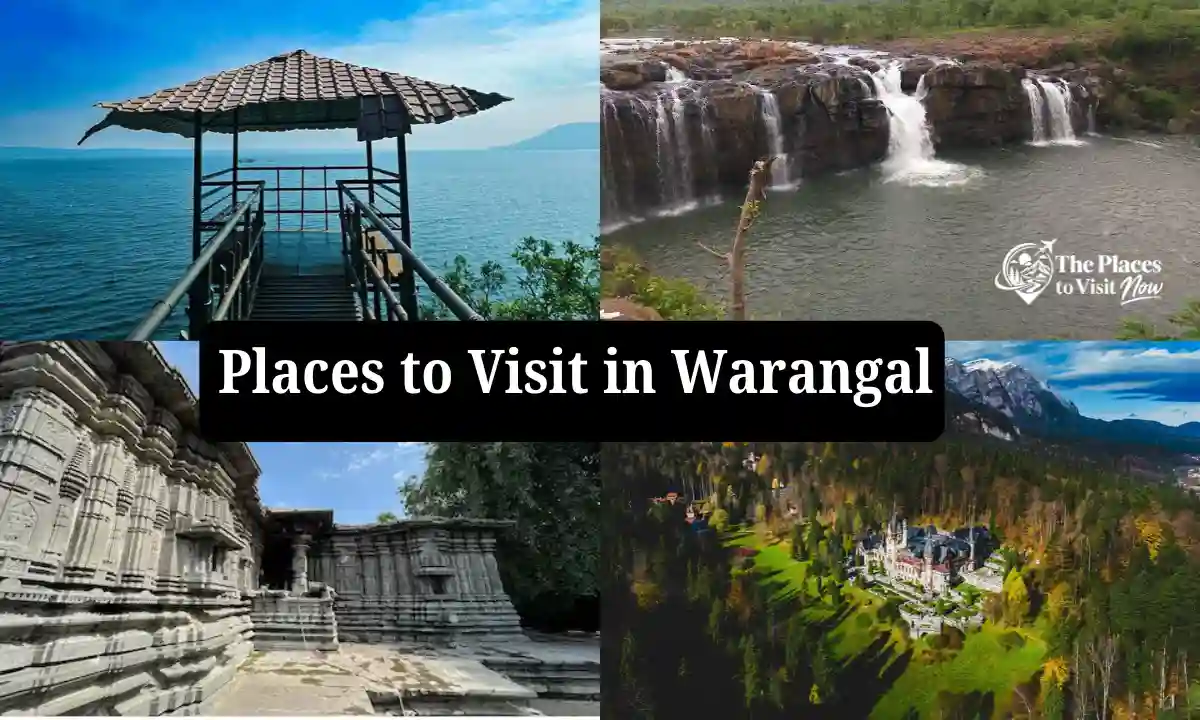
Most tours and guides to Warangal treat the temples separately from the lakes. First the Thousand Pillar Temple and Ramappa; then the Pakhal and Laknavaram lakes for boating and taking pictures.
This is the same thing. According to the dates set by UNESCO itself, the period of Kakatiyas lasted between 1123 and 1323 CE and in the course of these two hundred years the dynasty built the temples and created the lakes. The Pakhal and Laknavaram are not the products of nature. They are man-made reservoirs of the thirteenth century that are supplying water eight hundred years later. And the families enjoying their picnic on a Sunday on the shores of these lakes are sitting on Kakatiya structures.
Thus, Warangal stops being a mere set of sightseeing attractions and turns into the output of an amazing two centuries of activity that was suddenly stopped by the capture of the city by Delhi in 1323. This guide is about the sights of Warangal viewed in such a perspective.
Warangal at a Glance
| Detail | What to Know |
|---|---|
| What it was | Capital of the Kakatiya dynasty, roughly 1123 to 1323 CE |
| The UNESCO site | Ramappa Temple at Palampet, inscribed in July 2021 |
| Distance to Ramappa | About 70 km from Warangal |
| The state emblem | The Kakatiya Kala Thoranam gateway at Warangal Fort |
| The oldest major temple | Thousand Pillar Temple, Hanamkonda, dated to 1163 CE |
| The overlooked site | The Ghanpur group, locally called Kota Gullu |
| The lakes | Pakhal and Laknavaram, both Kakatiya-era reservoirs |
| From Hyderabad | About 145 km, roughly three hours |
| Best season | October to February |
| Ideal trip length | 2 days, 3 if you add the far lakes |
Two Hundred Years, In Order
Visit in this sequence and the whole city makes sense.
| Roughly | What Was Built | Where You See It |
|---|---|---|
| 1163 CE | The Thousand Pillar Temple under Rudra Deva | Hanamkonda, inside the city |
| Early 1200s | The fort, its gateways and the great Swayambhu temple | Warangal Fort |
| 1213 CE | Ramappa Temple, by a general of Ganapati Deva | Palampet, about 70 km out |
| 13th century | Pakhal and Laknavaram reservoirs | The lake circuit |
| 13th to 14th century | The Ghanpur group of temples | Near Palampet |
| 1323 CE | The Delhi Sultanate takes the city and it stops | The ruined temple inside the fort |
And that last line is the one which doesn’t get written. The reason why the massive temple at Warangal Fort is a field of stone sculpture and not a structure is simply that the city fell and that the construction process came to an end.
Ramappa Temple: The One Named After Its Sculptor
The very reason why Warangal has found itself on the world map seventy kilometers away from the city at Palampet. The Rudreshwara Temple built in 1213 by General Recharla Rudra who served under King Ganapati Deva and included on the UNESCO World Heritage List in July 2021 as the first of its kind in Telangana.
The temple has something unique about itself compared to other temples of India. Usually, the name of the temple refers either to the god or the king or the place where the temple stands. Here the temple is named after the sculptor Ramappa and construction of the temple is thought to have taken about forty years.
The engineering, which is the real story
- The sandbox foundation. The foundation of the temple was made of an amalgamation of layers of sand, lime, clay, jaggery and a solution of karakkaya fruit. This has resulted in a damping material, and the temple survived an earthquake during the 17th century with little damage limited to the floor only.
- Floating bricks. The pyramid-shaped vimana, which rises above the garbhagriha of the temple, is constructed of light weight porous bricks known to even float due to their extreme lightness.
- The stone. The beams and pillars of the structure are made up of granite and dolerite stones. These are so hard that the sculptures even eight hundred years later have metallic luster.
- The sculpture. According to UNESCO’s own citation, none of the figures either human or animal are motionless but convey movement and even depict regional dance forms.
Look for the celebrated bracket figure of a dancer with her foot raised towards her ear. It is the image that appears on every poster and it repays standing in front of for a while.
- Entry is free and the site is maintained by the Archaeological Survey of India.
- Best light is roughly eight to ten in the morning and three to five in the afternoon.
- Allow at least ninety minutes. Most visitors give it twenty and miss the brackets entirely.
One honest note. You will see it written everywhere that Marco Polo called this the brightest star in the galaxy of temples. The line is repeated constantly and the attribution is not well documented. It is a lovely phrase and it does not need him.
Places to Visit in Warangal: The Shortlist
| Place | Distance | Time Needed | Why Go |
|---|---|---|---|
| Ramappa Temple | About 70 km | 2 hours | The UNESCO site and the best of Kakatiya art |
| Warangal Fort and Kala Thoranam | In the city | 2 hours | The gateways on the state emblem |
| Thousand Pillar Temple | Hanamkonda | 1 hour | A 1163 temple with three shrines in one |
| Ghanpur group, Kota Gullu | Near Palampet | 1 hour | Composite mythical beasts, almost empty |
| Bhadrakali Temple | In the city | 45 minutes | Hilltop shrine above a lake |
| Laknavaram Lake | About 75 km | Half day | Island reservoir with hanging bridges |
| Pakhal Lake | About 50 km | Half day | A 13th-century reservoir and sanctuary |
| Kakatiya Musical Garden | In the city | 1 hour | Easy evening, good with children |
| Warangal Planetarium | In the city | 1 hour | A wet-afternoon option |
| Bogatha Waterfall | About 100 km | Full day | Best after the monsoon |
| Eturnagaram Sanctuary | About 100 km | Full day | Forest along the Godavari |
Warangal Fort and the Gateways
The fort was the nucleus of the capital city and had concentric defences, with the majestic Swayambhu temple at the center.
Today, all we see is an open area surrounded by intricately carved masonry, and emerging from it are four huge gateways known as the Kakatiya Kala Thoranam. The structures are so intact and unique that one of the gateways was chosen as the official emblem of the state of Telangana, although most of us might be familiar with the structure without even knowing the source.
It is the ruins that matter here; walking around amidst the scattered pillars and door frames of a structure without walls will give you an idea of what was destroyed in 1323.
- Go early or late. There is essentially no shade on the site.
- Entry is nominal. Allow two hours to do it properly rather than photographing one gateway and leaving.
- The Khush Mahal, a later Sultanate-era hall within the fort area, shows what came after.
Thousand Pillar Temple
This is the older masterpiece, at Hanamkonda, dating from 1163 and built during the reign of Rudra Deva.
It is a trikutalaya, a three-shrine temple attached to one central hall, devoted to Shiva, Vishnu and Surya, mounted on a star-shaped foundation with a huge monolith Nandi, in polished black stone, placed before it.
The columns are both the name and the attraction of the temple, beautifully carved and fashioned, while the hall is well known for the numbers and quality of its columns. Parts of the structure have been disassembled and reconstructed in a lengthy process of renovation.
- Entry is free. It is an active temple, so dress modestly and expect worship in progress.
- Go in the morning, when light reaches into the hall.
- The Nandi outside is worth as much attention as the pillars inside.
Ghanpur, the Group Nobody Visits
Close to Palampet, and typically overlooked by people driving past to Ramappa, is a group of temples locally called Kota Gullu that were constructed during the same period and in the same style.
But what makes it worth stopping there is the sculpted images of the bracket figures, featuring composite mythical images consisting of parts of animals and humans that are not found in Ramappa. A number of the monuments are ruins, making it even easier to appreciate the carving work.
It takes one hour, costs nothing, and chances are that it will be all yours most of the time. Pair it up with Ramappa rather than considering it a different destination altogether.
The Lakes Are Also Kakatiya
This is your link to hold onto for day two. The Kakatiyas were both hydraulic engineers and temple builders. They built a system of lakes on this arid plateau which were connected in such a way that the surplus water from one lake flowed into another, which made farming possible and therefore also the city itself.
- Pakhal Lake: around fifty kilometres away, this lake was built in the thirteenth century during the reign of Ganapati Deva, and is now a wildlife sanctuary. Best for bird watchers, calm waters and hilly forests.
- Laknavaram Lake: seventy five kilometres away, this reservoir has several small islands inside it and now has suspension bridges that make this lake the most photographed place in the district.
- Ramappa Lake: located next to the temple itself and also a part of the same landscape design, as the temple was specifically placed keeping in mind the water bodies.
Boating and bridges at these lakes depends on local conditions and water level.
Costs and Practicalities
These are approximate figures for planning. ASI and state rates are revised periodically, so confirm at the counter before you visit.
| Item | Approximate Cost (Rs) | Notes |
|---|---|---|
| Ramappa Temple | Free | ASI maintained, allow 90 minutes |
| Warangal Fort | 20 to 50 Indian | Higher for foreign nationals |
| Thousand Pillar Temple | Free | Active temple, dress modestly |
| Ghanpur group | Free or nominal | Usually empty |
| Bhadrakali Temple | Free | Hilltop, busy on weekends |
| Laknavaram bridges and boating | 50 to 300 | Depends on current arrangements |
| Pakhal Lake entry | Nominal | Sanctuary charges may apply |
| Kakatiya Musical Garden | 20 to 60 | Evening show timings vary |
| Local guide at Ramappa | 300 to 800 | Genuinely worth it for the sculpture |
| Auto within the city | 50 to 150 per hop | Agree the fare first |
| Full-day cab | 2,500 to 3,500 | Covers Ramappa, Ghanpur and Laknavaram |
| Hyderabad to Warangal train | 100 to 500 | About three hours |
Best Time to Visit Warangal
| Months | Conditions | Verdict |
|---|---|---|
| November to February | Cool and dry, comfortable for open sites | Best window of the year |
| October and March | Warm but workable | Good, and quieter |
| April to June | Very hot on this plateau | Avoid, or go at opening time only |
| July to September | Monsoon, green, waterfalls running | Good for the lakes and Bogatha falls |
The fort and Ramappa are both open, unshaded sites. In anything above the cool season, do them between seven and ten in the morning and keep the middle of the day for the museum or the planetarium.
A 2-Day Plan
| Day | Morning | Afternoon and Evening |
|---|---|---|
| Day 1 | Thousand Pillar Temple, then Warangal Fort | Bhadrakali Temple, then the musical garden at dusk |
| Day 2 | Drive to Ramappa early, then Ghanpur | Laknavaram Lake and the hanging bridges, back by evening |
With a third day, take Pakhal Lake for birds, or Bogatha Waterfall if you are here after the monsoon. If you only have one day, do Ramappa and Ghanpur and accept that the city sights will wait.
Practical Tips Most Warangal Guides Skip
- Go through the sites chronologically – Thousand Pillar Temple, then the fort, and then Ramappa. The evolution of the style will become apparent, and your tour won’t be a mere list anymore.
- Get a guide at Ramappa; bracket figures are the essence of the place, and you can easily miss them.
- Allocate an hour and a half for Ramappa; otherwise, you’ll spend twenty minutes and take a picture of its facade and get nothing but the reason why it is a World Heritage Site.
- Make a stop at Ghanpur along the way; it takes just a few minutes from the road leading to Ramappa, and very few people make it there.
- Start early; both the fort and Ramappa are open sites with no shade whatsoever.
- Hire a car with a driver for the second day; Ramappa, Ghanpur, and Laknavaram are located in the same direction, forming one day.
Trivia You Can Use to Sound Like a Regular
- The Ramappa Temple is one of the few examples where the name does not denote the presiding god or the patron but is named for its sculptor, which is almost exclusive among temples in India, and it is believed to have been constructed over a period of about forty years.
- Its pyramid-shaped tower is constructed from porous bricks, which are extremely light and can actually float, thus reducing the weight on the lower portions.
- The base comprises a sandbox foundation of sand, lime, clay, jaggery and karakkaya decoction that acted as a damper and saved the temple during a seventeenth-century earthquake.
- According to UNESCO, there is no figure of any man or animal at Ramappa which is motionless. All the sculptures here exhibit movement and many even portray the local dances.
- One of the four Kakatiya Kala Thoranam gateways of Warangal Fort was selected as the emblem of the state of Telangana.
- Pakhal and Laknavaram lakes are not natural but thirteenth-century Kakatiya-era reservoirs.
Final Take: Read It in Order
All the sites to be seen in Warangal are the end products of one dynasty spread out over two hundred years, and the city should be looked at from that perspective. Begin with the Thousand Pillars Temple built in 1163, then traverse the ruins of the fort and its four imposing gateways before paying proper attention to Ramappa Temple of Palampet along with Ghanpur on the same trip.
Spend a day at Laknavaram or Pakhal knowing that all that water has been collected by the same dynasty that sculpted those brackets. Two days will do for the job, and three days if both the lakes have to be visited. Visit during November and February because there is no shade anywhere and nothing has to be done in the sun, take a guide at Ramappa and don’t forget that the reason why there is only a field of carved stones instead of temples is a year, 1323.
Frequently Asked Questions
What is Warangal famous for?
It is the capital city of the Kakatiya dynasty from 1123 to 1323, and because of the structures constructed during their reign. These include UNESCO listed Ramappa Temple in Palampet, Thousand Pillar Temple in Hanamakonda, Warangal Fort along with four gateways, and a number of reservoirs like Pakhal and Laknavaram.
Why is Ramappa Temple a UNESCO World Heritage Site?
This inscription took place in July 2021 due to the fusion of sculpture and engineering. The sandbox base, the light, floating bricks in the structure, and the dolerite bracket figures that maintain a metallic look even after 800 years. According to UNESCO, none of the figures in the sculpture is static.
How far is Ramappa Temple from Warangal?
About 70 kilometres, at Palampet in Mulugu district, roughly an hour and a half by road. Combine it with the Ghanpur group of temples nearby and with Laknavaram Lake to make a single full day.
Why is Ramappa Temple named after a sculptor?
Because it is named for Ramappa, its chief sculptor, rather than for the deity or the ruler who commissioned it. That is close to unique in Indian temple architecture, and the construction is said to have taken around forty years.
Are Pakhal and Laknavaram natural lakes?
No. Both are Kakatiya-era reservoirs built in the thirteenth century as part of a linked system of tanks across this dry plateau, and they are still in use. Laknavaram is the one with the islands and suspension footbridges.
How many days do you need in Warangal?
Two days take care of the city places on one day and Ramappa, Ghanpur, and Laknavaram on another. Three days give you time for Pakhal Lake for bird watching or Bogatha Falls post-monsoon. If you have just one day, then Ramappa is your choice.
Note: Entry charges, site timings, and boating or bridge access at the lakes change periodically and depend on water levels. Everything here is indicative. Confirm locally before travelling.
Also read more: Places to Visit in Dandeli: A River That Runs on a Timetable
Leave a Reply