
Begin with the misconception that most articles about this city make. Colombo is not the capital of Sri Lanka. This capital is Sri Jayawardenepura Kotte. The city became the capital in 1977, and it officially became the capital on 29 April 1982 when the new parliament building was opened there. Colombo retained all the money, the port and the population and it is referred to as the commercial capital, but the parliament left forty years ago.
It is essential to know about this when visiting Colombo because this is why most of the sights of this city have become something other. The parliament located on the coastline is the Old Parliament, the magnificent Dutch hospital is now a line of restaurants, the horse racetrack at the seaside park became a promenade. Colombo is a city that was handed down time after time and it is this fact that makes the city truly interesting.
And this is why the sites here are ordered according to their layers rather than according to their ratings. The Portuguese cannonballs, the Dutch administration, the British collections, the Independence, and, finally, the tower and the territory which did not exist twenty years ago. They are located near each other, and in this order the city makes much more sense.
The City Reads as Layers, So Walk It That Way
Here is the whole article in one view. Read down the left column and you are reading five hundred years in sequence.
| The layer | Roughly when | What you can actually stand in front of |
| Portuguese and early Dutch | 1500s and 1600s | Galle Face, first cleared so Dutch guns had a line of fire |
| Dutch administration | 1600s and 1700s | Wolvendaal Church and the old Dutch Hospital in the Fort |
| The British century | 1800s and early 1900s | The National Museum, the Galle Face promenade, the Red Mosque |
| Independence | 1948 onward | Independence Memorial Hall and the square around it |
| Geoffrey Bawa | 1970s and 1980s | Seema Malaka on Beira Lake, and the parliament out at Kotte |
| The new skyline | 2010s and 2020s | The Lotus Tower, and Port City on reclaimed sea |
The Dutch Layer, Which Is Older Than It Looks:
Two buildings carry this layer, and both are routinely walked past. One is a church that nobody thinks to go inside. The other has been so thoroughly repurposed that most visitors eat dinner in it without ever registering what it was.
Wolvendaal Church
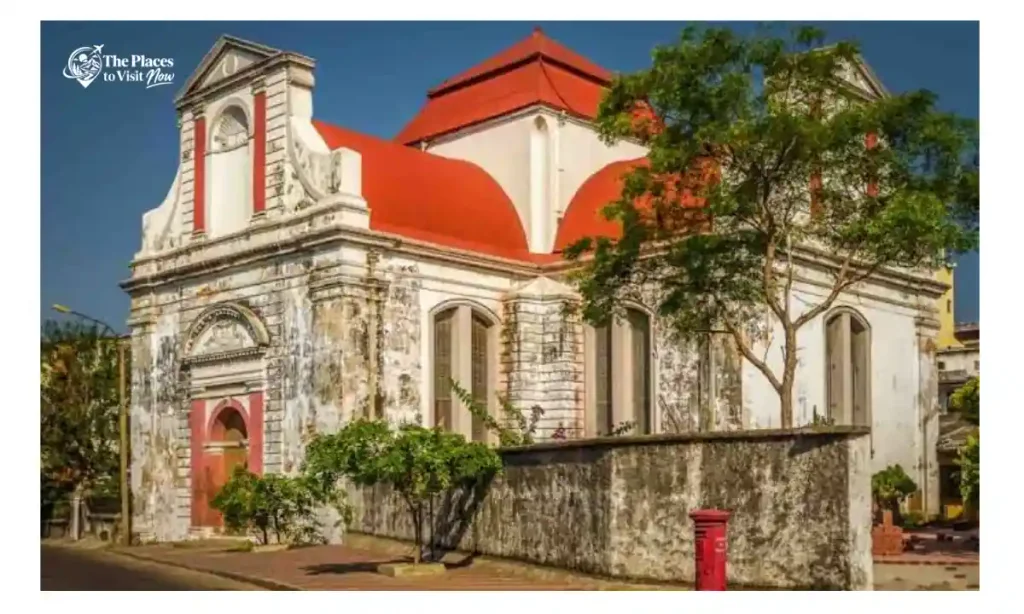
Foundations were laid down in 1749 and dedication to serve worshippers took place on 6 March 1757. The church is located on a hilltop at Pettah, on a site that used to be a swamp, outside the then existing city walls and is considered to be one of the oldest Protestant churches functioning in the country.
Do not focus on the facade and enter instead. You will see a number of tombstones engraved into the granite floor, with some of them relocated here from another church. The building serves as a burial ground to five Dutch governors, with Johan Gerard van Angelbeek being the last one, died in 1799. Some of the features include a solid state pew for the Dutch governor, ebony and calamander chairs dating to seventeenth and eighteenth centuries and a font dating back to 1667.
Remember the name. Wolvendaal literally means Wolf Dale. There were no wolves but Europeans confused it with jackals running around the place and this error has remained the name of a Colombo neighborhood up until today.
Old Dutch Hospital
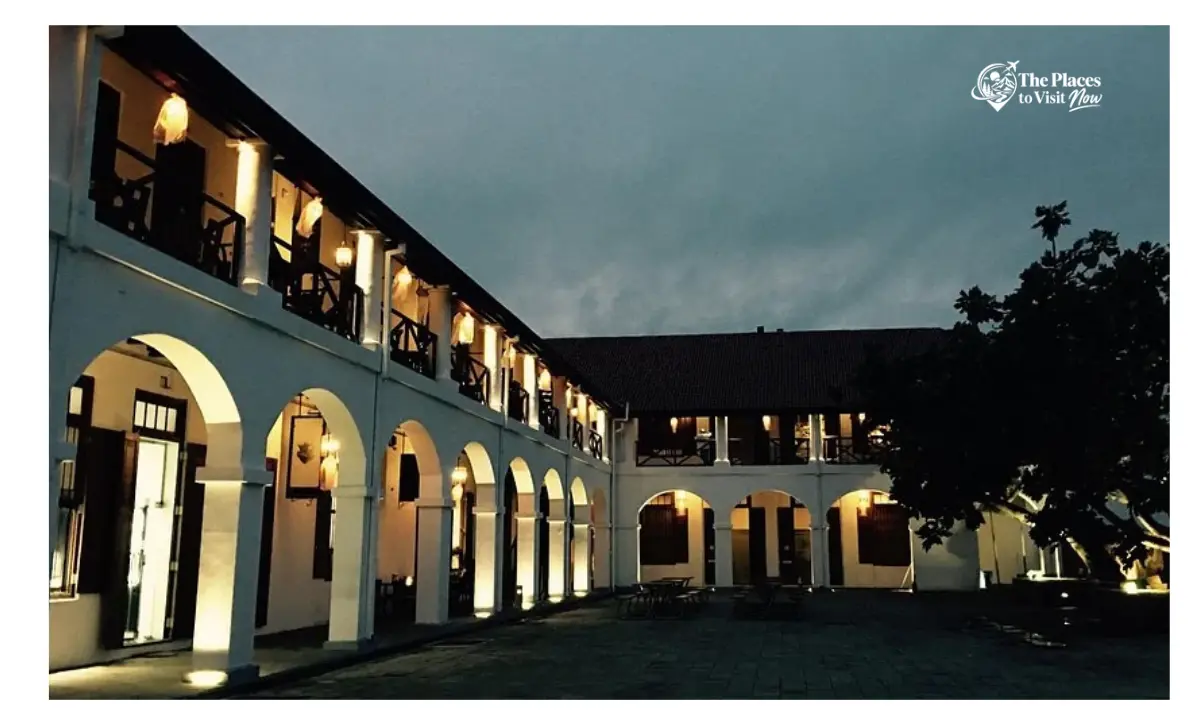
Believed to exist since 1681 and called to be the oldest building in the Colombo Fort region. Note the distinction of words because it is often referred to as the oldest building in Colombo, which is something different.
The hospital was constructed for treating officers and employees of the Dutch East India Company and seamen who were disembarking their ships, which is why it is positioned so close to the port. After that it was used as the Colombo Apothecaries, then as a police station for Fort in the 1980s and 1990s and was seriously damaged by an attack following the Central Bank bombing in 1996. In 2011 it was refurbished into a commercial complex with two inner courtyards and the old architecture being preserved.
This is now the best place in Colombo to eat well and that is due to the thickness of the walls which keep the courtyards cool. Visit in the evening.
The British Layer, Where the Collecting Happened
This is the thickest layer and the one that supplies most of the places to visit in Colombo that end up on a shortlist. Three of them sit here, and each was built for a purpose it no longer serves.
Colombo National Museum
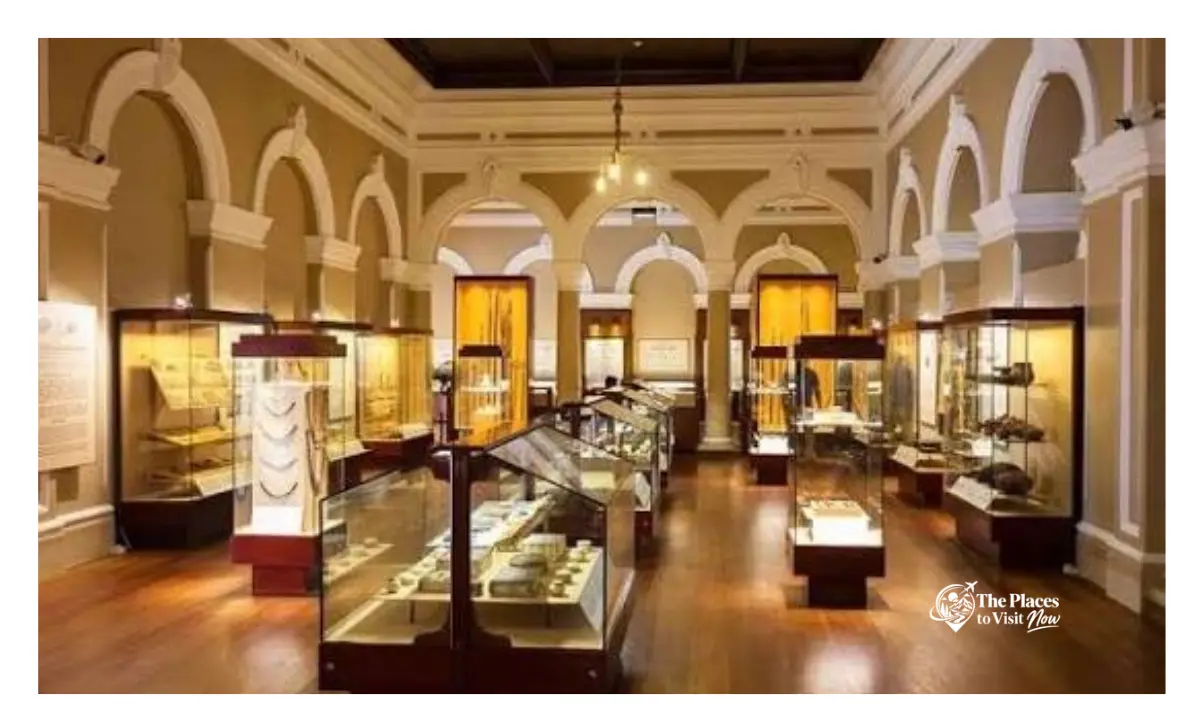
Founded on 1 January 1877 by Sir William Henry Gregory, at the time British Governor of Ceylon, and said to be the biggest museum in Sri Lanka. The design is by James George Smither, the government architect, in the Italianate style, and the construction carried out by Arasi Marikar Wapchie Marikar.
The collection to see is upstairs: the regalia of the Kandyan kings, comprising the crown jewels and the throne of the last King of Kandy, all restored to Sri Lanka by the British Government. downstairs starts with stone and bone implements and urn burial, moves through Anuradhapura and Polonnaruwa sculpture, moonstones and guard stones, the fifteenth-century trilingual inscription from Galle, and ends in a gallery of ritual and demon masks.
First things first, before you hunt for it: the renowned Tara figure is actually a copy; the original one is at the British Museum. Tourists in search of it can be easily confused by their finds at the galleries, and there is no mention of this anywhere.
Operating times appear inconsistent: one source says six days a week with one day off introduced in September 2025 and closed on Poya Days, and another source on the same page says seven days a week on reduced opening hours. Check the day in question on the day, and read the Poya section below anyway.
Galle Face Green
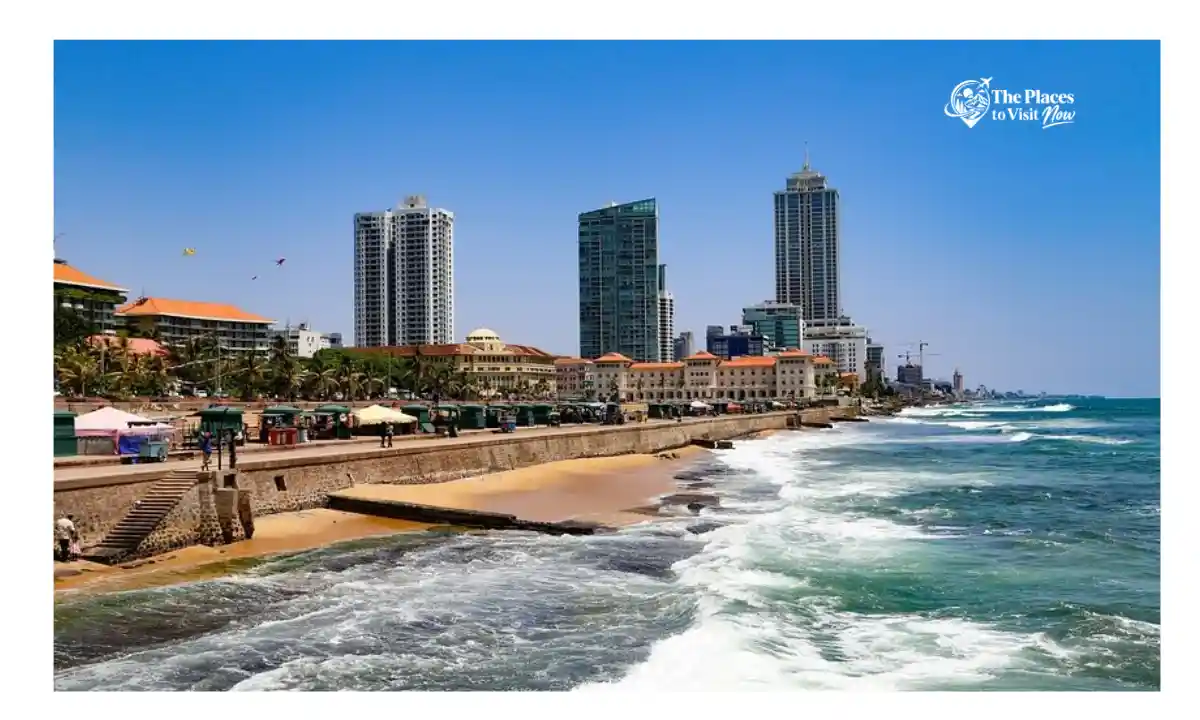
This one has lived three lives and the first is the surprising one. The Dutch had cleared the area so that their cannons would have an unrestricted path to shoot at the Portuguese. This was a field of fire before anything else.
Governor Sir Henry George Ward had sanctioned a promenade along the ocean in 1856 and the project had been completed in 1859. It had sported a race course called the Colpetty Race Course from the early 1820s till 1893, and had also hosted other sporting activities such as golf, cricket, polo, football, tennis and rugby. Now, what remains is an area of five hectares, or twelve acres, which is much smaller than what it used to be historically.
It is best to visit this place on any weekend evening when there will be vendors selling crabs, prawns and slices of mango flavoured with pepper and salt. The Galle Face Hotel stands at the southern end of the place. The kites flying above are just another part of this activity and not something meant for tourists.
Red Mosque, Pettah
Jami Ul-Alfar was built by the Indian Muslim Community of Pettah in 1908 and completed in 1909 to the designs of an architect called Habibu Labbe Saibu Labbe whose information is not available elsewhere. It is a candy-stripe red and white mosque combining Indo Saracenic styles and pomegranate dome structure along with clock tower. It has been compared to the Jamek Mosque of Kuala Lumpur. A four-storeyed wing added in 2007 increased its capacity to ten thousand people. The place was apparently used by sailors in the early 20th century to navigate the route to the harbour.
However, the following is the catch that might surprise some people and is perhaps the most useful information on this page for visiting Pettah in the morning. One complete listing mentions the mosque as open from 9 in the morning to 5 in the evening, closed for visitors on Fridays, and open only for men, though women can view the building from outside. Practice of mosques may vary and therefore it is recommended to inquire at the entrance gate. Anyhow, dress modestly; this is a place of worship for a congregation in the busiest commercial quarter.
The Independence Layer, Built on the Exact Spot
The opening ceremony of the first session of the parliament of independent Ceylon took place in what was Torrington Square at the time, and was inaugurated by the Duke of Gloucester from a specially constructed podium on 4 February 1948. Construction of the monument in honour of independence began a year later, to the day, on 4 February 1949, and was completed in 1953.
Independence Memorial Hall is not just another colonnade. It is a copy of the Magul Maduwa – the royal audience hall of the Kingdom of Kandy – in which the Kandyan Convention was signed in 1815. This way, a memorial to the termination of British colonial rule is an imitation of a hall in which Kandyan independence was transferred, making this building more worth spending some ten minutes looking at rather than shooting one photograph.
A sculpture of Don Stephen Senanayake, the first prime minister of independent Ceylon, is standing at the entrance, and there is also an Independence Memorial Museum attached. The square next to it is where Colomboians come to walk at dawn and dusk.
The Bawa Layer, and the Link Nobody Makes
Geoffrey Bawa was born in Colombo on 23 July 1919, and died there on 27 May 2003. Bawa is the most famous South Asian representative of tropical modernist architecture, which means that his buildings have open space plans, courtyards, large verandas, and natural ventilation rather than glass walls and air conditioners.
Two buildings of Bawa bracket this whole article, but connecting them is something that is never done by any Colombo guide.
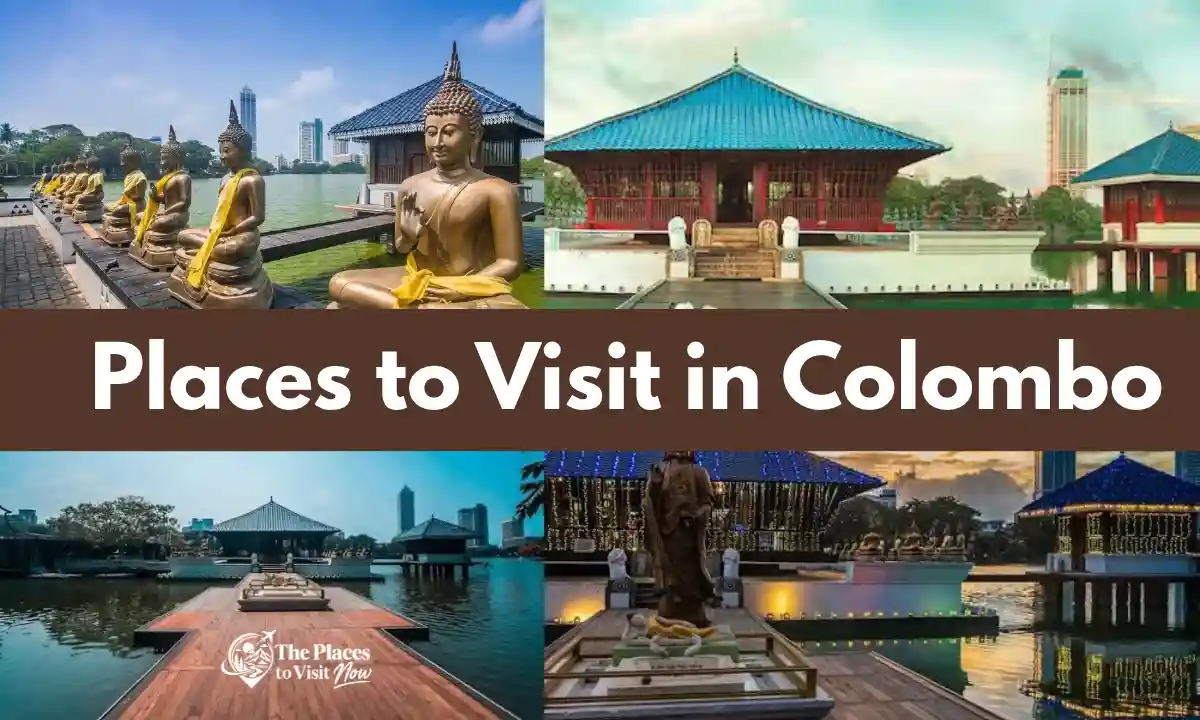
The first is Seema Malaka – the small temple which appears to float on the surface of Beira Lake and is featured on the cover of many guides about Colombo. This is actually an outer structure of the Gangaramaya temple complex. The original structure was built in the late nineteenth century with foundations going into the lake bottom; and the marshy soil could not support such a building. By 1970, it had completely sunken under the surface of Beira Lake. Bawa was invited to rebuild it in 1976; but instead of rebuilding, he created the structure of floating platforms on which Buddha figures stand and a wooden meditation hall was built, with a northern platform leading to a library for monks. Thus, the original temple, which went down under the water, was replaced by a floating one.
The second is the parliament complex at Sri Jayawardenepura Kotte – a group of pavilions topped with copper roofs and rising from an artificial lake created by dredging the marshland along the Diyawanna Oya.
Thus, it is the same architect who designed both – the serene little temple to which tourists travel to Colombo in order to take photos, and the building which transferred the capital from Colombo. Colombo lost its parliament, but gained its postcard in the space of six years, by one man.
Bawa’s own residence at No.11, 33rd Lane, started as a row of small bungalows, and turned into a composition of courtyards and rooms. It is maintained by the Geoffrey Bawa Trust, and you can visit it, making this place the most interesting small site of Colombo for those interested in architecture. Make your arrangements in advance.
The Newest Layer, Including Land That Was Not There
The last layer is the one still being poured. One piece of it you can go up, and the other you may or may not be allowed to walk on, depending on the month you arrive.
The Lotus Tower
Three hundred and fifty meters of pink and green lotus flowers against the Colombo skyline, opened to the public on 15 September 2022. It was begun back in 2012 during Mahinda Rajapaksa’s presidency, with an estimated cost of 113 million US dollars and financed predominantly by China. The construction of this monument has always been politically controversial.
The regular story is that it is the tallest in South Asia. The exact statement, and that one worth repeating, is that it is claimed to be the tallest self-supported structure in South Asia – and that is a more specific claim than tallest building or tallest structure, which is what the record proves. The height of this tower varies, most commonly given as 350 meters, but sometimes mentioned as 356.
There is an observation deck, broadcasting facilities and a line of entertainment options, which were added gradually after opening. Go there for a view at sunset, when you can see all layers of this multi-layered city spread underneath, including the next entry on the list.
Port City Colombo
Right next to Galle Face you will find a significant stretch of land that used to be sea. Port City is a project on reclaimed land, Chinese financed, and its marketable area of 178 hectares contained 116 hectares already leased for 99 years in 2026. The promises tied to the project, such as 15 billion dollars of investments and employment for more than 80,000 people, continued to be disputed in 2026 due to lack of verified data.
As a tourist, you should know the following. Parts of it, including the landscaped marina promenade, have been opened to the public at different points in time, according to changing rules, schedules and access requirements. A beach and a central park are included in the original plan. Whether any specific part is available on the day you come is not a question an article can answer precisely, so ask at your hotel rather than build your morning plans around it. What needs to be understood is that the coastline you see is newer than your guidebook.
The Temple That Refuses to Stay in Any Layer
Started in the late nineteenth century by the monk Hikkaduwa Sri Sumangala Nayaka Thera and developed into a seat of learning and culture by Sri Jinaratana Nayake Thera, Gangaramaya theoretically belongs to the British layer. Practically, it has been growing all the way along and belongs to no layer at all.
This complex contains a main vihara with a Buddha statue and his life story in ceiling painting, a pagoda, a relic chamber, a bodhi tree grown from a sapling from the Maha Bodhiya of Anuradhapura, and a replica of Borobudur in Java. The interesting element and the reason why this place should be visited is the museum. There are numerous Buddhist statues, including bronze and gold Buddhas sitting, standing, reclining and meditating, the smallest Buddha figure in the country, which can be seen through a magnifying glass, ancient manuscripts, huge tusks made of ivory, and many gifts given by devotees, including luxury cars and watches. This collection does not seem to be a museum, but a very long collection of objects that people were unable to get rid of.
This temple is open from six o’clock in the morning till eight at night. Entry is free for locals, but with a minor fee for foreign visitors. The conservative clothing is expected, no sleeveless tops and no shorts. On full moon days in February there is a grand Nawam Perahera procession, led by several hundreds of monks and relics, transported on a decorated elephant. It is the largest event that takes place in this city all year round.
The market quarter Pettah, containing Red Mosque and Wolvendaal, is another element that does not belong to any layer.
Poya Days Will Quietly Close Your Itinerary
This is by far the most useful piece of information that any Indian visitor needs to have on their mind prior to coming to Sri Lanka, and it never makes an appearance in any list of things to do in Colombo.
A full moon day in Sri Lanka means Poya – a Buddhist holiday which is also a national one. There are thirteen or fourteen such days a year, making it highly likely that one will fall within your brief stay. On the Poya day, business is usually closed, alcohol is prohibited, meat is prohibited. On the other hand, temples are packed like crazy and there’s no better time for visiting one than that.
So you don’t want to waste a Poya. You want to make it work for you. And here’s how.
| On a Poya day | What tends to happen | What to do with it |
| Shops and businesses | Generally closed, including much ordinary retail | Not the day for Pettah bargaining or a shopping afternoon |
| Alcohol | Sale is forbidden across the country | Plan the evening around food rather than a bar |
| Meat | Sale is forbidden as well | A good day to eat the vegetarian side of Sri Lankan cooking |
| Temples | At their fullest, with observances through the day | Exactly when to go to Gangaramaya and Seema Malaka |
| Museums and ticketed sites | One listing records the National Museum closing on Poya days | Check before you build a museum morning around that date |
Which Part of the City to Sleep In
Colombo is strung along the coast and the numbered districts confuse first time visitors, so this is the short version of where to put yourself.
| Area | What it puts you next to | Who it suits |
| Fort and Pettah | The Dutch Hospital, the Red Mosque, Wolvendaal, the markets | Anyone who wants to walk the old city in sequence |
| Galle Face and Kollupitiya | The Green, the seafront hotels, the Old Parliament, Port City | First time visitors who want the ocean out of the window |
| Cinnamon Gardens | The National Museum, Independence Square, quiet tree lined streets | Slower trips, families, anyone travelling with older parents |
| Mount Lavinia | A proper beach, about half an hour south of the centre | Trips that are really about the coast, with the city as a day out |
What the Day Costs, Without Invented Numbers
No rupee or dollar figures on this page. Sri Lankan pricing for foreign visitors has moved sharply in recent years, ticket rates are revised without notice, and an article that prints exact amounts is misleading people within months. The structure of the spending is stable, and that is the useful part.
| What you pay for | How it works | Worth knowing |
| Temple entry | Free for locals, a modest charge for foreign visitors | Applies at Gangaramaya, and covers the museum inside it |
| The National Museum | A ticket per head, with separate local and foreign rates | Allow two hours, because the Kandyan regalia is upstairs at the end |
| The Lotus Tower | A ticket per head for the observation level | Added attractions inside are charged separately from the entry |
| Getting around | Metered three wheelers, or an app, which is usually cheaper | Insist on the meter or the app fare rather than a quoted price |
| Eating | Street prices at Galle Face, restaurant prices at the Dutch Hospital | The gap between the two is very wide for similar seafood |
| Guides | Per group at the bigger sites, arranged on the spot | Worth it at the National Museum, where the labelling is thin |
Nine Things Worth Knowing
- Colombo is not the capital of Sri Lanka. The capital was declared as Sri Jayawardenepura Kotte in 1977 and made official on 29 April 1982 with the construction of a new parliament building. Colombo is the commercial capital of the country which is a separate role.
- Galle Face started off as an artillery field. The Dutch cleared the site for the use of their cannons to fight against the Portuguese long before anybody considered it as a promenade.
- The temple on the lake was once submerged under water. The original Seema Malaka had its base in the lake bed and the marshy area subsided and the entire structure was submerged until 1970. The rebuilding done by Bawa in 1976 was as floating structures.
- The same architect worked on the two ends of the story. Seema Malaka as well as the Parliament Complex at Kotte, which was constructed in 1982 moved the capital from Colombo, are creations of the architect Geoffrey Bawa.
- The name Wolvendaal is an error. Wolvendaal means wolf valley. There has never been any wolf in that place. Europeans mistook the local jackals as wolves.
- The National Museum used to be closed on Fridays in the beginning. It was due to the wish of Wapchi Marikar, the Muslim contractor who built the museum and the tradition persisted for a very long time.
- The Tara statue is only a copy in the museum. The original statue of Tara is in the British Museum whereas the Kandyan crown jewels and the throne of the last King of Kandy found in the same building are authentic and have been returned by the British Government.
- The Independence Memorial Hall copies a Kandyan building for a reason. It is the replica of the Magul Maduwa, the royal audience hall where the Kandyan convention was signed in 1815 and the monument for independence quotes the room where independence was lost.
- The claim about the Lotus Tower is less than what you have heard. It is called the tallest self-supported structure in South Asia and its height is reported as 350 meters in most sources and 356 meters in some sources.
Small Things That Change the Day
- Ensure you do not have a Poya day in your time range. Businesses will be closed and alcohol and meat sales forbidden, as well as the temples themselves will be crowded.
- Visit Pettah early on. Both the market quarter itself, as well as the Red Mosque and Wolvendaal lie close together and are better experienced earlier in the day, before it gets too hot and crowded.
- Inquire of the staff of the gate of the Red Mosque directly rather than assume things from listings. The Red Mosque is listed as closed to non-Muslims on Fridays and male visitors on any other day.
- Schedule a visit to Number 11 (Bawa house) via the trust operating it. This is not a casual drop-by.
- Schedule two hours for the National Museum and confirm what days it operates on, since different sources will have conflicting information.
- Dress appropriately to visit Gangaramaya and Seema Malaka. No sleeveless clothing, no shorts and take off your shoes where requested.
- Climb the Lotus Tower at dusk rather than noon. The idea is to see layers of the city from one vantage point and noon haze takes away much of the beauty of that view.
- Meter or app for three-wheelers. Visitor quotes for fares in Colombo do not correlate much with the actual metered price.
- Try the food stands of Galle Face only on weekend evenings. This is the best time to enjoy them at full strength.
Questions Worth Answering First
What are the best places to visit in Colombo?
Gangaramaya and Seema Malaka, the National Museum, Galle Face Green, the old Dutch Hospital, Independence Memorial Hall, Wolvendaal Church and the Lotus Tower. Most of them sit within a short drive of each other.
Is Colombo the capital of Sri Lanka?
No. Sri Jayawardenepura Kotte is, with the move becoming formal in April 1982. Colombo remains the commercial capital and the largest city.
How many days do you need in Colombo?
Two is enough for the city itself, one for the Fort and Pettah layer and one for the museum, Independence Square and the lake temples. A third day lets you add Mount Lavinia.
What is a Poya day and will it affect my trip?
It is the full moon Buddhist holiday, falling thirteen or fourteen times a year, when shops close and alcohol and meat sales are forbidden. Temples are busiest and best on that day.
Can women visit the Red Mosque in Pettah?
One detailed listing records the mosque as open to male visitors only, with women viewing it from outside, and closed to visitors on Fridays. Ask at the gate, since practice can change.
Is the Lotus Tower worth visiting?
Yes, for the dusk view over the whole city and the new reclaimed shoreline. It opened to the public in September 2022 and is described as the tallest self supported structure in South Asia.
What is the best time of year for Colombo?
The drier stretch from roughly December to March suits the west coast best. February also brings the Nawam Perahera at Gangaramaya, on the full moon.
Also read more: Places to Visit in Malvan: Everything Starts With One Rock
Leave a Reply