
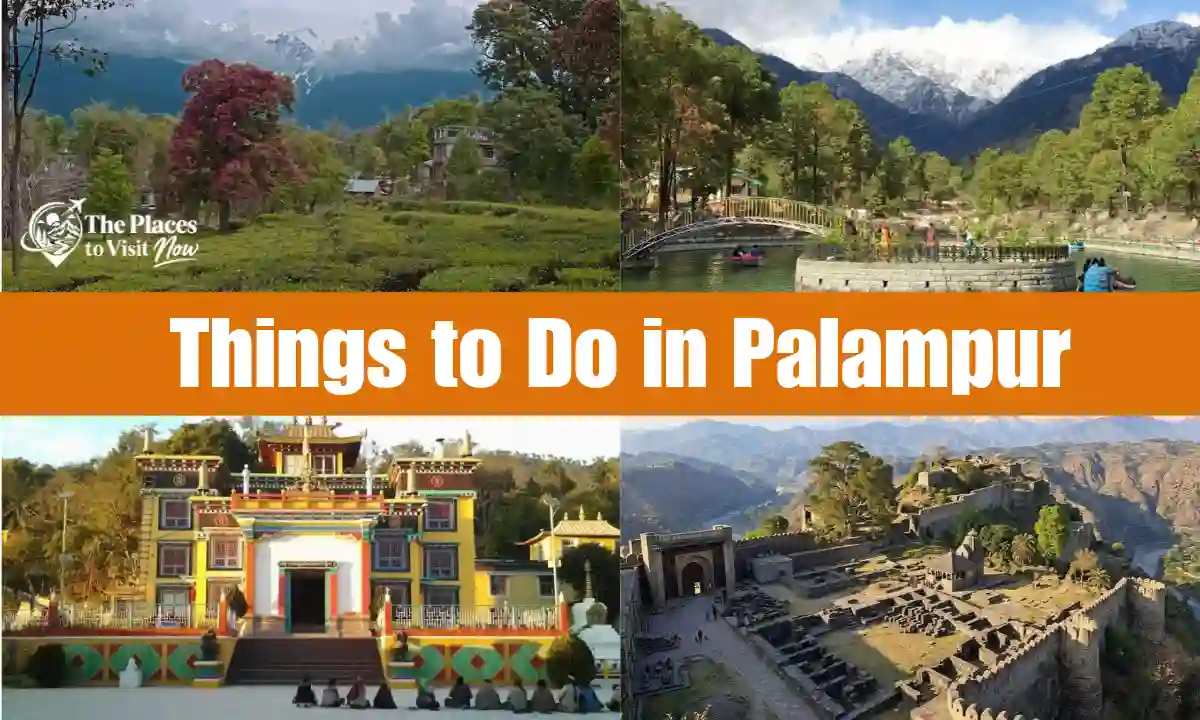
All those tea gardens everyone photographs in Palampur represent the remnants of an industry that collapsed one morning and never really recovered since. This does not make Palampur a gloomy place to visit. On the contrary, it is the sole truth that explains everything about the town, and no guide in Palampur even mentions this fact.
When the Kangra earthquake of 1905 devastated this valley killing thousands of people, flattened the tea factories, and the British planters who built the industry sold up and returned to their country, the new owners began producing the tea in small amounts. The peak was reached in the nineteenth century and has been declining ever since. Hence, the list of activities in Palampur begins with visiting the tea garden, not mentioning the fact that tea has survived while others failed.
It becomes clear that the valley divides into three zones according to the events connected with the earthquake. The first zone comprises the tea that still functions despite being damaged by the earthquake. The second zone consists of one magnificent object that has not been destroyed by the earthquake, namely the temple from 1204. And the third zone includes the objects created after the earthquake. They turned out to be the most interesting things about the valley: an Irishwoman and her artists, a Tibetan monastery, a narrow-gauge railway and the launch ramp on the ridge above it.
Three Kinds of Things to Do Here
Sort your day by which of these you have come for, because they sit in different directions and want very different amounts of time.
| Which kind | What is in it | What it asks of you |
| Damaged but still working | The tea estates and the cooperative factory | Half a day, and a tour booked rather than a photo stop at a fence |
| Still standing from 1204 | The Baijnath Shiva temple | An hour, plus the drive out, and worth timing around Dussehra |
| Everything that came later | Andretta, the Tibetan settlements at Bir, Billing | A full day, or two if you intend to fly |
| The town itself | Neugal Khad and Saurabh Van Vihar | An easy evening within a few kilometres of the centre |
| Running through all three | The Kangra Valley narrow gauge railway | A few hours, and it reaches Baijnath without a car |
The Tea, and How Most Visitors Get It Wrong

Tourism in Himachal Pradesh refers to Palampur as being the tea capital of north India and attributes the tourism of the town to its gardens, which is justified. But this is what most tourists do with their visit to the place: drive on a road, stop at a fence and take pictures of some bushes.
What the industry actually is now
The cultivation of tea in Kangra was introduced in the mid-nineteenth century following the completion of a feasibility study in 1848 which found the region to be well-suited for tea production and planting with a Chinese variety of the tea plant took place. The British were in control of the plantations. Wah Tea Estate is located near Palampur and was founded in 1857.
But then the 1905 earthquake claimed thousands of lives and destroyed the factories; the British abandoned the plantations, and the subsequent owners produced little. According to the latest information available, there were about 5,900 tea gardens spanning 2,312 hectares producing up to nine lakh kilogram annually, all but ten percent of which was black tea. This is the scale of losses of an industry which reached its peak in the late nineteenth century.
There is one peculiarity worth mentioning prior to tasting. The Chinese hybrid used in this region produces a very light color of the liquor, hence Kangra tea is not able to produce the dominant CTC-type tea in Indian cups. The black tea has a sweet aftertaste and green tea – wood-like aroma. If you expected the same Assam power – no, nothing is wrong.
Kangra tea has been awarded geographical indication in 2005 in Chennai. There may be some mentions of protected status in Europe; it is just a headline from 2015 announcing such protection, so take it as an unverified statement.
Actually getting inside an estate
Wah Tea Estate conducts tour through the garden and factory ending up with tasting and starts its tours on the hour starting from ten in the morning till five in the evening. The tours include the history, walk through the plantation with a possibility to experience plucking of two leaves and a bud, factory with its processes of withering, rolling, fermenting, drying and sorting, and finally tasting. Just one warning: the duration is stated to be forty five minutes, which seems to be rather short for all mentioned above, so better find out the real time needed before planning other activities.
In case you do not have enough time for such a tour, there is a Palampur Cooperative Tea Factory located two kilometers south from the town and the visits there are free of charge.
As far as the timings are concerned, be realistic. There is absolutely no month that you can assure yourself that you will be able to observe the plucking and the processing. Moreover, those who process tea will tell you the same. A rather recent review from the estate says that first flush appeared very late due to the changeable climate. So plan a tour through the garden, factory and tasting as an essential part of it, and take a look at the whole picking as a bonus.
The estate has a rather good afterlife. It was bought by Sir Sikander Hayat-Khan, who called it after his native place Wah, located in Pakistan, and the current owner, the great-grandson of the fourth generation planter bought the estate in 1953.
The Temple That Did Not Fall
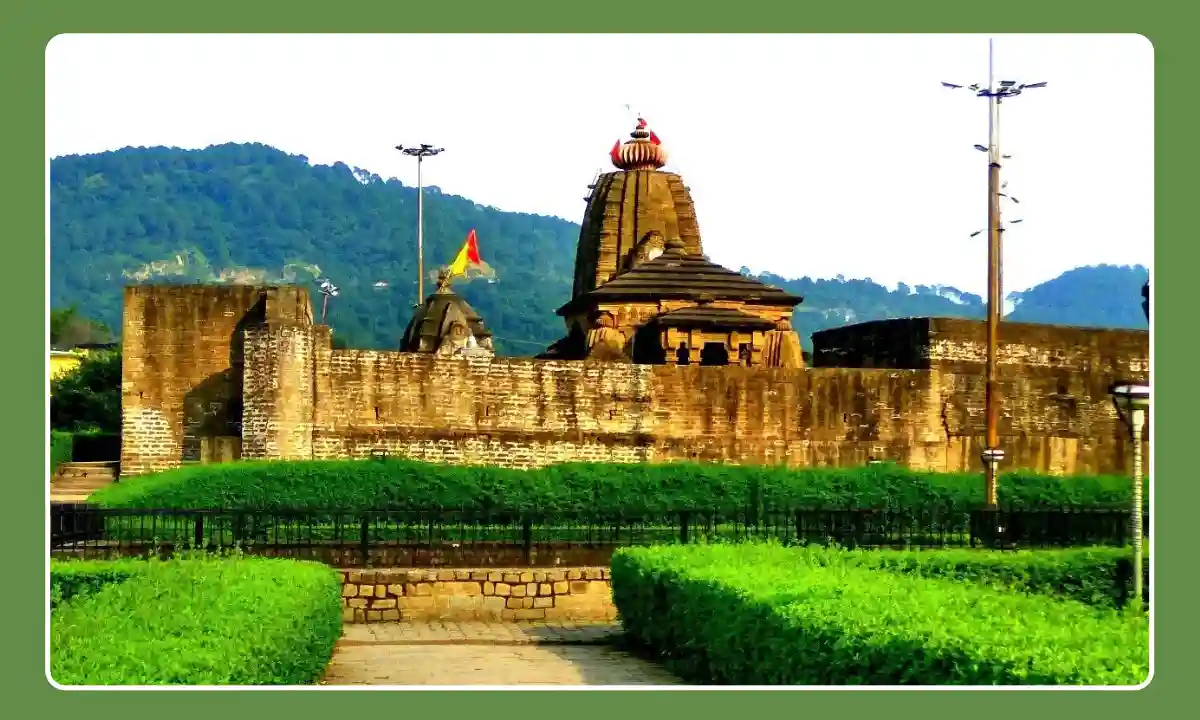
About sixteen kilometres from Palampur lies the very reason why the 1905 story stands true. The Baijnath temple is dated back to the year 1204 AD. It was constructed by two local merchants, Ahuka and Manyuka in the Nagara style. The temple is a dedication to Lord Shiva in his incarnation of Vaidyanath or lord of physicians. This structure emerged out of the ruins left behind by the quake. All it sustained was damage to its roof and to the shrines in its courtyard.
The Baijnath temple comes under the protected category in the Archaeological Survey of India. There are two inscriptions on the stone slabs in the inner hall of the temple – one in Sanskrit written in the Sharada script and one in Pahari in Takri. These inscriptions speak about the process of construction, glorify Shiva, mention the King Jaya Chandra and the names of the builders and sponsors. There is an inscription that mentions the ancient name of Kangra as Nagarakot. One important detail: while the building itself is dated to 1204 AD, it should be mentioned that the inscriptions date the construction period to Saka era which was few centuries earlier, leaving the question unanswered.
Now for the actual reason to plan your visit. Baijnath does not have Dussehra celebration. No effigy of Ravana is burnt in the town of Baijnath. It seems like the legends of Baijnath state that Ravana was a devotee of Shiva who gave him his head as an offering on Kailash and gave him shivling on the condition that he will not put it to the ground and when he put it down at the place which was known as Kiragrama to quench his thirst, it stayed there. In order to pay respect to his devotion, the town of Baijnath abstains from burning the effigy of Ravana.
The Irishwoman Who Started a Village of Artists
Andretta lies thirteen kilometers away, on the way to Mandi, and is an artists village owing to one individual.
Norah Richards was an Irish actress and theatre artist who came to Lahore in 1908 when her husband secured himself a job at Government College. She became vice principal of Dayal Singh College and contributed in establishing modern theatre of Punjabi culture. After the death of her husband she went back to Ireland but came back in 1924 and resided in Andretta from that time onward.
She established Chameli Niwas, an indigenous Kangra style mud, slate and bamboo house, set up a temporary stage for plays in 1935. In the same year the district commissioner of Kangra allotted her fifteen acres of land, which later became the Woodland Estate, where she founded her drama school. Soon enough artists started to follow her. One of them was Sobha Singh, famous for painting Sikh religious subjects, who stayed in Andretta till his death in 1986. B. C. Sanyal was one of the first friends and organized money from exhibitions to build an arts center. Lahore artists made their contribution in the 1940s.
What to visit: the Andretta Pottery and Craft Society established in 1983 by the son of the potter Gurcharan Singh, Mansimran Singh along with Mary Singh, having a studio and terracotta museum, the Sobha Singh art gallery, and the Norah Richards arts center and house. Punjab University possesses and maintains her estate since she has bequeathed it to them. Students conduct an annual theatre festival in Punjabi here on her birthday, the 29th of October.
An hour and a half will be sufficient for a visit unless you want to participate in pottery class.
What Came Over the Mountains After 1959
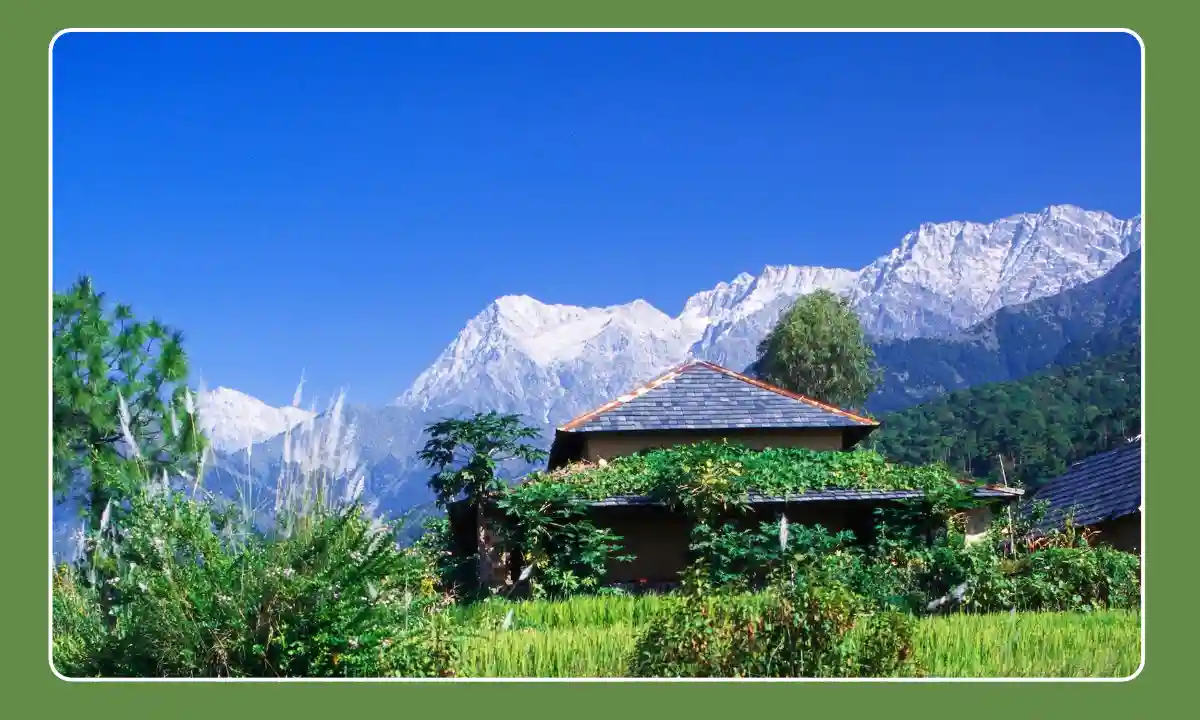
The other post-earthquake settlement in the valley is the Tibetan community. Bir colony is made up of refugees who had to leave the area following the occupation by the Chinese, thus giving the region a completely different feel: monasteries, crafts, and Tibetan cuisine near a British tea garden.
Chokling Monastery in Bir is an exile community with a stupa and a statue of Padmasambhava. Nearby is Palpung Sherab Ling which offers classes on meditation and Buddhist philosophy to those seeking more than just a visit. There is also the Tibetan community of Tashi Jong in the same area worth considering in case you are already there.
Consider these places as active religious settlements and not as tourist attractions. Walk silently and do not take pictures of the people without permission. In case there are activities in any hall, stay away from it.
Billing, and a Superlative That Lives in a Web Address
Bir is where you land and Billing is the take-off ridge and together they are the main reason why so many people find themselves in the Kangra Valley.
It is always said that Bir Billing is the second-highest paragliding spot in the world. Let’s examine what actually takes place when you look closer. The official tourist website does have a page with the corresponding URL with the words “second highest in the world” in the string, but the actual text on the Bir Billing page contains no such phrase at all. It just mentions that this is the capital of Indian paragliding and one of the most successful paragliding sites in the world. These are two different claims, and only the weaker one survives in the URL.
Some facts that do not belong in the promotional brochure: Bir is situated about half an hour away from Palampur, Billing is even higher above it, you can choose tandem flights for novices, and there is a pre-World Cup event organised by the state tourism agency in October. March-June and September-November are the recommended months for the valley.
Flying is weather-dependent, and flights are sometimes cancelled for days in advance. If you plan to fly there, schedule some slack in your dates.
The Town Remembers One of Its Own
The two convenient places within a few kilometres away from the centre can be visited easily. Neugal Khad, around three kilometres away, is the stream and ravine where the range of Dhauladhar opens up across the stream. This is the usual place for a sunset walk and rightly so.
Another place within four kilometres away is a park beside the same stream named Saurabh Van Vihar, which is dedicated to Captain Saurabh Kalia. Kalia hails from Palampur. Born in June 1976, he passed out of the agricultural university in this town in 1997 and passed his services examination in August the same year. He joined the Jat Regiment. On 15th of May 1999, when he led a patrol for checking infiltration of enemy troops in a post above thirteen thousand feet in the Kargil sector, his party ran out of ammunitions and he along with five soldiers got caught. Their bodies were returned on 9th June, after twenty two days, and showed severe marks of torture. He was only twenty two years old then. His father has fought the case for years together and has not received any gallantry award yet.
This is a picnic spot for people without their knowledge of any of the above facts. However, you need not make your visit a serious affair but surely an informative one knowing the name of the person behind the gate.
Distances Here Are Not Agreed On
A small warning before you plan driving times. The official state tourism listing for Palampur contradicts itself, giving Bir as twenty nine kilometres in its distance table and thirty five in its text, and Kangra as thirty eight in one place and thirty five in another. Treat the numbers below as the right order of magnitude rather than as precise, and check live road distances on the day.
| Where | Roughly how far | What it is |
| Neugal Khad | About 3 km | The stream and chasm with the Dhauladhar behind it |
| Saurabh Van Vihar | About 4 km | A riverside park named for a Kargil officer from this town |
| Andretta | About 13 km | The artists village, the pottery and the Sobha Singh gallery |
| Dhauladhar Nature Park | About 15 km, at Gopalpur | A hillside wildlife park, better for families than for walkers |
| Baijnath | About 16 km | The 1204 Shiva temple that survived the earthquake |
| Chamunda Devi | About 25 km | A busy riverside temple on the Dharamshala road |
| Bir | Twenty nine or thirty five km, depending which line you read | The Tibetan colony, the monasteries and the paragliding landing field |
| Dharamshala | About 40 km | The obvious pairing if you are making a longer trip of it |
The Narrow Gauge Line Through the Middle of It
There is one that deserves inclusion close to the top of every list of things to see in Palampur but almost certainly won’t be found on any of them. There is a one hundred year old narrow gauge railway line that runs right through this town and takes visitors to the temple.
The Kangra Valley Railway line stretches 163.72 kilometres from Pathankot to Joginder Nagar on a two-foot-six-inch-gauge track. Construction began in 1925; the line was put into use for freight on 1 December 1928 for transporting goods to the Uhl hydroelectric power plant, and passenger services began in April 1929. This fits quite nicely in the third group – it’s yet another thing this valley has gained after the earthquake and not before.
The railway has been listed as a tentative property on the UNESCO World Heritage List since 15 April 2014 as a potential extension to the existing Mountain Railways of India world heritage property, alongside the Matheran Light Railway. The keyword here is “tentative”. The railway is a candidate and not yet a heritage property, and anyone who tells you that Palampur has a world heritage railway line is slightly ahead of official announcements. The nomination states that Palampur is a significant site along the line, heritage bungalow included.
The actual benefit is the route itself. Since the line goes through Palampur and Baijnath, visitors have access to the 1204 temple via the narrow gauge train instead of traveling by car.
One warning about the train services. As the line was suspended in part since August 2022 due to flood damage to the Chakki bridge between Pathankot and Kandwal, with trains operating on a limited portion of the route until the full line was restored. In the 2026 report the entire line is operational again. Taking this into account, make sure that the train still runs and get the schedule for your day.
Paying for It
No rupee figures on this page. Tour and tasting rates at the estates move, paragliding is priced by operator and season, and the published numbers already disagree between listings. The shape of the spending is stable and that is the part you can plan with.
| What you pay for | How it works | Worth knowing |
| A tea estate tour | Per head, with a cheaper tasting only option at the estate | Tours leave on the hour through the day, so no need to book far ahead |
| The cooperative factory | Free to visit | The budget alternative if the estate tour does not fit your day |
| A tandem paraglide | Per flight, set by the operator and the season | Weather cancellations are common, so do not pay for a single fixed slot |
| Temple entry | No charge at Baijnath or Chamunda Devi | Shoes off, and expect crowds at Shivratri in February or March |
| Andretta | Small charges at the gallery and the pottery | A hands on pottery session needs arranging in advance, not on arrival |
| A car for the day | Day hire, and the largest single cost of a Palampur trip | One hire covers Andretta, Baijnath and Bir as a single loop |
Nine Things Worth Knowing
- Earthquake marks the end of tea boom. The 1905 Kangra earthquake wiped out many lives and factories and the British planters abandoned operations resulting in reduced tea production.
- Kangra tea cannot be used to make the tea that Indians drink. This is because the Chinese hybrid grown in this region results in very light colored tea hence producing orthodox tea instead of the more popular CTC.
- The estate has been named after a town in Pakistan. This tea estate was founded in 1857 and later sold to Sir Sikander Hayat Khan who named it Wah Tea Estate after his hometown Wah that was in Pakistan.
- The roof of the temple at Baijnath was damaged in 1905. This ancient temple was built in 1204 by two merchants, Ahuka and Manyuka. The Archaeological Survey of India maintains this temple.
- Ravana effigy is not burnt at Baijnath. The town does not celebrate Dussehra because of the belief that Ravana was devoted to Shiva and had laid a shivling in the town.
- Irish actress builds artists’ village. Norah Richards established a village called Andretta in 1924 where she got 15 acres from the District Commissioner of Kangra. Artists such as Sobha Singh joined her here in 1935 when she started a drama school.
- The pottery is more recent than the painting. Andretta Pottery and Craft Society was founded by Mansimran Singh, son of the potter Gurcharan Singh and Mary Singh in 1983, many decades after the first artists moved there.
- The temple of the thirteenth century can be reached by narrow gauge train. The Kangra Valley Railway which has been serving passengers since April 1929 uses a two-foot six-inch gauge line running through Palampur and Baijnath.
- The superlative for paragliding is not in the official website text. The Tourism Department’s website refers to Bir Billing as paragliding capital of India and one of the best sites in the world for paragliding but not as second highest in the world.
Sort These First
- Plan an organized estate visit rather than stopping to admire tea from outside of the fence. Estate tours start on the hour from 10 till 5 and are essential for understanding what tea is.
- Do not plan to watch tea leaves being picked during your visit because flushing time has become inconsistent, estate reported late first flushes, and the tour happens whether or not tea pickers are out in the fields.
- Attend the festivities at Baijnath on the day when Dussehra is celebrated. Visit a Himachali town with no burning effigy – it will be the only most unusual hour in the area.
- Contact the pottery workshop in Andretta ahead of time because this studio is functioning and you have to book a hands-on experience beforehand.
- Choose two or three alternative days for your paragliding adventure. Regular weather cancellations make one booked day very risky to do paragliding at Billing.
- Merge Andretta, Baijnath and Bir into one route. These three towns are located in one direction and they can easily be visited using one rental car.
- Check the actual distance by yourself rather than trusting some official source. Official sources contradict each other about distances between Bir and Kangra.
- Check the current state of the narrow gauge railway before choosing your train day. This train was partially suspended since August 2022 due to floods at the Chakki bridge, but the report in 2026 says that it returned fully.
- Visit Bir monasteries as practicing centers. Ask for permission to take photos of people and respect spaces used for practice.
Answers to the Obvious Questions
What are the best things to do in Palampur?
A guided tea estate tour, the Baijnath temple from 1204, the artists village at Andretta, and the Tibetan monasteries and paragliding around Bir and Billing. Neugal Khad is the easy evening walk.
Why is Palampur called the tea capital?
Himachal tourism uses the phrase for the town because its tourism grew around the Kangra tea gardens, which the British planted here from the middle of the nineteenth century.
Can you visit a tea factory in Palampur?
Yes. Wah Tea Estate runs guided garden and factory tours with a tasting, on the hour from ten to five, and the cooperative tea factory about two kilometres south of town is free to visit.
When is the best time to see tea plucking?
There is no dependable month any more. The estate itself reports the first flush arriving late, so plan for the tour and the tasting and treat live plucking as a bonus.
Why is Dussehra not celebrated at Baijnath?
The town does not burn a Ravana effigy out of respect for the legend that Ravana was a devotee of Shiva and placed the shivling there.
Is Bir Billing really the second highest paragliding site in the world?
The official tourism text does not say so. It calls Bir Billing the paragliding capital of India and a site rated among the best in the world.
Can you take a toy train from Palampur?
Yes. The Kangra Valley narrow gauge line runs through Palampur and on to Baijnath, so the temple is reachable by train. Confirm the current timetable, since the route had a long partial suspension.
How far is Palampur from Dharamshala?
About forty kilometres, which makes the two easy to combine. The official distance figures for this area are inconsistent, so check on the day.
Also read more: Places to Visit in Bareilly: A City With Four Names
Leave a Reply