
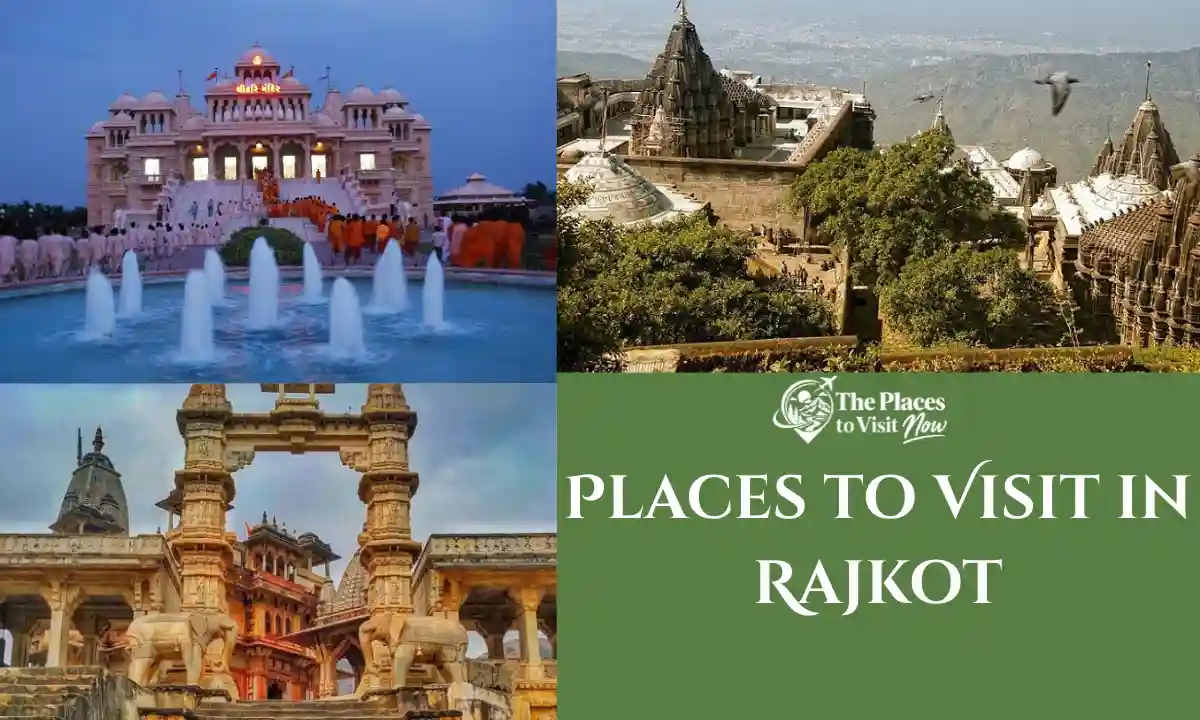
For the vast majority of tourists, Rajkot is only a transit point from which you head to Gir or Dwarka, and any listings related to this place are just a string of parks, zoo, dams and dolls’ museum. It does not do justice to all of what you will find there.
Rajkot has something unique that no other city in India can provide, namely the entire trajectory of Gandhiji’s formation in just one walkable city: his birth house when his father was Diwan; his school where he studied and graduated, and which has been running for 164 years, closed its doors in 2017 and became a museum dedicated to Gandhiji; and institution which he visited and founded in 1921, which is operating till today. Birth place, educational institution and all that was done based on that. Within reach of a couple of kilometers.
On the top of that Rajkot features an almost perfect colonial civic center concentrated in one garden; some mysterious Buddhist caves located only an hour from Rajkot; and one of the most interesting food cultures of Gujarat. The guide will cover all tourist spots to visit in Rajkot, including costs in rupees and worthwhile day trips.
Rajkot at a Glance
| Detail | What to Know |
|---|---|
| Where | Saurashtra, Gujarat, on the Ahmedabad to Dwarka corridor |
| Why it matters | Gandhi’s childhood, schooling and a later institution are all here |
| The standout | Mahatma Gandhi Museum, inside his actual former school |
| That museum | 39 galleries, closed Mondays, around Rs 25 for Indian visitors |
| The colonial core | Jubilee Garden, with museum, library and hall together |
| Best season | October to February |
| Worst season | April to June, when Saurashtra gets very hot |
| Ideal trip length | 1 full day in the city, 2 with day trips |
| Food reputation | Among the best street food towns in Gujarat |
| Also useful | The natural base for Gondal, Virpur, Junagadh and Gir |
The Gandhi Arc, In Order
Do these three in sequence and they add up to something much larger than any one of them.
| Stage | Where | What It Is |
|---|---|---|
| The home | Kaba Gandhi No Delo | The family house where he lived as a boy while his father was Diwan of Rajkot |
| The school | Mahatma Gandhi Museum, former Alfred High School | The school he studied and matriculated from, now a museum about him |
| The institution | Rashtriya Shala | The khadi and education centre he founded here in 1921, still working |
Kaba Gandhi No Delo
A traditional Gujarati house in the old city, after the name of Karamchand, called Kaba, Gandhi’s father, who was the Diwan of Rajkot. Here they resided when Gandhi was a child, and this house is now a museum featuring photographs, artefacts and exhibits related to his life, as well as a khadi and craft area.
This is a humble museum, but it’s the correct one to begin with, as the museum in the school is more sensible after you’ve stood in the courtyard of the house.
Mahatma Gandhi Museum, the former Alfred High School
This is the one that your day should revolve around, and history itself can be attributed to the same.
Established in 1853 with a total of thirty-six students, this school is the pioneer English school of Saurashtra region. The school building that you see was constructed through the funding provided by Nawab of Junagadh and is named after Prince Alfred, Duke of Edinburgh. Gandhi had studied in this school and graduated in 1887. The school existed for 164 years before being shut down in 2017; however, the building has since been renovated and opened up in September 2018 as a museum commemorating the 150th anniversary of Mahatma Gandhi.
This place houses around thirty-nine galleries dedicated to the life of Gandhi, his philosophy, and the freedom struggle, with an interactive and audio visual approach instead of glass showcases.
- Entry is around Rs 25 for Indian visitors and Rs 250 for foreign nationals.
- Open roughly 10 AM to 6 PM and closed on Mondays, which catches out a lot of day visitors.
- The format works unusually well with children, which is rare for a museum of this subject.
- Go in the morning for a quieter run through the galleries.
Rashtriya Shala
Established in 1921 by Gandhi as a National Education Centre and as a centre for Khadi work, it is not a museum like the first two places. It operates, with weaving and craft works taking place and a few exhibits of Gandhi mementos.
Twenty to Thirty minutes, free or minimal cost, and the best place to purchase khadi in Rajkot. It rounds out the experience, since your visit concludes with something he made and not something that was made in his honor.
Places to Visit in Rajkot: The Shortlist
| Place | What It Is | Time Needed | Cost (Rs) |
|---|---|---|---|
| Mahatma Gandhi Museum | His former school, now 39 galleries | 2 to 3 hours | 25, closed Mondays |
| Kaba Gandhi No Delo | His childhood home, now a museum | 45 minutes | Nominal |
| Rashtriya Shala | The institution he founded in 1921 | 30 minutes | Free or nominal |
| Watson Museum | Saurashtra history, Harappan finds, Victoria statue | 1 hour | Nominal |
| Jubilee Garden complex | Lang Library, Connaught Hall and the museum together | 1 hour | Free |
| Rajkumar College | An 1860s princely school, viewed from outside | 20 minutes | Free |
| Rotary Dolls Museum | Over a thousand dolls from across the world | 45 minutes | Nominal |
| Pradyuman Zoological Park | A large zoo on the city edge | 2 hours | 20 to 50 |
| Aji Dam and Randarda Lake | Water-side evening spots | 1 hour | Free or nominal |
| Ishwariya Mahadev Temple | A temple complex with a garden | 45 minutes | Free |
| Race Course and Khau Galli | Evening ground and the food street beside it | 1 to 2 hours | Food only |
| Saurashtra Cricket Stadium | A modern international venue at Khandheri | Match days | Ticketed |
Jubilee Garden: A Colonial Town Centre in One Park
This is the second reason to go slowly in Rajkot, and it is truly unique. Rajkot used to be the capital of the British political agency of Kathiawar, and all the civic buildings that went along with this title have been constructed around one garden, which still exists. Here, in one park, you can see the Watson Museum, Lang Library, Connaught Hall, Masonic Lodge, and also the garden itself.
In most of the cities in India, you can find the colonial civic buildings dispersed and re-designed. Here they exist as a whole in one park, so that in forty minutes you can go through the whole administrative centre of the nineteenth century.
Watson Museum
This museum is named after a British political agent and is considered the best museum in Saurashtra other than in Ahmedabad. It houses artifacts starting from the Harappan period to sculptures to textiles, wooden carvings, and silver ware from Saurashtra along with a big statue made of marble of Queen Victoria.
One hour is sufficient for this museum. Entry fees are very small.
Rajkumar College and the Cricket Thread:
Rajkumar College was established in the mid-1860s to provide education for the sons of princely families in Kathiawar. It is still a functional school with a nice campus that can be seen from the outside. This is one of the reasons why visiting the place will take some extra 20 minutes.
Ranjitsinhji, better known as Jam Saheb of Nawanagar and as one of the best batsmen in his time, went to this college before he went to study in England. The trophy which is the most prestigious first-class competition in India bears his name.
The connection remains alive even today. Saurashtra cricket is organized in Rajkot, international matches are played in Saurashtra Cricket Association Stadium in Khandheri, and a lot of Indian players have come out of this area in the recent years. Try to catch a game when you visit this place.
Eating in Rajkot
The street food culture of Rajkot is very strong in Gujarat and definitely requires some attention.
- Fafda and Jalebi in the mornings, which is a typical Gujarati thing and is executed very efficiently here.
- Penda, Rajkot, a thick and milky sweet famous to the city, along with Chikki.
- Gathiya in different ways, to be consumed as a snack during the day.
- Food streets of the Race Course area in the evenings, where there is only the local people around.
- Kathiawadi thali at least once, which is more spicy and garlic flavored than other Gujarati foods.
Day Trips From Rajkot
Rajkot is also the practical base for a large part of Saurashtra, and two of these are considerably better than anything in the city.
| Destination | Distance | Why Go | Time Needed |
|---|---|---|---|
| Gondal | About 38 km | Naulakha Palace, a royal vintage car garage and an Ayurvedic pharmacy | Half day |
| Virpur | About 60 km | The Jalaram temple, which accepts no donations at all | Half day |
| Khambhalida Caves | About 60 km | Rock-cut Buddhist caves with large carved figures | Half day |
| Wankaner | About 50 km | Ranjit Vilas Palace, a striking Indo-Saracenic pile | Half day |
| Tankara | About 55 km | Birthplace of Swami Dayanand Saraswati | Half day |
| Jamnagar | About 90 km | Lakhota fort, the lake and a marine national park | Full day |
| Junagadh | About 100 km | Uparkot fort, Ashokan edicts and Girnar | Full day |
| Gir National Park | About 160 km | The only wild Asiatic lions in the world | Overnight |
Gondal
The best half-day trip from Rajkot. Gondal was a rich princely state, and what remains is in remarkable condition. The Naulakha Palace has stone-carved balconies and a durbar room, and there is an auto gallery at the royal garage that includes some very old cars, which have been sitting right there in their sheds for one hundred years now.
Virpur
However, one aspect of the temple which is truly unique compared to any other large temple in India is that since the beginning of the twentieth century, this temple has not received any donations in whatever form, from whosoever. Instead of receiving donations, what the temple does is provide free food to all visitors.
One can eat; one cannot donate. It is indeed a rare experience for a country where generally it is vice versa.
Khambhalida Caves
Rock-cut Buddhist caves dating to roughly the fourth century, cut into a limestone outcrop about an hour from Rajkot. The central chaitya entrance is flanked by two large carved Bodhisattva figures, which is the reason to make the trip.
The site is small, unstaffed and almost never visited. Wear proper shoes, carry water, and expect no facilities.
Entry Fees and Costs
These are approximate figures for planning. Rates are revised periodically, so confirm at the counter before you visit.
| Item | Approximate Cost (Rs) | Notes |
|---|---|---|
| Mahatma Gandhi Museum, Indian | 25 approximately | Closed Mondays, allow 2 to 3 hours |
| Mahatma Gandhi Museum, foreign national | 250 approximately | Same galleries |
| Kaba Gandhi No Delo | Nominal | Small museum in the old city |
| Rashtriya Shala | Free or nominal | Buy khadi directly here |
| Watson Museum | Nominal | Closed on some days, check first |
| Jubilee Garden | Free | The whole colonial ensemble |
| Rotary Dolls Museum | 20 to 50 | Good with children |
| Pradyuman Zoological Park | 20 to 50 | Allow two hours |
| Khambhalida Caves | Free or nominal | No facilities at the site |
| Gondal palace and garage | 100 to 300 | Separate charges may apply |
| Virpur Jalaram temple | Free, and donations refused | Free meals served |
| Full-day cab from Rajkot | 2,000 to 3,000 | For Gondal and Virpur together |
| Rajkot to Gir taxi | 3,500 to 5,000 | About 160 km |
Best Time to Visit Rajkot
| Months | Conditions | Verdict |
|---|---|---|
| November to February | Cool, dry, comfortable for walking | Best window of the year |
| October and March | Warm but manageable | Good, and quieter |
| April to June | Very hot across Saurashtra | Avoid, or plan mornings only |
| July to September | Monsoon, green, occasional heavy rain | Workable, and the countryside looks best |
If you are combining Rajkot with Gir, note that the park closes for the monsoon, generally from mid-June to mid-October, so plan that leg for the cooler months.
A 2-Day Plan
| Day | Morning | Afternoon and Evening |
|---|---|---|
| Day 1 | Kaba Gandhi No Delo, then the Gandhi Museum | Rashtriya Shala, Jubilee Garden and Watson Museum, then Khau Galli |
| Day 2 | Drive to Gondal for the palace and car garage | Virpur for the Jalaram temple, back by evening |
If you would rather have the obscure version of day two, swap Gondal and Virpur for the Khambhalida caves and Wankaner. If you are heading on to Gir or Junagadh, do day one and leave the next morning.
Practical Tips Most Rajkot Guides Skip
- Visit the sites of Gandhi in their chronological order, house first then school then institution. It connects three different destinations in a single experience.
- The Gandhi Museum remains closed on Mondays. As the reason for visiting Rajkot, this fact alone should determine your schedule.
- Give yourself two to three hours at the museum. The average time taken by tourists for visiting thirty-nine galleries is forty minutes and many leave in between.
- Gujarat is a state that prohibits alcohol and one must not have any with them.
- Get a driver hired along with the vehicle for Gondal and Virpur. Both these places face each other in the same direction and can be covered on a single day.
- Have fafda and jalebi in the mornings and not evenings as this is what Rajkot does.
- If you are heading to Gir, pre-book permits from the website.
Trivia You Can Use to Sound Like a Regular
- The Mahatma Gandhi Museum is situated in the very school that Gandhi attended. The museum is located in the building that operated as a school from 1853 to 2017 and has been functioning since 2018 as a museum dedicated to its most distinguished student.
- It is the first English school in Saurashtra whose buildings were sponsored by Nawab of Junagadh and named after Prince Alfred, Duke of Edinburgh.
- Rajkot is the only Indian city where you can visit Gandhi’s childhood home, the school that Gandhi matriculated from, and his own educational institution on the same day.
- Ranjitsinhji, after whom the Ranji Trophy was named, received his education at Rajkumar College, Rajkot.
- The temple of Jalaram at Virpur does not accept any donations for several years and still serves free food to everyone every day.
- Two huge Bodhisattva sculptures are present in the entrance to the Khambhalida caves near Rajkot, and they are hardly visited by anyone.
Final Take: One Day, One Story
The sights to see in Rajkot revolve around one theme. You would start at Kaba Gandhi No Delo, his house, then stay for most of the day at the museum in the school where he actually studied and then end at Rashtriya Shala that he started himself. Add to this a visit to the Jubilee Gardens that houses Watson Museum as well as the collection of buildings from the colonial era, and enjoy the Race Course food streets in the evening.
Spend an entire day there, but remember that day should definitely not be a Monday. Should you have another day to spend, take a drive to Gondal where you can see the palace and vintage cars, then go to Virpur where you can eat for free and pay nothing. And finally use Rajkot as a gateway to Junagadh, Jamnagar and the lions in Gir.
Frequently Asked Questions
What is Rajkot famous for?
Its Gandhi connection above all. He spent his childhood here while his father was Diwan, studied and matriculated at Alfred High School, and later founded Rashtriya Shala in the city. Rajkot is also known for Kathiawadi food, its engineering industry and as the base for Saurashtra cricket.
Is the Mahatma Gandhi Museum in Rajkot worth visiting?
This is the perfect reason to make a stopover in Rajkot. It is set up in the same school where Gandhi studied for 164 years until its closure in 2017. The museum has about thirty-nine galleries of interactive displays. Give yourself at least two to three hours to explore this place. It closes every Monday.
How many days do you need in Rajkot?
One full day covers the Gandhi sites, Jubilee Garden, the Watson Museum and an evening of street food. A second day is best spent on Gondal and Virpur, or on the Khambhalida caves and Wankaner if you prefer the quieter version.
What is special about the Virpur Jalaram temple?
It accepts no donations at all, from anyone, in any form, and has done for years. Instead it serves free meals daily to everyone who comes. For a major Indian pilgrimage site, that arrangement is genuinely unusual, and it is about an hour from Rajkot.
Is Rajkot a good base for Gir and Junagadh?
Yes. Junagadh is approximately one hundred kilometres away, while Gir is about one hundred and sixty kilometres distant, and Jamnagar is some ninety kilometres in the opposite direction. Rajkot is the most accessible city in terms of road and rail transport in Saurashtra; thus, it serves as a good base point. Reserve Gir tickets well in advance.
What is the best time to visit Rajkot?
November to February, when Saurashtra is cool and dry. Avoid April to June, when it gets very hot. The monsoon is workable and the countryside looks its best, though Gir is closed for much of it.
Note: Museum timings, closing days and entry charges change periodically, and access to institutions such as Rajkumar College is limited as they are working schools. Everything here is indicative. Confirm locally before your visit.
Also read more: Best Places to Visit in November in India: The Month That Books Out

Leave a Reply