
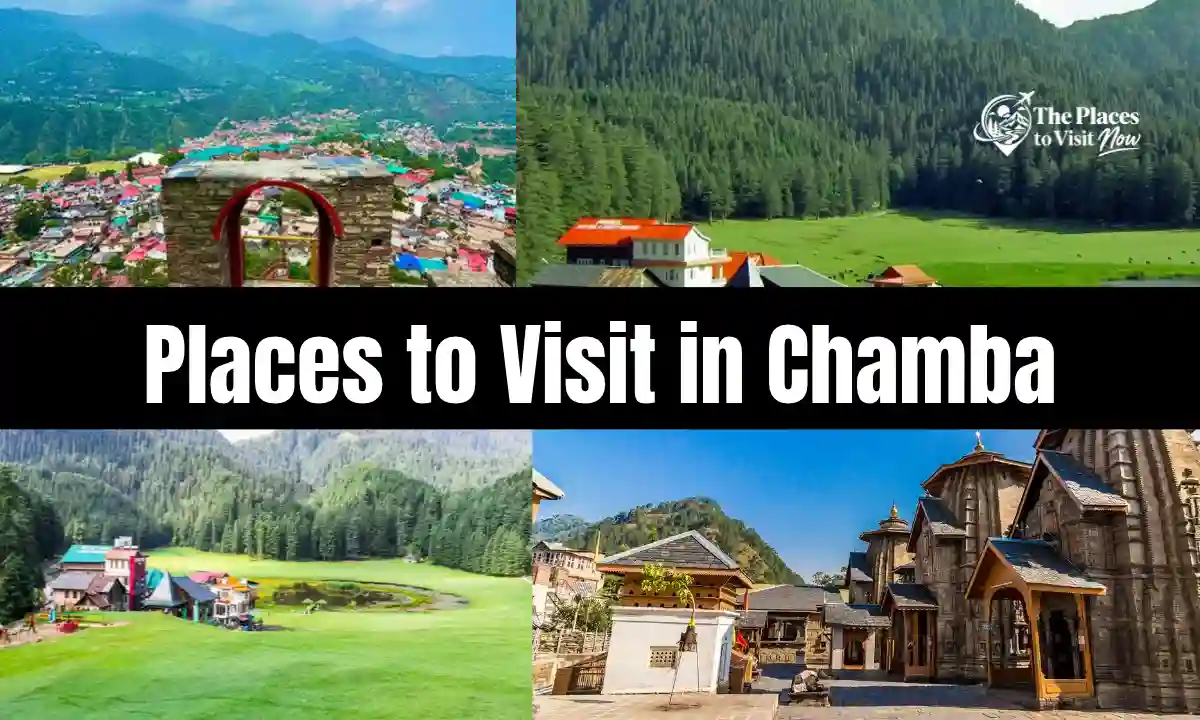
Quite a few tourists arrange their holiday to Chamba anticipating meadows and pine forests, but what they discover is a hot administrative town located at a thousand meters above sea level on the bank of the river Ravi, where the only open space is a cricket pitch, and where the main tourist site is a cluster of stone temples.
They have not been misled. They have read about the district of Chamba, which is vast indeed, and have come to Chamba town, which is not. Meadows lie in Khajjiar. The pine forest can be found in Dalhousie. The hilly regions lie beyond Bharmour. All of them are in Chamba, but none of them is Chamba.
This is the key point to be explained in any guide to Chamba, and I think it should come first. Then comes the discussion of all tourist sights in Chamba, on both sides of the divide, embroidery with no wrong side, and the story of Khajjiar told in reverse by everybody.
Town or District: Work Out Which One You Want
Read this before you book anything, because the two experiences have very little in common.
| If you want | You want | What you will actually get |
| Old temples, museums and a working hill town | Chamba town | A compact town on the Ravi at around 1,000 metres, walkable in a morning, warm by hill standards |
| Meadows and the photographs you have seen | Khajjiar | A saucer-shaped grassland at roughly 1,900 to 2,000 metres, about 24 km from Dalhousie |
| Pine forest, colonial-era streets and a hill station base | Dalhousie | The usual base for this district, and where most package tours actually put you |
| High temples and serious mountains | Bharmour and beyond | A different trip altogether, needing days rather than an afternoon |
The practical result: when you are sold a Chamba package, make sure to find out what Chamba. Also, if you are interested in the place itself, then do not take it for granted that Dalhousie will easily bring you there, since it’s quite a drive and not just a flight.
Chamba Town, and Why It Is Worth the Detour
The city was founded by Raja Sahil Varman, who ruled Bharmour but established his capital in the lower Ravi valley. The name was inspired by his daughter, Champavati, whose story was that her father suspected her of something but could find nothing wrong, and out of an apology to her he built her a temple.
The Lakshmi Narayan temple complex
That’s why one should come here. The primary shrine here dates back to the tenth century and was constructed by Sahil Varman himself; the development of the site continued for next nine centuries, which means that the building process here was going on from the tenth century till the nineteenth.
Something is interesting in history of this place. When in 1678 Aurangzeb demanded that the temple, the ruler Raja Chhatra Singh decided to install gold-covered finials on its roof. It is an answer with some style, and it is those golden finials that still shine in the light.
The Chaugan
This refers to the long stretch of grassland that cuts right through town, measuring some 800 meters in length by 80 meters in width. This was constructed by the British in 1890 from five smaller chaugans. This is where Chamba really thrives: cricket matches, evening strolls, the commercial bazaar lining the side of it and the administrative offices surrounding it.
Rang Mahal and Akhand Chandi Palace
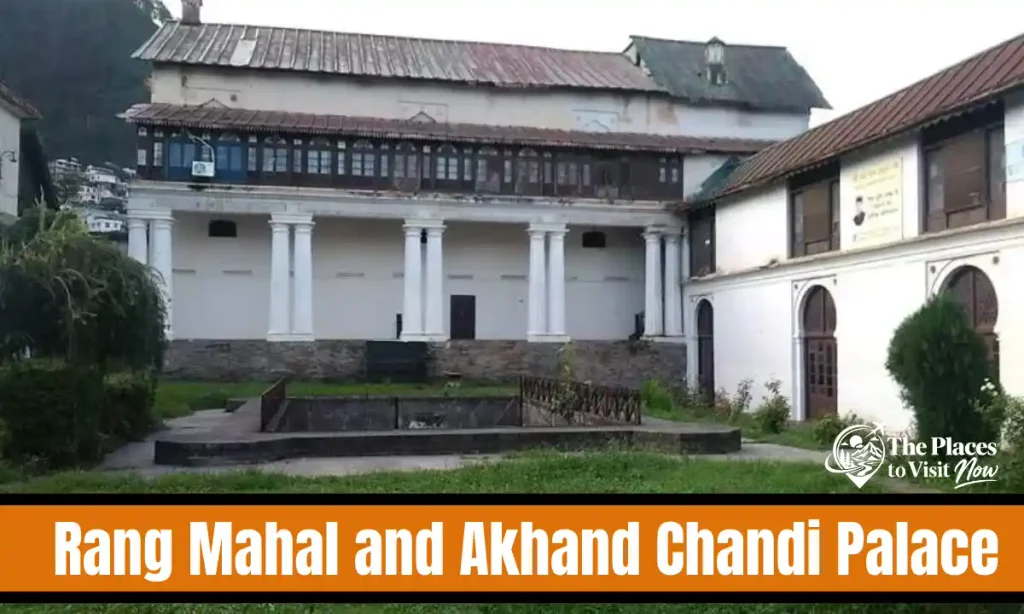
The Rang Mahal is another palace complex from the eighteenth century that boasts frescoes painted by artists Durga and Mangu, son of Durga, during the reigns of Rajas Charhat Singh and Sri Singh.
Lower your expectations about the other one: The Akhand Chandi Palace, built in 1747-1765 by Raja Umed Singh with its green roof, was sold to the government of Rajasthan in 1973 and turned into a government college and district library. It’s a working institution and not a palace museum, so tourists visiting there with hopes to see the latter are usually disappointed.
The Cloth With No Reverse Side
Chamba rumals are embroidery cloths created using a technique referred to as do-rukha or a double satin stitch. This stitching technique works in such a manner that it covers both sides of the fabric without making any knots at all, hence making the resulting fabric look exactly the same when viewed from any side. This is an amazingly fascinating art because the moment you realise what it entails, you can never take it out of your sight anymore.
The base material used is hand-spun and hand-woven unbleached fine mulmul, embroidered using untwisted silk yarn like that used in Punjab’s phulkari. The themes range from Krishna and Raaslila through Ashtanayika to royal hunting parties and games of chaupad; wedding procession, peacocks, horses, and elephants form the borders.
The art was nurtured by Raja Umed Singh (who reigned from 1748 to 1768) who welcomed miniature painters leaving the Mughal courts as their power waned. His successors, Raj Singh and Charat Singh continued to nurture this craft. Court rumals were made by royal women and the elites while folk ones were made by the Pahari women.
Where to see it
Bhuri Singh Museum was opened on September 14, 1908 in the name of Raja Bhuri Singh who suggested it to J. Ph. Vogel for saving the inscriptions from the area. There are original rumals, along with Pahari paintings and royal paintings given to the museum by Raja Bhuri Singh himself, inscriptions carved in stone, coins, jewelry, clothing, arms, and musical instruments here. The building that you see was built in 1975.
Take at least an hour here because even a small museum of this district is unusually good. It is the only museum which will tell you what to see elsewhere in Chamba.
The Khajjiar Story, the Right Way Round
Khajjiar is known as the ‘Mini Switzerland of India,’ and the reason why you will usually hear behind this is that soil from Switzerland was taken and dumped at this location. But it all happened the other way round.
In reality, on 7th July 1992, the Vice-Consul and Head of the Chancery of Switzerland in India, Willy P. Blazer, gave this name to Khajjiar. At that time he put up a sign with the Swiss hiking footpath symbol and the distance to the city of Bern as 6,194 kilometres. This sign is located at Khajjiar.
But the journey was reversed as he carried a piece of stone from Khajjiar back home, which now forms a part of the stone collage at the parliament house in Bern.
Coming to the description of the place, Khajjiar is basically a saucer-shaped meadow at an approximate altitude of 1,900 to 2,000 meters, having a small lake with an islet in it. Vacha weeds have rendered some patches of land spongy, covered with dust layers to form thick earth around the banks, thus the lake is getting smaller by the day.
The Khajji Nag temple located next to the meadow deserves at least the few minutes of your visit to Khajjiar. Constructed in the twelfth century by Prithviraj Singh I of Chamba, it has a golden dome, snake worshipers temple and figures of Pandavas and Kauravas on the mandapa roof.
The Rest of the District
Everything below is in Chamba district but needs its own time rather than an afternoon from the town.
| Where to go | What it is | How much time it needs |
| Dalhousie | The colonial-era hill station that serves as the district’s main base | A night or two, and the usual arrival point |
| Kalatop Wildlife Sanctuary | Deodar and oak forest between Dalhousie and Khajjiar, good for walking | Half a day, easily paired with Khajjiar |
| Chamera Lake | The reservoir on the Ravi, with boating when conditions allow | Half a day from the town |
| Bharmour | The old capital before Chamba, holding the Chaurasi temple complex | A full day each way; stay overnight |
| Manimahesh | The high lake and its yatra, reached on foot from beyond Bharmour | Several days, and strictly seasonal |
| Pangi valley and Sach Pass | Remote high country over a difficult pass | A serious expedition needing days and good weather |
Bharmour deserves a sentence of its own, because it is where the dynasty started before the capital moved down to Chamba around 920 AD. Visiting both in one trip gives you the before and after of the same kingdom.
Minjar Mela
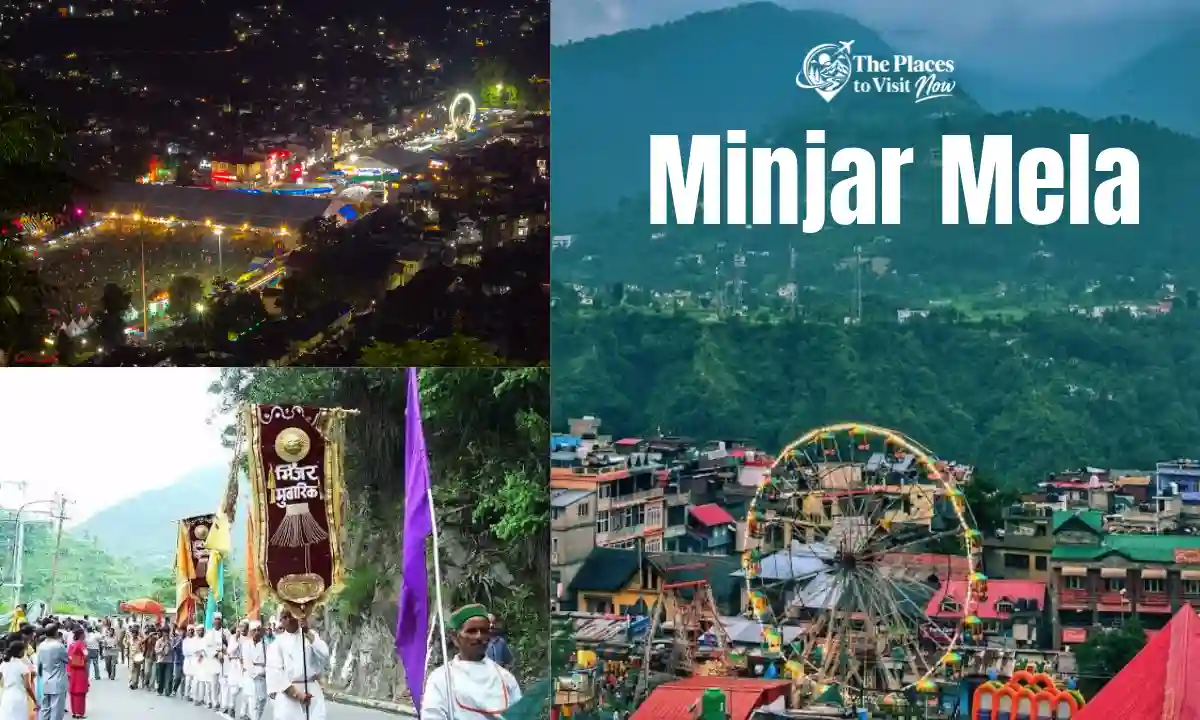
The biggest festival of the year in this town, and the time when the Chaugan takes center stage.
It occurs on the second Sunday of Shravana, which comes around in August, and celebrates both the victory of the Raja over the king of Trigarta in 935 AD and the harvest of paddy and maize. The festival starts with offering of a bundle of paddy tied in gold silk and red cloth and lasts for seven days, with cultural programs such as the parade of chariots with Raghuvira and two hundred more deities riding in them, folk dances, and grand finale with the parade to the river Ravi for offering the items to the river.
This is the week when you will see the whole strength of the town. This is also the week when you do not want to have any peace. Check the dates of the festival for the year you are visiting because the festival is according to the lunar calendar.
What It Costs
Rough rupee figures for two people. Himachal rates shift with season and road conditions, so use these as a starting point rather than a quote.
| What you are paying for | Roughly what it costs | Worth knowing |
| Bhuri Singh Museum entry | A small charge, usually under 50 per person | Carry change; closed one day a week, so check before going |
| Lakshmi Narayan temple | Free | Shoes off, and photography rules vary inside the complex |
| A budget room in Chamba town | 900 to 2,000 a night | The town is cheaper than Dalhousie by a clear margin |
| A mid-range room in Dalhousie | 2,000 to 5,000 a night | Rates climb hard through the summer season |
| Taxi, Dalhousie to Khajjiar and back | 1,500 to 2,500 | Usually quoted with waiting time; Kalatop fits the same trip |
| Taxi, Dalhousie to Chamba town | 1,800 to 3,000 | Longer than people expect, so agree the fare and the stops |
| A genuine Chamba rumal | From a few thousand upwards | Hand-worked pieces take weeks; a cheap one is not hand-worked |
| Meals per person per day | 300 to 700 | Simple Himachali and north Indian food; the town has more choice than Khajjiar |
When to Go
The town and the high country run on different calendars, which is worth holding in mind when you pick dates.
| If you come in | What it is like | What it suits |
| March to June | Warm and clear, and the main season across the district | Everything. The town is hot by midday but the meadows are perfect |
| July to September | Monsoon, green and wet, with landslide risk on the hill roads | Minjar Mela in August; otherwise check road conditions carefully |
| October and November | Crisp and clear with thinning crowds | The best window for the town, the temples and the museum |
| December to February | Cold, with snow at Khajjiar and Dalhousie | Snow seekers. High routes beyond Bharmour close entirely |
Two Ways to Plan It
The short version, three nights
Start off at Dalhousie. Dedicate one day to Khajjiar and Kalatop combined, considering that the two places are located along the same route. Have one complete day to tour Chamba town, which includes the Lakshmi Narayan temple complex, the Bhuri Singh Museum, and the Chaugan.
The longer version, five or six nights
Similar to what was said before, go ahead and head to Chamba for two days, which will allow you to visit the temples and the museum at leisure, and include Chamera Lake as well. Afterwards, drive up to Bharmour for one night to visit the Chaurasi group of monuments and where the state of origin lies.
Practical Tips
- One uses Pathankot as the railway station in this district, and almost all the road travel begins from Pathankot.
- Allow some buffer on each trip as these are mountain roads and despite being small distances they will take time.
- Determine the day when the museum remains closed during the week before scheduling an early visit since this is the only indoor activity available in the town.
- Purchase the Chamba rumal from the museum shop or a reputable place in town and get both sides shown before buying.
- Take an extra layer even in summer as the difference in altitude between the town at a thousand metres and Khajjiar at almost two thousand exists.
- Khajjiar becomes congested in the season and the meadow is fragile, thus walk on the trails and avoid riding on the meadow.
- Dont venture into the higher areas past Bharmour without the guidance of locals, especially around Sach Pass area.
- Book the stay well ahead if Minjar is the objective of the trip as the town becomes full.
Six Pieces of Trivia
- Chamba was established in 920 AD by Raja Sahil Varman, who named the town after his daughter Champavati.
- In 1678, when ordered by Emperor Aurangzeb to destroy the Lakshmi Narayan temple, Raja Chhatra Singh adorned its roof with gold pinnacles.
- The embroidery of Chamba rumal is done in the do-rukha technique, a double satin stitch which leaves no knots and is identical from both sides of the cloth.
- Bhuri Singh Museum was founded on 14 September 1908 at the initiative of J. Ph. Vogel as a museum to protect the stone inscriptions of the region.
- Khajjiar has been described by Swiss diplomat Willy P. Blazer as Khajjiar Mini Switzerland; he erected a sign in 1992 indicating the distance from Bern as 6,194 km.
- He brought along a stone from Khajjiar, which is now part of a stone collage in the Swiss Parliament building.
Final Take
Figure out which Chamba you’re going to first. The intelligent way to proceed through the locations in Chamba would be to make Dalhousie your starting point, then spend one day in Khajjiar and Kalatop, and finally spend an entire day in Chamba for its tenth-century temple complex and Bhuri Singh Museum.
While you’re there, make sure you are shown a Chamba rumal. Hold it up to the light, so you can see both sides of it. Cloth that is embroidered such that it has no wrong side to it is more of a memento from Chamba than a photograph of the meadow. And far fewer people know about it.
FAQ’s
What are the special features of Chamba?
Chamba has gained fame through its architecture of the tenth century and Chamba rumal that are embroidered cloths made using do-rukha or double satin stitch that makes them symmetrical. In addition, Chamba has other sites of interest including Khajjiar and Dalhousie besides Minjar Mela held annually in the month of August in the town.
Are Khajjiar, Dalhousie and Chamba town one and the same place?
No, they are not and getting mixed up here means losing out on your destination. All the three locations are in Chamba district but Chamba town is a riverside town located at 1000 metres above sea level whereas Khajjiar is a lake at 1900 to 2000 metres above sea level and Dalhousie is another hill station some 24 km away from Khajjiar. Make sure what you are booking in Chamba Package is right.
Why is Khajjiar nicknamed Mini Switzerland?
This nickname was given by the then Vice-counselor and Head of the Chancery of Switzerland in India, Willy P. Blazer in 1992 when he installed a sign on 7 July showing the distance between Khajjiar and Bern to be 6194 kilometers. Contrary to popular belief no soil of Switzerland has been brought here but Blazer took one from Khajjiar and has it in the stone collage of the Swiss Parliament building.
What is Chamba rumal?
It is an embroidered cloth produced using do-rukha method, which involves making double satin stitch that gives the embroidered cloth the symmetry since there are no knots. The Chamba rumal is made on the handwoven unbleached cotton cloth called mulmul and the designs include the royal hunt, scenes of Krishna among others. Originals are found in Bhuri Singh Museum in Chamba town.
Can I visit the Akhand Chandi Palace in Chamba?
As a Palace Museum. The palace was purchased by the state government of Himachal Pradesh from the royal family in 1973 and converted into government college and district library. Thus it is a working establishment and cannot be visited as a palace although visitors can view the building and its green roof from outside. One can visit Rang Mahal with eighteenth century frescoes instead.
When is the Minjar Mela conducted?
The Mela is celebrated on the second Sunday of Shravana, which is around August for a week on the Chaugan in Chamba town. The Minjar Mela is meant to commemorate the victory of the Raja of Chamba over Trigarta ruler in 935 AD and the paddy and maize harvest. It concludes with the procession to the banks of River Ravi where offerings are thrown into it.
Also read more: Places to Visit in Kainchi Dham: Timings, Rules and What Is Nearby
Leave a Reply