
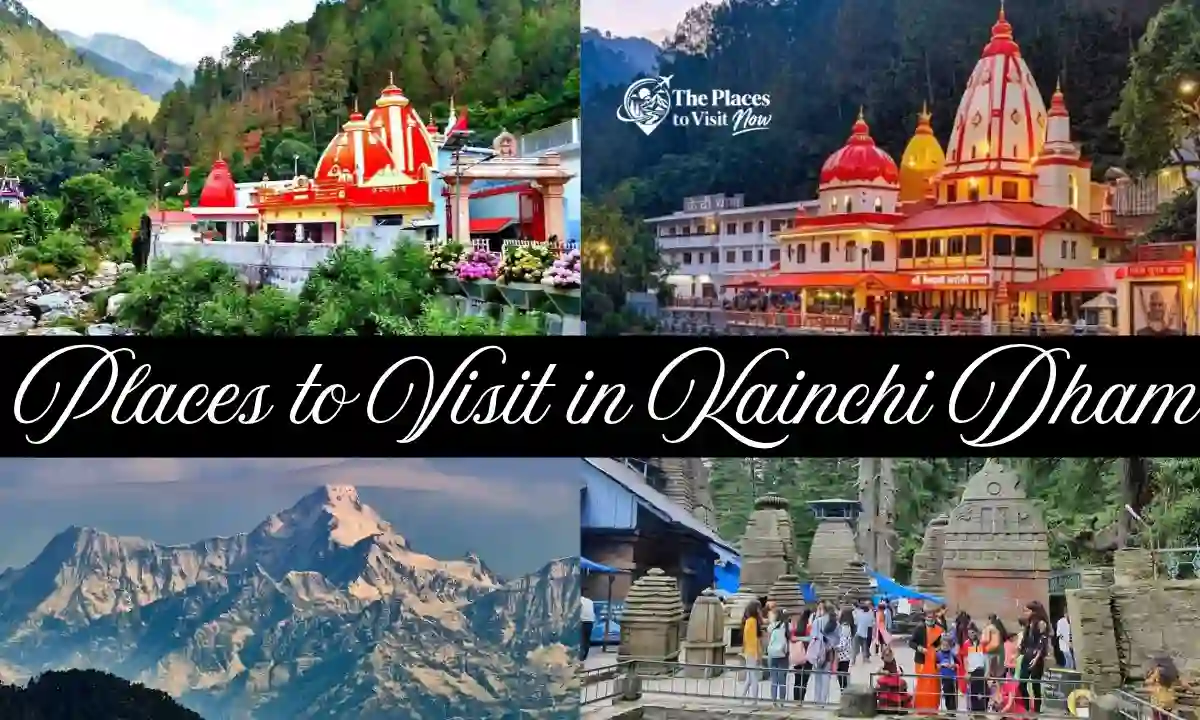
Kainchi Dham is not a series of sites. It is just one single ashram situated at the edge of a little riverbank, against a hilly backdrop along the Nainital-Almora highway, and a thorough visit will take about an hour or two. There is nothing impressive in terms of the architecture. The size of the temple and its surroundings is modest. If you plan for a full day of sightseeing, you will be done in the morning hours and wonder where the time went.
But what it has in excess is a huge crowd of people that come through its two-laned mountain road known by the name of hairpin bends. So, what this really boils down to is timing your visit to the ashram such that the trip to Kainchi Dham makes sense in the first place. And then, pairing your visit with other sites that make it worthwhile traveling there. Below are both. Also included is an interesting story about Kainchi Dham that turns out to be untrue.
The Truth About the Steve Jobs Story
It’s one you’ve likely come across. Steve Jobs visited the Kainchi Dham Ashram, had a spiritual experience with Neem Karoli Baba, and returned a changed man. The story appears on websites, listicles, and even billboards, and it is what makes a lot of people know about it in the first place.
But the dates simply don’t add up. Neem Karoli Baba passed away on September 11, 1973. Steve Jobs travelled to India in 1974, along with his friend Daniel Kottke, and by then, the guru was already dead and the two never got a chance to meet.
And yet the truth is just as interesting, and more credible, than the myth. A young man travelled all the way across the world to meet a teacher, came to realize that he had missed him by approximately one year, but decided to stay at the ashram nonetheless and spend some time with Baba’s followers. No matter what impact it had on him, it was the place and people that made an impact.
So yes, there was still a connection, and here is the part of the truth that does hold: Steve Jobs recommended the place to Mark Zuckerberg during one of the toughest times for Facebook, and Zuckerberg visited the ashram. The link between the two valleys existed; it just didn’t start with a meeting that never happened.
The Number That Made This Place What It Is Today
There is just one number to give you the context for what visits this place the experience that it is today.
The annual number of pilgrims at Kainchi Dham is up from around 800,000 to 2.4 million, according to the government of Uttarakhand in mid-2025 based on the previous year’s numbers. That is three times as many, visiting an ashram accessible via a road that takes a few hairpin turns so sharply, that the ashram is named after them. The word Kainchi comes from the Hindi word for scissors, because of the way the turns look.
So it is not an infrequent occurrence here that creates crowds; it is the defining aspect of a visit here, and all of the advice that will follow from it.
The 15 June Problem
This is the key date for understanding everything in Kainchi Dham, and that is precisely the date you want to avoid planning for as much as possible.
15 June is Pratishtha Diwas, the founding day of the Hanuman temple in 1964 and also the day when the annual Kainchi Dham Mela takes place, drawing huge crowds. It is the most significant day in the year at this ashram and, for the same reason, the most difficult day to simply show up to.
Here is how the restrictions imposed for that day really look, and notice that they last for four days, not one.
| What changes around the fair | How it works on the ground |
| Can I drive to the ashram? | No. Private vehicles are not allowed to reach Kainchi Dham directly during the fair |
| How long do restrictions last? | From the morning of 13 June to the night of 16 June, so four days in total |
| How do I get there then? | Shuttle buses and cabs run from designated parking zones to the temple |
| Where do I park? | Arriving via Haldwani or Kathgodam, use Bhimtal or Vikas Bhawan parking. Arriving via Nainital or Ramnagar, use Metropole or DSA Flats |
| Are there shuttles from the plains? | Yes, services run from Haldwani bus stand, Haldwani railway station and Kathgodam railway station |
| What about other traffic? | Heavy goods vehicles are barred from key routes, with milk, LPG and petroleum exempt |
The honest recommendation: if the fair itself is why you are coming, accept the shuttle system and go with time and patience. If it is not, avoid 13 to 16 June entirely. Those are the four days when the shortest visit takes the longest.
Timings and Rules Worth Knowing Before the Gate
None of this is complicated, but arriving without knowing it is how people end up turned away or uncomfortable.
| What to check | The position |
| When is it open? | Early morning to evening, with hours shifting by season. Winter visitors report roughly 7 am to 6 pm |
| What time should I arrive? | Before 8 am if you can. Weekday mornings are much the easiest |
| Is there a dress code? | Cover shoulders and knees; the ashram asks visitors to avoid short or revealing clothing |
| Can I take photos? | Not inside the temple area |
| What about my phone? | You can carry it, but keep it silent and put away once you are past the gate |
| Do I take my shoes off? | Yes, before entering the temple area |
| How long will I be inside? | One to two hours is normal, or about half a day once travel and parking are counted |
Prasad is distributed to visitors. Take it with your right hand or with both hands. Timings and arrangements do change, so read the notice at the gate on the day rather than trusting a figure you read in advance.
Within the Complex
The ashram was built in 1964 by Neem Karoli Baba, who built it on the land donated by Purnanand and had been selected a couple of years before.
The temple of Hanuman which was consecrated on 15 June 1964 is its centrepiece and the main draw for people. In the following ten years, the complex continued to grow with the installation of statues of Lakshmi Narayan, Parvati, Ganesha, Kartikeya, and Vindhyavasini Devi, as well as a Shiva linga.
What makes the complex unique is not its size. It is its atmosphere and the atmosphere is less thick around eleven in the morning on a Sunday in June than it is at half past seven on a Tuesday in February. The most important element that you have control over is when you walk in the gates.
What to Pair It With
Because the ashram is a half day at most, this is the section that decides whether the trip was worth the drive. Everything here is close.
| Where to add on | How far from the ashram | What it gives you |
| Bhowali | About 9 km | The nearest town, known for its fruit market, and the natural stop for food |
| Nainital | About 17 km | The lake, the Mall Road and the boats; busy but the obvious base |
| Bhimtal and Sattal | A short drive on the other side of Bhowali | Quieter lakes with far fewer people than Nainital |
| Mukteshwar | Roughly an hour on | Orchards, long Himalayan views and a much calmer pace |
| Ranikhet and Almora | Further along the same road | A full second day each rather than an add-on |
The most common sensible shape is Nainital as a base, Kainchi Dham early one morning, and Bhimtal, Sattal or Mukteshwar for the rest of that day. That gets you the ashram at its best hour and fills the day properly.
What It Costs
There is very little to pay for at the ashram itself, so most of the budget is getting there and staying nearby. Figures are indicative and move with season.
| What you are paying for | Roughly what it costs | Worth knowing |
| Entry at the ashram | Free | There is no ticket; prasad is distributed to visitors |
| Taxi from Nainital and back | 1,500 to 2,500 | Usually quoted as a round trip with waiting time included |
| Taxi from Kathgodam or Haldwani | 2,000 to 3,500 | This is where most people arrive by train |
| Shared jeep from Bhowali | 50 to 150 per seat | The local way to cover the last stretch |
| Shuttle during the June fair | A nominal per-head charge | Run from the designated parking zones; carry small notes |
| A budget room in Bhowali or Bhimtal | 1,200 to 2,500 a night | Cheaper and calmer than staying in Nainital itself |
| A mid-range room in Nainital | 2,500 to 6,000 a night | Lake-facing rooms carry a premium and sell out in season |
| Meals per person per day | 300 to 700 | Simple Kumaoni and north Indian food around Bhowali and the lakes |
When to Go
Season matters less here than the day of the week and the hour of the morning, but it still shapes the drive.
| If you come in | What it is like | How it suits this trip |
| October to February | Cool and clear, with thinner crowds outside holiday weekends | The best window. Early mornings are quiet and the roads are easy |
| March to May | Pleasant, and the start of the hill season rush | Fine on weekdays, difficult on weekends as the plains empty upwards |
| June | Peak season, with the fair in the middle of the month | The hardest time to visit casually. Avoid 13 to 16 June unless the fair is the point |
| July to September | Monsoon, with green hills and landslide risk on the ghat roads | Quieter at the ashram, but check road conditions before setting out |
A Half Day That Will Do
Be sure to get out of Nainital or Bhowali early enough to reach there before eight. The ride is short, the curves are slow, and the difference between arriving at half past seven and arriving at ten is the difference between a quiet temple and a queue.
Spend an unhurried couple of hours exploring the complex. Sit and don’t move around too much. Then head back to Bhowali for a late breakfast, and enjoy the rest of the day either in Bhimtal and Sattal for water and tranquillity or Mukteshwar for scenery and another leg to the trip. Home by nightfall.
Practical Advice
- Do everything possible to go there on a weekday morning. There is no other way to make this trip better.
- Look up the traffic plan before going there. Even if it is not the fair, you might need to park at some distance from the ashram and be taken there by shuttle, thus adding the best part of an hour to the process.
- Do not attempt to time your arrival and departure. The roads are full of hairpins and slow traffic, and you may end up spending way more time than it takes to travel a particular distance.
- Come prepared with cash. The ashram requires nothing of you, but shuttles, parking and food require money.
- Bring comfortable clothing, covering the shoulders and legs, and footwear you can remove easily.
- Leave the phone off or on silent. Photography is forbidden in the temple area and people are there to pray.
- If you bring elderly relatives with you, consider the walk to the ashram and the number of steps, which is larger than expected on a crowded day.
- Do not make the entire trip to Kainchi Dham about the ashram itself. Combine it with the lakes or Mukteshwar or you will be back in your hotel by noon.
Six Bits of Trivia
- Neem Karoli Baba passed away on 11 September 1973, while Steve Jobs came to India in 1974, hence the two men did not mSteve Jobs recommended the ashram to Mark Zuckerberg in a difficult period for the young Facebook, and Zuckerberg paid a visit there.
- The name “Kainchi” translates as “scissors” in Hindi and stems from two hairpin bends on the road which form a scissor shape.
- The ashram was founded in 1964 on the land given by Purnanand, and its location was chosen about two years prior.
- The Hanuman temple was consecrated on 15 June 1964, making it the ashram’s foundation day.
- Annual visitors increased from 800 000 to 2.4 million.
Final Thoughts
Come early, stay for a little while, and organize your trip accordingly. The true structure of sites worth visiting in Kainchi Dham is a small ashram that is worth an unhurried hour and which is best approached before eight on a weekday, with Bhimtal and Sattal or Mukteshwar filling the rest of the day.
And remember the two dates. They are the only thing you should keep in mind when organizing this trip. Try to avoid going there on 13-16 June unless the fair is the sole reason for the trip, since private vehicles cannot get there. And if someone tries to convince you that Steve Jobs spent some time with Neem Karoli Baba there, let me assure you that the truth is not so. Steve Jobs came there a year after Neem Karoli Baba passed away and stayed regardless.
FAQ’s
Did Steve Jobs meet Neem Karoli Baba at Kainchi Dham?
No. Neem Karoli Baba left for heaven on 11 September 1973 and Steve Jobs traveled to India in 1974 along with his buddy Daniel Kottke. He spent some time there with other followers but didn’t get an opportunity to meet him. But he recommended the place to another famous tech mogul Mark Zuckerberg.
How many kilometres is Kainchi Dham from Nainital?
Approximately 17 kilometers away from Nainital, located on the Nainital to Almora road and Bhowali being the nearest town at around 9 kilometres away from ashram. Return taxi charges from Nainital come to around 1,500 to 2,500 including wait time. The distance might be short but the trip is slow due to the zigzag nature of roads. That’s why the name Kainchi, which means scissors.
What are Kainchi Dham darshan timings?
Kainchi Dham remains open from morning till evening, depending upon season, but winter visitors report between 7 am to 6 pm. Try to reach before 8 am if possible, especially on weekdays, since that’s the time when the premises are calm. See the notice at gate for that particular day to know exact timing of the arrangements.
Why is 15 June special at Kainchi Dham?
It’s Pratishtha Diwas when Hanuman Mandir was consecrated in the year 1964, and it’s the date of Kainchi Dham Mela annually. It attracts thousands of people. You will not be able to drive in private vehicle up to the ashram premises during mela time from morning of 13 June to night of 16 June.
How long does it take at Kainchi Dham?
Around 1 to 2 hours inside the premises or half a day overall taking into account the time you would require for travelling and parking. Kainchi Dham is an ashram, not a temple complex, thus can be combined with Bhimtal, Sattal, Bhowali, or Mukteshwar in order to spend full day there.
What are the dos and don’ts of Kainchi Dham?
Wear clothes covering your shoulders and knees, take off your shoes before entering into the temple zone, and do not take photos inside it. Mobile phones can be carried but kept off and put in pocket starting from the gate. Prasad is offered to visitors and is taken with the right hand or both hands.
Also read more: Places to Visit in Neil Island: Beaches, Natural Bridge and Tide Timing


Leave a Reply