
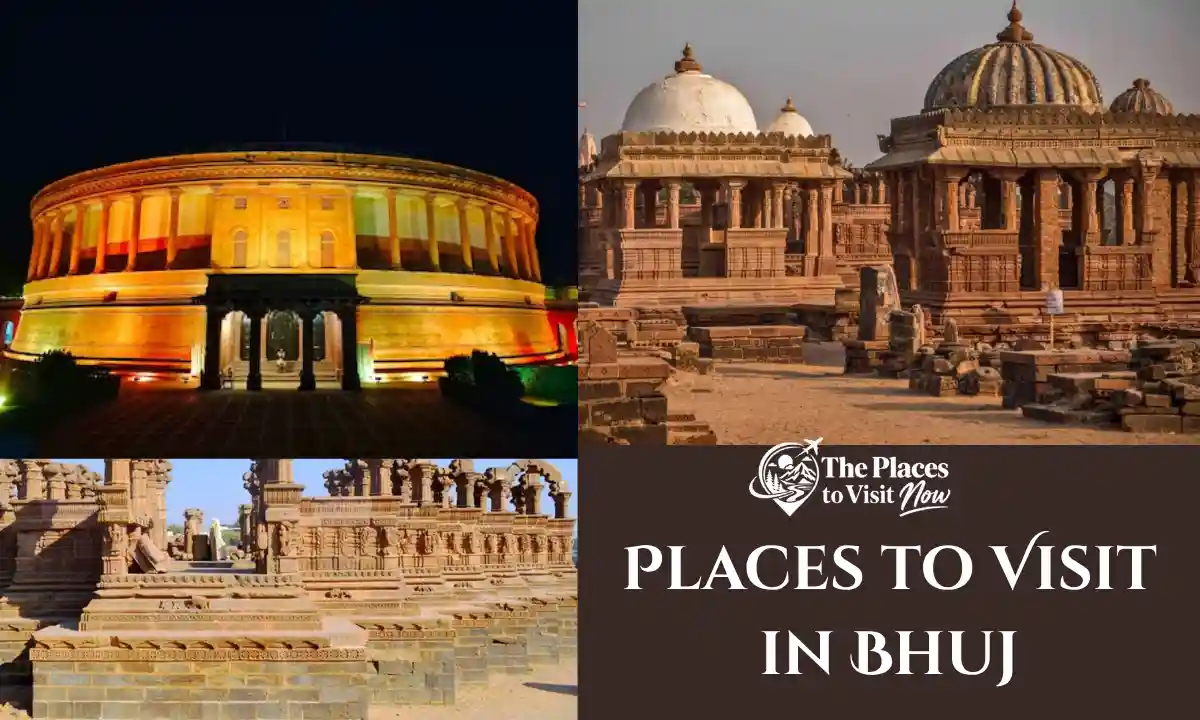
Almost every guide to Bhuj starts you off with a list of palaces and then directs you to the white desert without any explanation of anything.
On the morning of 26 January 2001, an earthquake occurred near Bhuj resulting in almost thirteen thousand deaths in Kutch. The ancient city of Bhuj crumbled to the ground. The Aina Mahal collapsed. The Prag Mahal was ruined. Cenotaphs fell into pieces. Almost every structure featured on the traditional itinerary of Bhuj remained intact after that morning or was restored or rebuilt afterwards.
But this wasn’t even the first instance of an earthquake affecting Kutch. The earthquake in 1819 drastically changed the geography of the region by destroying its main port. Kutch has been shaped and destroyed by the earthquakes two times in its history. This guide introduces you to the sites to see in Bhuj considering this context, plus a map of a crafts village, the rule regarding permits for the Rann, and estimated costs in rupees.
Bhuj at a Glance
| Detail | What to Know |
|---|---|
| Where | Kutch district, Gujarat, the largest district in India |
| What it is | The former capital of the princely state of Kutch |
| Connections | Airport with flights from Mumbai and Ahmedabad, plus a railhead |
| Best season | October to March |
| Rann Utsav | Roughly November to March, peaking in December and January |
| Ideal trip length | 3 to 4 days using Bhuj as a base |
| The defining event | The earthquake of 26 January 2001 |
| The newest landmark | Smritivan, the earthquake memorial on Bhujiyo hill |
| What Kutch is really known for | Hand crafts, each in its own village |
| Book ahead for | December and January, when Rann Utsav fills every hotel |
Two Earthquakes Made This Place
This is the frame that makes Kutch legible, and almost nobody puts it in a travel guide.
1819
A significant earthquake hit the area in 1819 and changed its landscape completely. It caused a ridge to be formed, causing disruption in the process of drainage for the area, as well as altering the way water flowed into this part of Gujarat. Lakhpat, once a prosperous port city built on trade, was now dry since the water had receded from it. The huge walls of the fort that surround it now remain in this deserted town.
2001
In the early hours of Republic Day in 2001, an earthquake near Bhuj claimed lives of nearly thirteen thousand people and leveled down large portions of the ancient city. Restoration works for the historic buildings of Bhuj have gone on for years, are still not finished in some places, and are evident all around you once you know what to look for.
What this creates is a city where, in addition to asking how old is this, the intriguing question in each of your stops is what happened here in 2001 and what has been done since then. This will make your trip much more fascinating than listing dates of construction.
Places to Visit in Bhuj: The Shortlist
| Place | What It Is | The 2001 Story | Time Needed |
|---|---|---|---|
| Aina Mahal | An 18th-century palace of mirrors and glass | Heavily damaged, restored over many years | 1 hour |
| Prag Mahal | An Italian Gothic palace with a clock tower | Badly damaged, partly repaired, still bare in places | 45 minutes |
| Smritivan | The earthquake memorial and museum | Built because of it, opened in 2022 | 2 to 3 hours |
| Kutch Museum | The oldest museum in Gujarat, from 1877 | Damaged and later reopened | 1 hour |
| Chhatardi cenotaphs | Royal memorials in red sandstone | Cracked and partly collapsed, left as ruins | 45 minutes |
| Hamirsar Lake | A 16th-century lake at the city’s heart | Survives, and still fills by old channels | 30 minutes |
| Bhujia Fort | The hill fort above the city | Damaged, now beside Smritivan | 1 hour |
| Sharad Baug Palace | The last Maharao’s residence and museum | Damaged, part of it now a museum | 45 minutes |
| Swaminarayan Temple | A large marble temple in the old city | The original was destroyed and rebuilt | 30 minutes |
| Ramkund stepwell | A square stepwell with carved figures | Survives, quiet and easily missed | 20 minutes |
Aina Mahal and the Sailor Who Built It
This is the greatest story in Bhuj, and it is hardly ever told.
The Aina Mahal or the Hall of Mirrors was built in the mid-eighteenth century for Maharao Lakhpatji. The architect of Aina Mahal was Ram Singh Malam, a Kutchi artisan who, according to legend, was shipwrecked on the way and taken care of by Europeans where he learnt the art of making glass, tiling, enamelling and clocks. He came back and used his newfound skills to create a palace in the desert of Gujarat.
And what he created is truly unusual and amazing. Mirror-walled rooms, Venetian glass, imported tiles, a room meant for pleasure bath complete with fountains and a music platform, gilded doors, and a scroll hundreds of feet long depicting a royal procession. This is a European aesthetic idiom realised by an Indian artisan for a Kutchi ruler, and there are not many such buildings in the world.
The earthquake of 2001 destroyed a lot of it. What you see now has been carefully restored after that event, and some rooms still remain closed to visitors. Rules for photography are different from one room to another, so check with the entry point.
Prag Mahal
Neighboring and completely contrasting in design and architecture is the Prag Mahal. This building was constructed in the Gothic style using Italian influences, by a British engineer between the 1860s and 1870s using marble and sandstone, a large durbar hall and a tall clock tower that provides views of the entire city and the Bhujia Hill.
Prag Mahal suffered extensive damage in 2001 and it has not yet been fully restored. The halls of this building are empty, the chandeliers are missing in some places, and pigeons have taken over the upper levels of this building. The abandoned state of this building may surprise a tourist initially but later on turns out to be its main attraction. This abandoned palace is still functional and is a wonderful photography spot and has been seen in several Hindi movies.
Smritivan: The Memorial on the Hill
Smritivan, which has been constructed since 2022 on the hillside of Bhujiyo Dungar, is one of the most important constructions that have come up in Kutch this century and it is a real piece of architecture.
It spans an area of about 470 acres, including the memorial forest wherein a tree has been planted for every one of the about thirteen thousand people who have died, using the Miyawaki technique in an enormous number of saplings. It has about fifty check dams across the site with the names of the victims written on them, as well as the sun point on the hilltop for the sunrise and sunset, along with a museum which has galleries relating to the earthquake, the rescue, and the reconstruction, and disaster management including the earthquake simulator.
This project has received international recognition, even being featured among the Prix Versailles selections made at UNESCO.
- Allow two to three hours. Most visitors budget forty minutes and end up rushing.
- The museum is emotionally heavy in places. Survivor testimony and the simulator affect some visitors strongly, particularly children.
- The hilltop is exposed. Come early in the morning or late in the afternoon rather than at midday.
- Bhujia Fort sits adjacent on the same hill, so pair them.
The Rest of the City
- Kutch Museum: built in 1877, the oldest museum in Gujarat and home to a significant collection of Kshatrapa inscriptions, as well as other items such as textiles, tribal objects and naval history. Admission fee nominal, closed on certain days.
- Hamirsar Lake: an artificial lake constructed during the reign of Kutch in the sixteenth century, supplied by a system of old canals drawing water from a large catchment area. Town celebrates when the lake is full after the rains. Walking along its shores in the evenings is the most local activity one can do in Bhuj.
- Chhatardi: royal cenotaphs near the city limits, made up of red sandstone structures erected over the place where the bodies of Jadeja kings were burned. A few of these cenotaphs got damaged during the earthquake in 2001 and have been left as they are. Visit these cenotaphs at sunset, when the stones glow.
- Sharad Baug Palace: residence of the Maharao, located in a garden with old trees, and with a section used as a small museum.
- Ramkund stepwell: a small square stepwell with carvings of humans around its sides.
The Craft Village Map
This is the real reason to base yourself in Bhuj. Kutch holds one of the densest concentrations of surviving handcraft traditions anywhere in India, and unusually, each craft belongs to a specific village. You do not go to a market. You go to the village where the thing is made.
| Village | Distance From Bhuj | The Craft | What to Look For |
|---|---|---|---|
| Bhujodi | About 8 km | Handloom weaving | Shawls, stoles and blankets woven by Vankar families |
| Ajrakhpur | About 15 km | Ajrakh block printing | Natural-dye resist prints in indigo and madder |
| Nirona | About 40 km | Rogan art, copper bells, lacquer work | Painted cloth, tuned bells and lacquered wood |
| Hodka | About 60 km | Lippan mud and mirror work | Wall panels and mirrored relief in mud |
| Khavda | About 70 km | Pottery | Hand-thrown, hand-painted earthenware |
| Ludiya | About 75 km | Wood carving and embroidery | Carved furniture and Meghwal work |
| Banni villages | 60 to 80 km | Embroidery in several distinct styles | Mirror work, each community with its own idiom |
Rogan art at Nirona
Of all of these, this is the only one to be sure you catch. Rogan is a form of painting where castor oil is boiled to a paste, combined with pigment, pulled into thin threads using a stylus, and applied to cloth in a way that never actually touches the cloth. The pattern is then folded to create an identical mirror image.
It exists within just a handful of practicing families, pretty much just this one village, and became known nationally when a piece of Rogan work was given as a state gift abroad. You need twenty minutes to see it being done, and you will not see this anywhere else.
Just one piece of advice for the entire craft trail. Purchase directly from the artists themselves in their studios rather than from sellers en route to the Rann, find out what is done by hand and what by machine, and do not negotiate a handcrafted piece down to the cost of a printed one.
The Rann and the North
The Great Rann of Kutch is the main attraction drawing people to Gujarat, and Bhuj is the gateway to it.
- Dhordo and White Rann: some 80 km north of the town, where the salt desert spreads out. It takes the form of white crust as the monsoon moisture evaporates – hence, the season lasts November-March. Full moon nights are the most popular and crowded.
- Rann Utsav: the tent camp and fest held during the whole season, featuring cultural performances, craft booths, and organized tours. It radically changes the landscape, filling up every single hotel room in the district; so, book well in advance for December and January.
- Kalo Dungar: also called Black Hill, it is the highest elevation in Kutch, offering views of the Rann and the old temple of Lord Dattatreya. There is an ancient tradition of feeding jackals in the temple. In the road leading to the hill there is a segment locally known as the magnetic hill, when the car parked on the plain seems to roll uphill.
- Banni grasslands and Chhari Dhandh: a seasonal wetland and grassland, a great place for birdwatching, including flamingos in the appropriate season.
One more practical information. Travel to the Rann region near the border needs a permit, obtained at a checkpost en route. Everyone travelling should have an original document with photograph. Requirements may change periodically, so check with your hotel first.
Mandvi and the Shipyard
Mandvi is 60 km southwest of Bhuj, near the coast, and has a large beach, the Vijay Vilas Palace and its gardens, and much more.
Large ships made out of wood are constructed even today in the shipyards in Mandvi, on the banks of the river, by eye alone, without any drawings. There is no guard or restrictions placed on tourists visiting the yard and watching the process. This is indeed remarkable considering the longevity of the trade.
This can be combined with the beach and the palace to make an enjoyable full-day trip from Bhuj.
Dholavira:
Around 250 km away from Bhuj is the ruins of one of the biggest cities of the Harappan civilisation, which was awarded UNESCO World Heritage status in 2021. The city ruins consist of an excellent network of tanks and drains, a citadel, a middle and lower town and the location of a large inscription in the Indus script that has been termed one of the earliest signboards anywhere.
It is a journey of quite a distance through the Rann on a causeway road and it is not a one-day tour but an overnight stay. Take it up if you like history; skip it if you have three days.
Lakhpat: The Port That Dried Up
A few kilometers from north-west of Bhuj lies a fort with walls surrounding a town which has hardly any population. Lakhpat used to be a thriving port till an earthquake in 1819 changed the course of waterways making it an inland city.
The walls contain a gurudwara that marks the visit of Guru Nanak, a Sufi shrine and lots of silence. This is probably the best example of how an earthquake can affect a town over a period of time in all of India.
Entry Fees and Costs
These are approximate figures for planning. Rates are revised periodically, so confirm at the counter before you visit.
| Place or Activity | Approximate Cost (Rs) | Notes |
|---|---|---|
| Aina Mahal | 50 to 100, camera extra | Some rooms remain closed |
| Prag Mahal | 30 to 60, camera extra | Clock tower climb when open |
| Smritivan museum | 150 to 300 | Allow two to three hours |
| Kutch Museum | 20 to 50 | Closed on some days, check first |
| Chhatardi | Free or nominal | Best at sunset |
| Sharad Baug Palace | 30 to 60 | Small museum in the grounds |
| White Rann entry and permit | 100 to 200 per person | Carry original photo ID |
| Rann Utsav tent stay | 5,000 upwards per night | Peaks over the full moon |
| Camel or vehicle ride at the Rann | 200 to 600 | Agree the price first |
| Dholavira entry | 25 to 50 Indian | Long drive, better as an overnight |
| Craft village purchases | Varies widely | Buy in the workshops, not on the highway |
| Full-day cab from Bhuj | 2,500 to 4,000 | The only practical way to do the villages |
| Bhuj to Dhordo return by cab | 3,000 to 5,000 | About 80 km each way |
Best Time to Visit Bhuj
| Months | Conditions | Verdict |
|---|---|---|
| November to February | Cool days, cold nights, the Rann at its whitest | Best window, and the busiest |
| December and January | Peak Rann Utsav, full moon crowds | Spectacular, but book months ahead |
| March | Warming quickly, season winding down | Good value, fewer people |
| April to June | Extreme desert heat | Avoid |
| July to September | Monsoon, the Rann floods and closes | Green and quiet, but no white desert |
A 3-Day Plan
| Day | Morning | Afternoon and Evening |
|---|---|---|
| Day 1 | Aina Mahal, Prag Mahal, Kutch Museum | Chhatardi at sunset, then Hamirsar Lake |
| Day 2 | Smritivan and Bhujia Fort | Bhujodi and Ajrakhpur craft villages |
| Day 3 | Drive north via Nirona for Rogan art | Kalo Dungar, then the White Rann at sunset |
With a fourth day, take Mandvi for the beach, the palace and the shipyard. With five or more, add an overnight at Dholavira, or Lakhpat if the earthquake story has caught your interest.
Practical Tips Most Bhuj Guides Skip
- Take an original photo ID of all the passengers in the vehicle when traveling towards the North. The Rann permit is only issued from the check post and photocopies will not be considered.
- Make sure you book December and January well ahead. Rann Utsav consumes all the accommodation in the district, including the tent city.
- Use a car with a driver to visit the craft villages as they are scattered around six hundred to seven hundred kilometers and do not have any link via public transport.
- The desert nights are very cold from December to February despite the hot days. Make sure you pack something accordingly.
- Make sure you take permission before clicking artisans at work or in the village houses and make a purchase if you have taken their time.
- Plan enough time to stay in Smritivan as it requires much more time than you anticipate and also remember that visiting the museum is emotionally challenging.
- Kutch is arid like the rest of Gujarat and you cannot bring alcohol in.
Trivia You Can Use to Sound Like a Regular
- Aina Mahal was constructed by Ram Singh Malam, a Kutchi artisan said to be a shipwrecked craftsman who learnt glass and clock making in Europe for several years before returning to his homeland to construct an European-style palace.
- Smritivan planted trees to commemorate the dead in numbers close to thirteen thousand from the year 2001 and has won recognition in the Prix Versailles awards made at UNESCO as the first Indian museum selected.
- The earthquake that struck in 1819 brought about the formation of a ridge across the flat land, altering water movements in the area that made Lakhpat an abandoned port in the interior of the region.
- The Rogan art, practiced at Nirona, involves boiling of castor oil for several hours until it forms a paste and drawing of this paste in form of threads on a stylus that makes light touches to the fabric; this practice remains with a few families today.
- Mandvi still has wooden ships built without any plans, just like it was done centuries ago by shipwrights.
- Hamirsar lake, located at the center of Bhuj city, is fed by a series of channels dug many years ago and the town celebrates the occasion when the lake overflows.
Final Take: Ask What Happened in 2001
Bhuj places make a lot of sense when seen beyond their mere palace status. Aina Mahal for its naval builder, Prag Mahal for the ruins, Smritivan for how Bhuj dealt with its darkest day, Chhatardi at sunset, and the villages for the reason why Kutch is important besides its white desert.
It takes three days to see the city and its crafts and one trip to the Rann. It takes four days for Mandvi and its shipyards and five days for Dholavira or Lakhpat. Book December and January well in advance, have your original ID ready for the Rann permit, hire a driver for the villages, and buy from the workshops and not from the roadsides. But at every palace, just find out what has happened to it in 2001. And then the sightseeing turns to something else.
Frequently Asked Questions
How many days are enough for Bhuj?
Three days include the city palaces, Smritivan, the nearby crafts villages, and an excursion to Kalo Dungar and the White Rann. If you plan to visit the port of Mandvi, it will take four days, and visiting Dholavira or Lakhpat takes five days because these places are far away.
Do you need a permit for the Rann of Kutch?
Yes, for the border area north of Bhuj. It is issued at a checkpost on the way, and you should carry original photo identification for everyone in the vehicle including children. Requirements change from time to time, so confirm with your hotel before setting out.
What is the best time to visit Bhuj and the White Rann?
November to February, when the salt crust has dried white and the days are cool. December and January are the peak of Rann Utsav and full moon nights are the most sought after, so book months ahead. The Rann floods during the monsoon and there is no white desert then.
Which craft villages should I visit around Bhuj?
Bhujodi for handloom weaving, Ajrakhpur for Ajrakh block printing, Nirona for Rogan art and copper bells, Hodka for Lippan mud and mirror work, and Khavda for pottery. Hire a car with a driver, since they are spread across several directions.
Is Smritivan worth visiting?
Yes, and allow two to three hours rather than the forty minutes most visitors budget. It covers 470 acres on Bhujiyo hill with a memorial forest, inscribed check dams and a museum on the 2001 earthquake, and it has been recognised in the Prix Versailles selections announced at UNESCO.
What is special about Aina Mahal in Bhuj?
It was designed in the eighteenth century by Ram Singh Malam, a Kutchi craftsman who learned glass-making, tile work and clock-making during years spent in Europe after a shipwreck. The result is a mirrored, tiled, European-influenced palace in the Gujarat desert, restored after severe damage in the 2001 earthquake.
Note: Entry fees, permit rules, opening days and Rann season conditions change without notice. Everything here is indicative. Confirm current requirements locally before travelling, particularly for the border permit and Rann Utsav bookings.
Also read about: Places to Visit in Barsana: Radha’s Village, and the Day Everyone Gets Wrong
Leave a Reply