
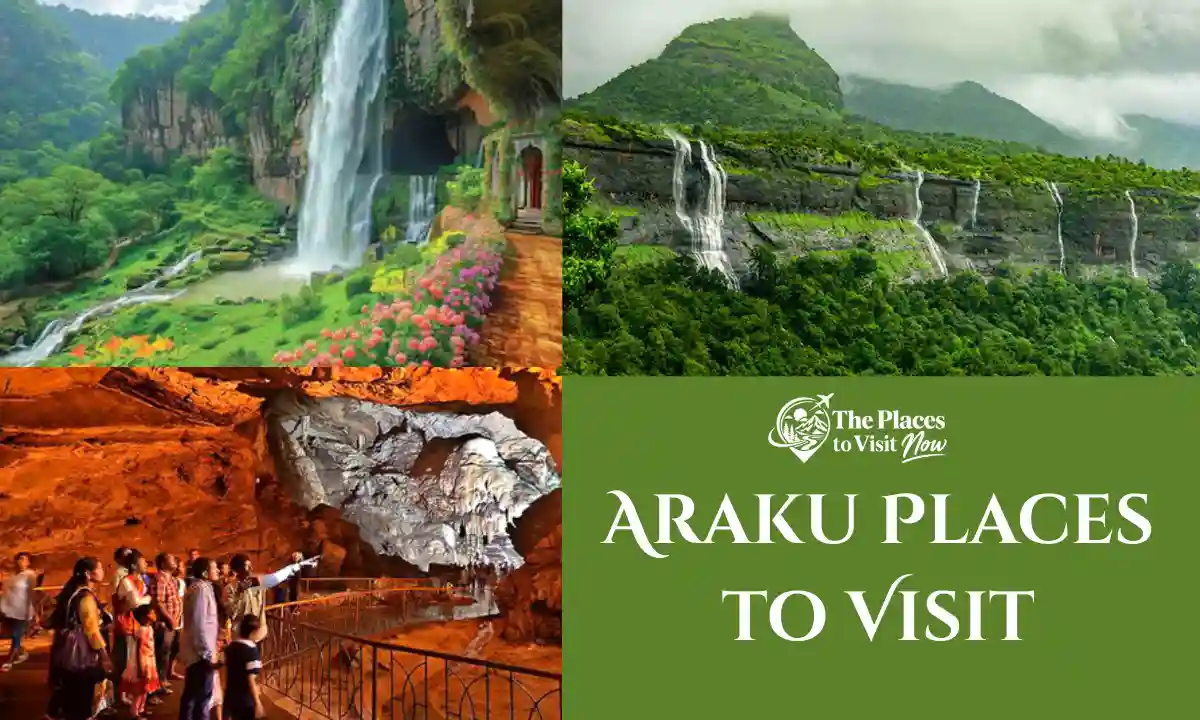
Most guides for Araku offer a list of eight sites, which includes the train from Visakhapatnam as just one of those sites, somewhere below the botanical garden. This is all wrong.
The train ride up is the highlight of your trip. The railway line winds through the Eastern Ghats via 58 tunnels and 84 bridges, and has one station which has been described as being the highest in broad gauge in all of India. At one point, the train runs right over the cave site you’ll visit later in the day. Nothing else compares to it in Araku, and the valley that you’ll see at the end of your journey makes more sense after your journey there by rail.
This guide focuses on the railway route first and then the valley. It includes the sites of interest in Araku, the question of whether or not you choose the train ride or road, cost estimates in rupees and booking suggestions weeks before your arrival.
Araku at a Glance
| Detail | What to Know |
|---|---|
| Where | Alluri Sitharama Raju district, Andhra Pradesh, in the Eastern Ghats |
| Elevation | Around 910 metres in the valley itself |
| Distance from Visakhapatnam | Roughly 111 to 115 km by road, about 3 hours |
| By train | Around 4 to 5 hours on the Kottavalasa to Kirandul line |
| The signature ride | The Vistadome glass-roofed coach on the Kirandul passenger |
| Book the Vistadome | On IRCTC, well ahead, since seats are very limited |
| Best season | October to March |
| Famous for | Tribal-grown Arabica coffee and the Borra Caves |
| Ideal trip length | 2 days, or a long day trip from Vizag |
| The smart move | Train one way, car the other |
The Line Was Built for Iron Ore, Not Tourists
That is the point that puts the entire journey in context.
The Kottavalasa to Kirandul line, also called the KK line, was not built to cart vacationers up the hills. It was constructed to transport the iron ore mined in the Bailadila deposits of Chhattisgarh down to the port at Visakhapatnam for export. The tunneling through rocky mountainsides, the bridges across valleys, even the gradient that has been constructed to pull the loaded ore rakes – all this exists because of industry.
That makes this train unique. Famous scenic hill railways in India are mostly narrow gauge railways constructed for colonial hill stations. This is a functional broad gauge railway line that just happens to pass through some of the most breathtaking landscape in south India and passenger trains merely use it.
On the way up there is Shimiliguda, for many years listed as the highest broad gauge railway station in India at slightly below one thousand meters above sea level. Ghum in Darjeeling, which sits higher, is a narrow gauge line and hence the reason behind both claims.
Train or Road? The Decision That Shapes Everything
Get this right and the trip works. Get it wrong and you either see nothing on the way up or spend your whole day on a platform.
| Option | Time | Approximate Cost (Rs) | What You Get and Give Up |
|---|---|---|---|
| Vistadome coach | 4 to 5 hours | 950 to 1,200 per person | Glass roof, best views, air conditioned. Only about 40 seats, so book far ahead |
| Ordinary passenger class | 4 to 5 hours | 50 to 150 per person | The same route for almost nothing, but crowded and no glass roof |
| Car or taxi | About 3 hours | 3,000 to 4,000 one way | Faster, and you can stop at Ananthagiri, viewpoints and the caves |
| APTDC bus package | Full day | 900 to 1,500 per person | Cheap and organised, but rushed and fixed to the group schedule |
| Train up, car back | Full day plus | Combined | The answer most experienced visitors settle on |
This is how that final row was thought of. The train offers you the climb, the tunnels and the engineering, which is what you cannot get through any other method. The car offers you the flexibility while returning, so that you may stop at the Galikonda viewpoint, the coffee slopes at Ananthagiri, or any other place where the light is favorable. To do both ways via the train means that the second half of the day will be wasted because of standing still, while the same via road denies you the railway line.
The Journey Itself, In Order
Sit on the left side going up for the better valley views, and keep your camera ready from about an hour in.
| Along the Way | What Happens There |
|---|---|
| Kottavalasa | Where the line branches off the main coastal route and starts heading inland |
| The first climb | The train begins ascending the Ghats and the tunnels start coming quickly |
| The long tunnel | One of the tunnels runs over half a kilometre, long enough to feel the train curving inside it |
| Above Borra | A section of the line runs directly over the Borra cave system |
| Borra Guhalu | The station for the caves, and a common place to break the journey |
| Shimiliguda | Just under 1,000 metres, and the highest broad gauge station in India |
| Araku | The line levels out into the valley and the coffee slopes begin |
Araku Places to Visit: The Shortlist
| Place | Distance From Araku Town | Time Needed | Best For |
|---|---|---|---|
| Borra Caves | About 36 km | 2 hours | Among the deepest caves in India |
| Coffee Museum and estates | In town and around | 1 to 2 hours | The tribal coffee story and a good cup |
| Tribal Museum | In town | 1 hour | The valley’s communities and Dhimsa dance |
| Chaparai water cascade | About 12 km | 1 to 2 hours | Natural rock slides and shallow pools |
| Katiki Waterfall | Near Borra | Half day | A short trek to a forest fall |
| Padmapuram Botanical Gardens | About 3 km | 1 hour | Hanging cottages and a small toy train |
| Galikonda viewpoint | On the ghat road | 30 minutes | One of the highest viewpoints in the state |
| Ananthagiri Hills | On the road from Vizag | 1 hour | Coffee slopes and mist |
| Tyda nature camp | About 40 km | Half day | Eco camp, trekking and birding |
| Dumbriguda Falls | About 20 km | 1 hour | Quieter than Chaparai |
| Sangda and Tatiguda Falls | 15 to 25 km | 1 hour each | Monsoon and post-monsoon only |
Borra Caves
At about 705 meters above sea level in the Ananthagiri hills, the Borra Caves extend in a few hundred meters length and descend about eighty to ninety meters in depth. This places them amongst the deepest caves in India. The Gosthani river carved these out of limestone through ages, and continues to come out of them.
They were brought to official notice in 1807 by William King of the Geological Survey of India; however, these caves were well known to the Jatapu, Kondadora and Porja tribes living nearby much earlier, and have spiritual importance for them. There exists a naturally formed formation of Shiva lingam in the cave, revered especially on Shivaratri and the sacred cow.
It is the formations which attract attention, and the guides show the named formations, including those resembling Shiva and Parvati, mother and child, beard of a sage, human brain and a crocodile.
- Entry is nominal, in the neighborhood of Rs 60 to Rs 100, apart from camera entry fees.
- The place has artificial lighting that is colorful and which people either like or feel is too flashy for comfort. It will be good for you to know this in advance.
- Reach there early since in the season period, the car parking lot will get filled and walkways will become a slow queue.
- Steps and walkways tend to be slippery and hence wear good footwear and grab onto the railings.
- It is cool inside even in the summer period; you should take something light to wear.
- If you reach there through the railway route, then alight at Borra Guhalu and not from Araku town, which is more than thirty kilometers away.
The Coffee, and Why It Matters
Araku farms Arabica at about 900 to 1,100 metres, and the coffee here has a history that extends far past a picture stop in a plantation.
These farms are operated mainly by tribal smallholders organized into co-operatives and with an emphasis on organic farming. The Araku brand of coffee has been exported around the world under its own label, even to Europe, which is highly unique for smallholder crops produced in a remote Indian valley.
- Coffee Museum in Araku town deals with all aspects of coffee production and its history in the valley, and also has a cafe. The entry fee is nominal.
- There are a number of estates around the valley and Ananthagiri who provide plantation tours to visitors. Please inquire at your hotel because of varying accessibilities.
- Please buy your coffee from the co-operative stores or the museum and not the roadside shops because the first two help in generating more revenue for the farmers.
- Harvesting and processing usually happen during the cool season, which is also the best time to visit the valley, and hence you can see the drying of the beans on the slopes.
The Tribal Museum and Dhimsa
Araku belongs to a region where there are a lot of tribals, and the museum in the town serves as a fair introduction to the region, with models, instruments, jewelry, dresses and presentations related to the Dhimsa dance, which is a group dance that takes place during festivals and weddings.
Often performances are organized for the tourists outside the museum too. An important point regarding that needs to be mentioned. One should observe the performance, pay the price if asked, take permission before clicking someone and respect their privacy. Any visit to a tribal village should be taken seriously as a visit to a village, not as entertainment.
The Waterfalls
- Chaparai water cascade: Not really a waterfall but an extensive flat rocky surface where the water cascades in sheets creating slides and pools. It is the favorite family destination in the valley and crowded during weekends.
- Katiki Waterfall: Near Borra. Access by a drive in a jeep followed by a walk through a rocky path. At its best after the rainy season and usually a trickle during the dry season.
- Dumbriguda Waterfalls: Not crowded like Chaparai. Small falls in succession.
- Sangda and Tatiguda Waterfalls: Seasonal and you have to ask in advance before driving, as they are very different during dry and wet seasons.
All of these waterfalls are best between September to December, when they have been recharged from the monsoon rains but are not yet drained during the dry season.
Viewpoints, Gardens and Camps:
- Galikonda viewpoint: on the ghat road, located at one of the higher road accessible locations in Andhra Pradesh with the valley sprawling beneath. It is ideal in the mornings when there is no haziness.
- Padmapuram botanical gardens: a small and compact garden with hanging cottages and a mini-train. Approximately an hour’s time is sufficient for Padmapuram botanical gardens.
- Ananthagiri Hills: en route to Vizag, surrounded by coffee plantations and misty atmosphere. It is an ideal location if you are on the road through Vizag.
- Tyda nature camp: an ecotourism camp offering trekking, archery, bird watching, and camping facilities. Approximately forty kilometers from Araku and on the Vizag side.
What to Eat
The food to search out is bamboo chicken, sometimes called bongulo chicken, where chicken is marinated and then stuffed in a bamboo tube and slowly cooked over an open flame, till the aroma of bamboo fills the chicken. This can be purchased from roadside vendors in and around the valley and at Chaparai.
Bamboo chicken usually takes an hour or more to cook, so the wise thing would be to order it on the way to your destination and pick it up later. Other than that, you will have to make do with basic Andhra dishes and lots of rice.
Entry Fees and Costs
These are approximate figures for planning. Rates are revised periodically, so confirm at the counter before you visit.
| Place or Activity | Approximate Cost (Rs) | Notes |
|---|---|---|
| Vistadome coach, one way | 950 to 1,200 per person | About 40 seats, book well ahead on IRCTC |
| Ordinary passenger class | 50 to 150 per person | Same route, no glass roof |
| Borra Caves entry | 60 to 100 | Camera charged separately |
| Borra Caves parking | 50 to 100 | Fills early in season |
| Coffee Museum | Nominal | Cafe attached |
| Tribal Museum | 25 to 60 | Dance performances charged separately |
| Padmapuram Gardens | 30 to 60 | Toy train extra |
| Chaparai cascade | Nominal, plus parking | Busy at weekends |
| Katiki Waterfall jeep | 600 to 1,200 per jeep | Shared options available |
| Tyda nature camp | 1,500 upwards | Tented stays and activities |
| Taxi, Vizag to Araku one way | 3,000 to 4,000 | About three hours |
| Full-day cab within the valley | 1,800 to 2,500 | Covers the main sights |
| Bamboo chicken | 400 to 700 | Order ahead, it takes time to cook |
Best Time to Visit Araku
| Months | Conditions | Verdict |
|---|---|---|
| October to February | Cool, clear, coffee season, waterfalls still running | Best window of the year |
| March to May | Warm but far milder than the plains | Good escape from coastal heat |
| June to September | Monsoon, hills at their greenest, falls in full flow | Beautiful, but ghat roads and visibility suffer |
| September to December | Post-monsoon, strongest waterfall flow | Best specifically for the falls |
A 2-Day Plan
| Day | Morning | Afternoon and Evening |
|---|---|---|
| Day 1 | Early train from Vizag, break at Borra Guhalu for the caves | Continue to Araku, Coffee Museum, Tribal Museum |
| Day 2 | Chaparai cascade, then a coffee estate walk | Drive back via Galikonda viewpoint and Ananthagiri |
If you only have one day, take the early train up, do the caves on the way, see the Coffee Museum and Chaparai, and drive back the same evening. It is a long day and it works, but you will be tired.
Practical Tips Most Araku Guides Skip
- Book Vistadome as early as possible as there are only about forty seats available and it is the most sought after booking for the entire journey. Tatkal booking is released the previous day if you miss out on the regular one.
- Always sit on the left side while going up. This is because the valley slopes down on the left side during your entire climb.
- Disembark at Borra Guhalu instead of returning later. The caves are about thirty kilometres away from Araku town.
- Try not to cover everything through the train alone as once you are down in the valley, there is a lot of travelling around which can only be done in an auto or car.
- Keep cash handy. Credit card transactions are not always available beyond Araku town and there is no mobile reception in the ghats and caves.
- The nights are actually cold from November to February due to high altitude. Pack accordingly even if Vizag had warm weather when you left.
- Bamboo chicken should be ordered in advance and not when you are hungry as it takes one hour or more to prepare.
Trivia You Can Use to Sound Like a Regular
- The railway to Araku is used to transport iron ore from Bailadila to Visakhapatnam harbor, thus making one of the most beautiful rail journeys of southern India a freight route by purpose.
- Shimiliguda Railway Station on this rail line has been recorded for many years as the highest broad gauge railway station in India, being close to a thousand meters high.
- There is a part of the rail track that passes right above the Borra Caves, and the train goes above the caves before entering them.
- Gosthani River comes out of the Borra Caves and flows further, thus making the caves in the first place due to the erosion of the limestone rock.
- Borra Cave complex is officially described in 1807 by William King of the Geological Survey of India, although it was known and sacred for the native tribes of the area for many centuries prior.
- The Araku Arabica coffee is cultivated by the tribal smallholders in 900 to 1,100 meters.
Final Take: Ride Up, Drive Down
Araku places to visit sort themselves out if you understand that the train ride is the main feature. You should catch an early train from Visakhapatnam, if possible, in the Vistadome, stop at Borra Guhalu for the caves, reach the valley by afternoon with the Coffee Museum and the Tribal Museum still open.
Spend your second day visiting Chaparai and walking around a coffee plantation, and come back driving so that you can also stop at Galikonda and Ananthagiri en route. Book the Vistadome many weeks in advance, go there during October and February, and carry some cash and warm clothes. Araku is not a big place to visit and does not need to be so. It is a three hours valley after a four hours train ride and the train ride is the most important part.
Frequently Asked Questions
Is the Araku train worth it?
Sure, and that is the only reason why you should make the journey. The train route goes up the Eastern Ghats through 58 tunnels and 84 bridges, crosses over Shimiliguda just below 1000 meters, and even comes over the Borra Caves once. The Vistadome carriage with the glass roof gives you the perfect view of it.
How do I book the Vistadome coach to Araku?
In IRCTC, as early as when the booking window opens. The coach accommodates only up to forty passengers and gets sold out fast, and costs are generally in the range of Rs 950-Rs 1,200 for a one-way journey. Tatkal tickets are available on the previous day of departure.
Should I go to Araku by train or by road?
Both in one go. Go by train on the way up to see the tunnels, bridges and the climb, and return via car in order to see the Galikonda viewpoint and coffee plantation of Ananthagiri. Going both ways by train will eat up most of your second day.
How far is Borra Caves from Araku?
Two days is comfortable, allowing the train journey with a stop at the caves on day one, and the waterfalls, a coffee estate and the drive back on day two. A single very long day trip from Visakhapatnam is possible but rushed.
How many days are enough for Araku?
Two days is comfortable, allowing the train journey with a stop at the caves on day one, and the waterfalls, a coffee estate and the drive back on day two. A single very long day trip from Visakhapatnam is possible but rushed.
What is the best time to visit Araku Valley?
Between October and February for clear weather and coffee harvest time. For the waterfalls, the best time to visit would be from September to December when the water flow is at its peak. Monsoons are lovely, but the roads through the ghats will be affected.
Note: Train timings, fares, seat availability, entry fees and waterfall conditions listed here are approximate and change through the year. Confirm current details on IRCTC and locally before travelling.
Also read about: Best Places to Visit in June Outside India: The Expensive Month, Spent Well
Leave a Reply