
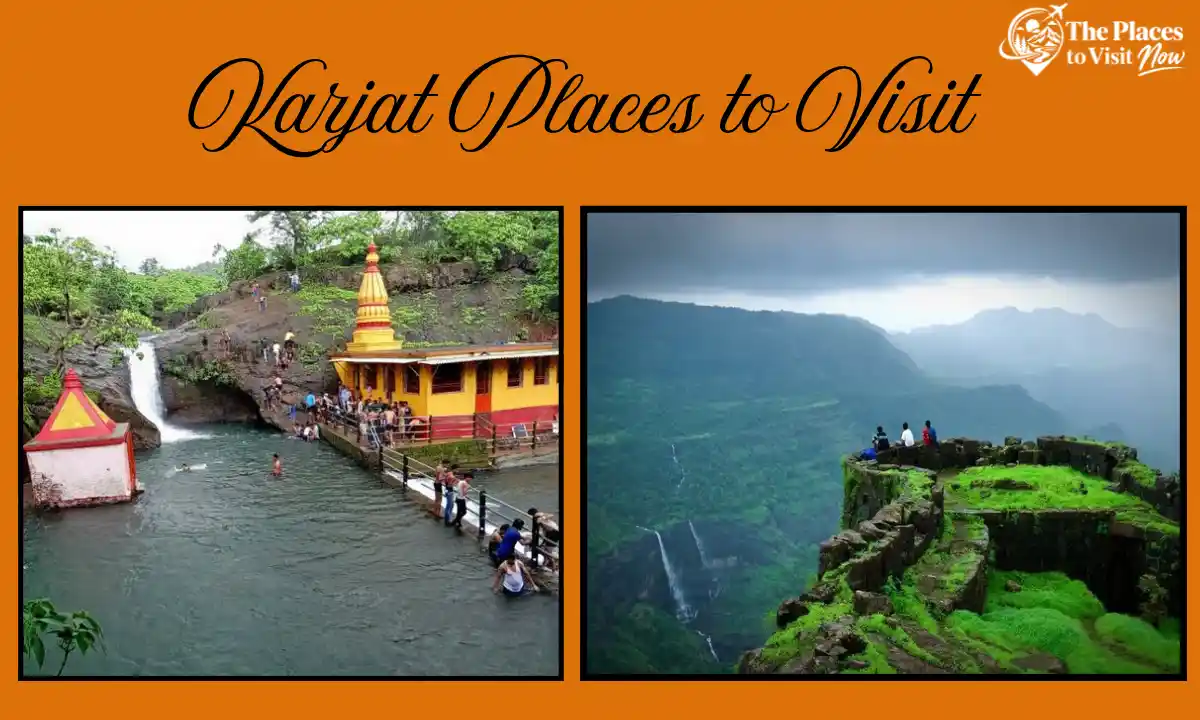
Most Indian tourist spots close down during the monsoon but Karjat springs to life. Between June and September, this part of the Sahyadris does one unique thing that you will not see anywhere else near any major city. Here, waterfalls are formed on the sides of mountains that remain rock for the rest of the year, there is sufficient water in a river to go rafting, a two-thousand-year-old Buddhist cave is blessed by a waterfall coming down from its entrance, and the forts that look plain during January become spectacular due to the mist. Visit Karjat in December and about half of the images that people take from here are nonexistent.
This is possibly the most important thing to know before planning your visit. The following guide has a comprehensive list of places that can be visited in Karjat, with an easy to use table of existence during different seasons, cost estimates in rupees, and also a safety section as the rains that make this place magnificent also make it the most dangerous weekend trip destination from Mumbai.
Karjat at a Glance
| Detail | What to Know |
|---|---|
| Where | Raigad district, Maharashtra, at the foot of the Bhor Ghat |
| From Mumbai | About 65 km, and reachable on a Central Railway local |
| From Pune | About 100 km by road |
| Peak season | June to September, the exact opposite of most of India |
| The signature sight | Kondana Caves with a waterfall over the entrance in monsoon |
| The signature trek | Kothaligad, with a staircase carved inside the rock pinnacle |
| Also nearby | Matheran, India’s only vehicle-free hill station |
| Two-week window | Fireflies in the forests, usually late May into early June |
| Ideal trip length | A weekend |
| The serious caveat | Waterfall and trek accidents here are a real annual problem |
The Reverse Season: What Exists When
Build your trip from this table rather than from a generic list, because several of Karjat’s headline attractions are seasonal in the strictest sense. They are not quieter out of season. They are absent.
| What | June to September | October to February | March to May |
|---|---|---|---|
| Waterfalls | At full flow, the main draw | Reducing, then mostly dry | Dry |
| River rafting | Running, the only window | Not operating | Not operating |
| Fort treks | Green and dramatic, but slippery | Best conditions for walking | Hot and exposed |
| Kondana Caves | Waterfall over the facade | Dry, but the carving is clearer | Dry and hot |
| Fireflies | Over by then | Not the season | Late May into early June only |
| Resorts and villas | Peak demand and peak pricing | Comfortable and popular | Quiet and cheapest |
Practical information on visiting the park. In case you are coming for waterfalls and rafting then there is only one season available which is the monsoon. In case you want to trekk to forts properly then you need to come from October to February when there is dry rock. In case you want to be alone then visit during April.
Why This Town Exists: The Bank Engine Stop
Karjat marks the transition between the plains and the ghat, and nothing but the fact that made the town what it is.
If you travel by train from Mumbai to Pune, the train needs to go up the Bhor Ghat, which is one of the toughest slopes that trains have to cross in the country. The train alone cannot do that; hence other trains, called bankers, are added to help pull the train up the slope, and removed once they reach the top. This is why the town was founded in this place and why a majority of suburban trains terminate here.
Once you know all this, your approach takes on a whole new meaning. The ghat that you are going to ascend was constructed in the nineteenth century and is one of the major railway feats of its time, and the very existence of Karjat as a junction is due to the fact that here the change is necessary.
Karjat Places to Visit: The Shortlist
| Place | Distance From Karjat | Effort | Best Season |
|---|---|---|---|
| Kondana Caves | About 15 km | Easy 1 to 1.5 hour walk | Monsoon for drama, winter for detail |
| Kothaligad, Peth Fort | About 25 km to the base | 3 to 4 hours return | Monsoon or winter |
| Bhivpuri Waterfall | About 10 km | Short walk from the village | Monsoon only |
| Zenith Waterfall | Near Bhivpuri | Short walk, slippery approach | Monsoon only |
| Ulhas Valley | Around the town | Drive and short walks | Monsoon |
| Kondeshwar Temple | About 8 km | Easy | All year |
| Sondai Fort | About 15 km | Short beginner trek | Winter |
| River rafting, Pej and Ulhas | Near town | Guided | Monsoon only |
| ND Studios | About 6 km | None | All year, confirm first |
| Morbe Dam and Kalote Lake | 15 to 25 km | Easy | Monsoon and winter |
| Matheran via Neral | About 12 km to Neral | Toy train or walk up | All year |
| Dhak Bahiri cave | About 30 km | Extremely hard and exposed | Experienced climbers only |
Kondana Caves: A Waterfall Over a Buddhist Facade
Fifteen kilometres away from Karjat, in the vicinity of Kondivade village, there are a cluster of sixteen rock-cut caves from around the first century BCE, directly hewn out of a basaltic cliff. The structure includes chaitya worship chamber, vihara chambers, stupas and pillars, belonging to the time when these hills had trade links between Konkan coastline and Deccan.
The special attraction during the monsoon rains is a seasonal waterfall flowing down the cliff opposite to the entrance of the caves. It is not every everyday experience to have a prayer hall which is two thousand years old lying behind the veil of falling water.
- The trek is a leisurely stroll through the forest for one hour to an hour and a half from the roadhead.
- An earthquake in the first decade of the last century damaged parts of the complex, and some sections have been cordoned off. Do not cross the barriers.
- During the monsoon season, the trail is muddy, and leeches abound. Dress appropriately.
- However, if you would like to study the carving properly, then visit in November or December when sunlight enters and there is no water left.
Kothaligad: The Staircase Inside the Rock
Kothaligad, generally known as Peth Fort for the village located below it, is the most enjoyable trek in the Karjat region and has one truly unique feature.
This hill forms a thin chimney-like pinnacle at the end. You don’t scale the outside to reach the top of the hill. Rather, there is a staircase carved inside the very rock pinnacle leading up to a watchtower located at the peak. There are caves at the peak, including a big cave dedicated to Bhairoba, along with cisterns carved out of the rock.
Tradition has it that this hill was constructed as a watchtower and not a complete fort, considering its size and location, from where one can have visibility up to Bhimashankar, Rajmachi, Siddhagad, and Matheran.
- Take three to four hours to get back from either Peth or Ambivli Village, along with the journey time.
- The internal stairs are dark and wet during the monsoons. So carry a torch and go slow.
- There is a small village down here, where one can have some food and local guides are also available.
- The last section of the pinnacle is exposed. So in case of poor visibility or running wet rocks, better to turn back.
The Waterfalls, and the Part Nobody Writes
Bhivpuri and Zenith are the only two names on every list of Karjat waterfalls, and both are stunningly beautiful when at their best. Fall injuries are a common phenomenon associated with the Sahyadris during the rains. Each year sees reports of deaths through plunging into the plunge pools or being washed away from rocks and becoming marooned by rising streams. Access to particular waterfalls is sometimes banned for safety reasons following such accidents. They are not freak accidents; they happen regularly and predictably due to fast-running water over smooth basalt surfaces.
- Avoid swimming under a waterfall that is flowing. It is by far the most common factor associated with fatalities in waterfalls.
- The water levels will suddenly increase due to rainfall upstream from where you are standing.
- Basalt rock is very slippery and covered in algae. The most common injury at the falls is a slip, not drowning.
- Do not attempt crossing any stream that is above your knees and rapidly flowing. Wait or turn around.
- Alcohol consumption is a major contributing factor for a number of incidents in waterfalls. Many sites do not allow alcohol use.
- If a waterfall has been closed by local law enforcement or park authorities, then it has happened because something went wrong there.
Nothing mentioned should keep you from visiting waterfalls; it only means you should check the conditions of the water before going in.
Dhak Bahiri: The One to Say No To
Bahiri cave located in Dhak, near the Bhor Ghat, figures prominently on many lists of Karjat area adventures but must certainly come with a higher cautionary note than it currently does.
The route requires a very exposed traverse on a ledge with considerable drops in places and parts that need to be climbed rather than walked. There are several past reports of fatal incidents there. This is not an adventurous route for beginners or monsoon trekking. It can be done by an experienced and properly prepared group that has already completed the trek.
For a safer way to enjoy the view, the alternative treks to Kothaligad and Sondai provide you with views of the Sahyadris without nearly as much exposure.
Also read more: Places to Visit in Kumbhalgarh: The Fort Has No Signboards, So This Is Them
Monsoon Rafting
Rafting is one of the few opportunities available near Mumbai to do white water rafting, and it is possible only when the rivers have water, generally from late June to September.
Rafts along the Ulhas and Pej rivers are operated by local providers, generally over a few kilometres of rapids, suited for beginners. You can expect to be provided with a helmet, a life vest, and a safety briefing. If the provider doesn’t provide you with these three things, then leave.
- Book with a reputable provider, and avoid those who try to attract your attention on the roadside.
- Check whether the provider can conduct rafting, otherwise your trip will get cancelled.
- Always bring along some extra clothes and a waterproof bag for your mobile phone.
Fireflies: The Two-Week Window
For a short time during the year, typically from late May to early June, the woods in this region of the Sahyadris play host to fireflies that flash in unison.
This occurs shortly before the onset of the monsoons and ends almost immediately when the monsoon season begins. Several camps and villages located in the vicinity of Karjat hold firefly nights at this time.
- The dates vary from year to year with the weather and are advertised locally only a week or two beforehand.
- Join in groups that keep quiet and dim the lights. Torches and camera flashes will spoil the experience for everyone and also disturb the insects.
- Do not capture or mishandle them.
ND Studios and the Easy Days
ND Studios, located on a vast plot of land near Karjat, was constructed by the art director Nitin Desai, and comprises standing sets of many popular Hindi movies, such as Mughal courtyards and era-specific village streets. The place has become popular as a tourist attraction among families for quite some time now.
One disclaimer. After the passing away of the founder in 2023, the studio has gone through a phase of uncertainty. Make sure to find out whether public tours are functioning before you plan an entire day for this destination.
- Kondeshwar Temple: an old Shiva temple set in the forest environment, nearby and deserted.
- Ulhas Valley: the green valley around the town, ideal when it rains in the monsoon mornings.
- Morbe Dam and Kalote Lake: easily reachable places near the waters, lovely when it rains and during winters.
- Sondai Fort: an easy trek suited for novices and families.
- Pali: the Ballaleshwar temple (one of the eight Ashtavinayak shrines) is accessible as a day trip.
Matheran: The Vehicle-Free Neighbour
Neral, the stop for Matheran, is just about twelve kilometres away from Karjat and that makes it convenient for tourists to visit. This place is the only hill station in India that doesn’t allow motor vehicles. You can reach there via the toy train and then take the shared taxis to Dasturi car park and from there walk, travel by horse or in a hand-pulled rickshaw.
That is the reason why this place is unique in silence and nothing else.
- This toy train operates on a seasonal basis and its operations are put on hold during the rainy season. It is advisable to check on that before planning your trip.
- Bring along slip-resistant shoes. These red laterite paths tend to be slippery due to rain.
- Matheran requires visitors to pay entry fees at the gate.
Costs and Practicalities
These are approximate figures for planning. Rates change with season and operator, so confirm before booking.
| Item | Approximate Cost (Rs) | Notes |
|---|---|---|
| Kondana Caves | Free or nominal | Local guide optional |
| Kothaligad trek, self-guided | Free | Village parking charged separately |
| Local trek guide | 500 to 1,500 per group | Worth it in monsoon |
| Organised trek from Mumbai | 800 to 1,800 per person | Includes transport and breakfast |
| River rafting | 1,000 to 2,000 per person | Monsoon only |
| Firefly night package | 1,200 to 2,500 per person | Late May, dates announced locally |
| ND Studios entry | 500 to 900 | Confirm operations before travelling |
| Matheran entry fee | 50 to 100 per person | Charged at the gate |
| Neral to Matheran toy train | 75 to 400 | Seasonal, often suspended in monsoon |
| Karjat resort or villa, weekend | 4,000 to 15,000 a night | Peaks sharply in monsoon |
| Mumbai local train to Karjat | 20 to 60 | Cheapest way in by far |
| Local cab for a day | 2,000 to 3,000 | For the waterfalls and trek bases |
Two Weekend Plans
The monsoon weekend
| Day | Morning | Afternoon and Evening |
|---|---|---|
| Day 1 | Kondana Caves walk with the waterfall running | Bhivpuri area, then the resort as the rain comes in |
| Day 2 | River rafting if the water allows | Ulhas Valley drive, then back to the city |
The winter weekend
| Day | Morning | Afternoon and Evening |
|---|---|---|
| Day 1 | Kothaligad trek with dry rock underfoot | Kondeshwar Temple, then an easy evening |
| Day 2 | Neral to Matheran on the toy train | Matheran viewpoints on foot, return by evening |
Practical Tips Most Karjat Guides Skip
- Go by train. Karjat is part of the Mumbai suburban network, and a train ticket would be very cheap compared to the cab fare without all the traffic on the ghats on a Sunday evening.
- Look up the weather in the catchment area of the stream you’re going to, not the weather above the stream itself.
- Leeches are common on trekking in monsoon conditions in the Sahyadri ranges. They can be easily handled with long socks, closed footwear and some salt.
- Leave early on the treks. Cloud accumulates through the day, and descending Kothaligad’s internal staircase in the fading light can be rather unpleasant.
- Book your stay in advance for the monsoon weekends. This is the only region in proximity to Mumbai where July is better than December.
- Bring cash. Cash transactions would be common at trek starting points and smaller dhabas.
- Take all your trash out. These waterfall regions get a real beating on every monsoon weekend.
Trivia You Can Use to Sound Like a Regular
- Locomotives pulling trains through the Bhor Ghat uphill journey towards Pune are reinforced by more bankers, which is one reason for Karjat’s status as a junction in the first place.
- The Kondana Caves have been built sometime during the first century BC and during the monsoons, a waterfall flows from the top of the rocky face right outside the prayer chamber.
- Kothaligad is accessed from inside the fort. The rock spire is cut with stairs that will lead you to the top through a watchtower there.
- It is said in local folklore that Kothaligad was built as a watchtower and not as a fort because of its size and visibility.
- Matheran, which is close by Neral, is the only hill station in India where motorized vehicles do not operate.
- For a couple of weeks prior to the arrival of the monsoon, typically around late May, synchronous fireflies illuminate entire trees in the area around Karjat.
Final Take: Pick the Season First
The places to visit in Karjat are not available year-round, which is what makes most tourists leave in disappointment. Monsoon is when you can find waterfalls and rafting at the cascade above Kondana caves. Fort trekking should be done during winter. You may observe fireflies for only two weeks in the end of May. Select the season, and the list will create itself.
During your first visit, make sure you go in July or August, and take a tour to Kondana Caves along with the flowing waterfall and raft if the water level allows. Come back to Karjat in December and visit Kothaligad with its staircase among rocks and also Matheran by the toy train. Use the local train instead of the ghat road, leave early, and be much more respectful towards the water than you see in the pictures. Karjat is the best weekend destination among Sahyadris.
Frequently Asked Questions
What is the best time to visit Karjat?
It all depends on what you wish. The period of June to September is ideal for visiting the waterfalls, rafting, and the cascading of water through the Kondana caves, which do not exist outside the monsoon period. The period from October to February is suitable for trekking inside the fort.
Is Karjat worth visiting in winter?
Yes, but for other reasons. The waterfalls are dry and rafting is not operational, so winter is when one can undertake the trekking activities at Kothaligad and Sondai, admire the Kondana carvings, and include Matheran. Moreover, it is more affordable and significantly less crowded than during the monsoon period.
What is special about the Kondana Caves?
They are a set of sixteen or so Buddhist rock-cut caves dating back to about 100 BCE, including a chaitya hall, viharas, and carved pillars. During the monsoon season, there is a waterfall flowing directly onto the rock face opposite the cave entrance – that’s what attracts most visitors.
Is the Kothaligad trek difficult?
The hike is of moderate difficulty, taking about three to four hours round trip, and recommended for relatively fit novices. The unique feature is that, at the end of the route, a stairway carved into the rock peak will take you to the summit. Take a flashlight because it is both dark and wet inside.
Are Karjat waterfalls safe?
They demand real care. Waterfall mishaps in the Sahyadri hills during monsoons are common issues, and there have been instances where access to certain waterfalls is restricted by authorities. One should never go swimming in plunge pools under flowing water and one should not cross a stream that is flowing rapidly above the knee.
How do you reach Karjat from Mumbai?
By Central Railway local train, which is not only the cheapest but also the fastest way or by road covering around 65 kilometres. The trains which travel from above Karjat to reach Pune add an extra locomotive called banker to ascend Bhor Ghat section.
Note: Waterfall access, rafting operations, firefly dates, toy train services and studio tours all change with season and local conditions. Everything here is indicative. Confirm current status locally before travelling, and follow any restriction issued by police or forest authorities.
Also read more: Places to Visit in Almora: The Ridge That Kept Collecting People

Leave a Reply