
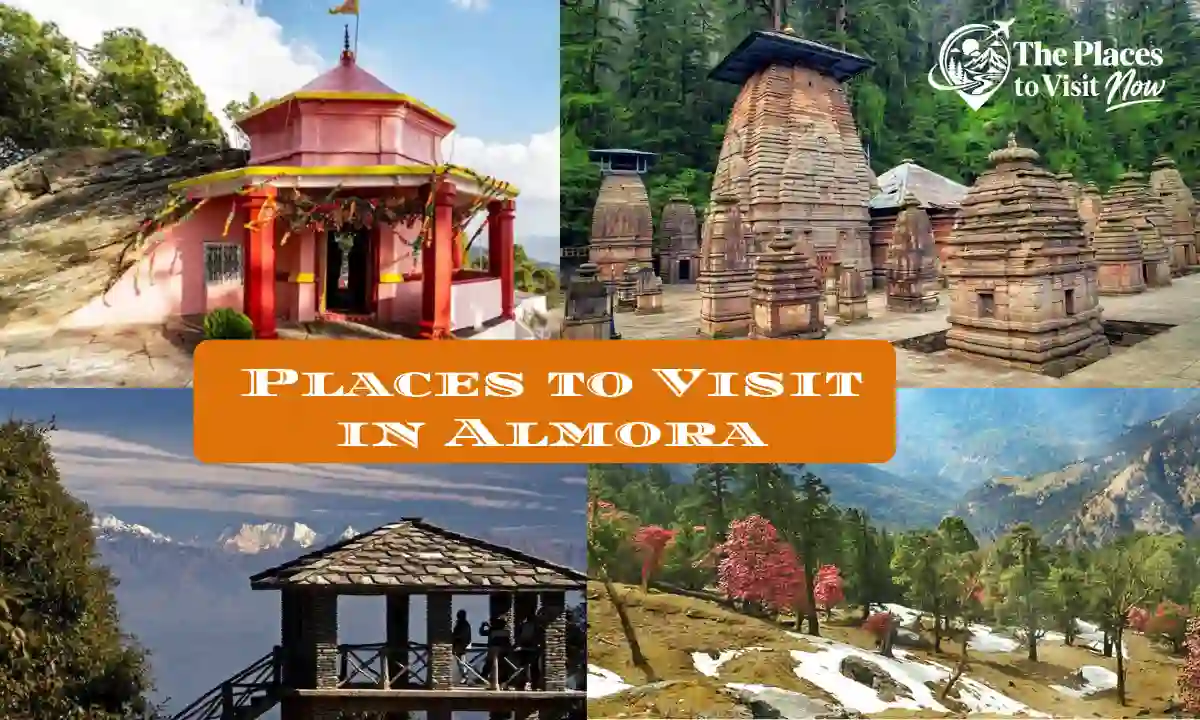
Almora is a little town on a horseshoe-shaped ridge in Kumaon, established as a capital in the sixteenth century, where there is a bazaar lined with stones and wooden gates. On paper, it is one of the many charming Uttarakhand mountain towns.
But what it really is, is one of the strangest cultural forces in India. Vivekananda went there to meditate on a ridge above it in 1890. Uday Shankar established a centre for dances and culture in the late 1930s. Nehru wrote his autobiography when he was incarcerated in the local jail. Tibetan Buddhist scholars took to living on the same ridge, followed by Beat poets and musicians. A spur of pine trees eight kilometers out of a Kumaon market town somehow managed to attract a disproportionate amount of culture from the twentieth century, and much of it can be walked in an afternoon.
This guide provides information on the places of interest in Almora with the history behind each, as well as the temples, stone shrines in Jageshwar and Katarmal, costs in rupees, and an honest investigation of the spiritual claims that every article about this town makes without verification.
Almora at a Glance
| Detail | What to Know |
|---|---|
| Where | Kumaon, Uttarakhand, on a ridge in the Almora district |
| Elevation | Around 1,600 metres in town, higher on the ridge above |
| Founded | In the sixteenth century as the Chand dynasty capital |
| Nearest railhead | Kathgodam, around 90 km |
| The famous ridge | Kasar Devi and Crank’s Ridge, about 8 km north |
| The unmissable temple | Chitai Golu Devta, hung with bells and written petitions |
| The big day trip | Jageshwar, a valley of over 100 stone temples |
| Best season | March to June and September to November |
| Ideal trip length | 3 days, and 2 nights minimum on the ridge |
| Local sweet | Bal mithai, and it is genuinely worth the detour |
The Ridge That Collected People
This is the frame worth carrying with you, because once you know it, the walk up to Kasar Devi stops being a viewpoint trip and becomes something else.
| Who | When | What They Were Doing Here |
|---|---|---|
| Swami Vivekananda | 1890 | Meditated on the ridge above Almora |
| W.Y. Evans-Wentz | Early 20th century | The scholar behind the English Tibetan Book of the Dead |
| Lama Anagarika Govinda | Mid 20th century | The German-born Buddhist teacher and writer settled here |
| Alfred Sorensen, known as Sunyata | Decades | A Danish mystic who lived on the ridge for many years |
| D.H. Lawrence | 1920s | Reportedly spent two summers in the area |
| Uday Shankar | Late 1930s to early 1940s | Ran an influential dance and culture centre at Almora |
| Jawaharlal Nehru | 1930s | Worked on his autobiography while imprisoned here |
| Timothy Leary | 1960s | Wrote much of his Psychedelic Prayers on the ridge |
| Allen Ginsberg and Ram Dass | 1960s | Part of the counterculture wave that followed |
| Cat Stevens and George Harrison | 1960s and 70s | Among the musicians drawn to the ridge |
Shankar’s institution certainly merits much more attention than it is currently receiving. For several years in the late 1930s, the town of Almora became home to perhaps the single most significant experiment in Indian performing arts, and many individuals who would go on to become significant figures in Indian dance, theater, and cinema spent time there, including Shankar’s younger brother, Ravi.
The Energy Claim, Honestly
Each and every article written on Kasar Devi says the same things – the ridge lies at an anomaly in the Van Allen Belt, there are just three such places in the world with Machu Picchu and Stonehenge being the other two, and NASA has researched this spot.
The truth needs to be told here, however. The Van Allen belts are areas with charged particles that exist at high altitudes as a result of their attraction by Earth’s magnetosphere. The only known region where the inner belt touches the surface of our planet is the South Atlantic Anomaly which extends over the South Atlantic Ocean and South America, but not the Kumaon Himalaya. There is no known research by NASA which talks of Kasar Devi being among the three geomagnetic hotspots and the information seems to be spreading via travel literature citing each other.
Which doesn’t make it any less worthy of a visit. People have been visiting this ridge to spend time sitting in silence for more than a hundred years already; it is an actual experience of tranquility that comes with amazing views and a real cultural background. This is much more interesting than an unverifiable physics fact.
Places to Visit in Almora: The Shortlist
| Place | Distance From Almora | Time Needed | Best For |
|---|---|---|---|
| Kasar Devi Temple | About 8 km | 2 hours | A 2nd-century shrine and the famous ridge |
| Crank’s Ridge | Just beyond the temple | 1 hour | The counterculture history and pine silence |
| Chitai Golu Devta | About 8 to 12 km | 1 hour | Bells and written petitions to a god of justice |
| Nanda Devi Temple | In town | 45 minutes | The town’s main shrine and its September fair |
| Almora bazaar | In town | 1 to 2 hours | Stone-paved lanes and carved wooden facades |
| Bright End Corner | About 2 km | 1 hour | Sunrise and sunset over the Himalaya |
| Jageshwar Dham | About 35 km | Half day | A deodar valley with over 100 stone temples |
| Katarmal Sun Temple | About 25 km | Half day | A 9th-century sun temple, rarely visited |
| Binsar Sanctuary | About 33 km | Half day | A wide Himalayan panorama from Zero Point |
| Lakhudiyar | About 20 km | 1 hour | Prehistoric rock paintings beside the road |
| Kausani | About 50 km | Full day | Gandhi’s ashram, tea gardens and peak views |
| Deer Park and Simtola | 3 to 5 km | 1 hour | Easy pine walks close to town |
Kasar Devi and Crank’s Ridge
The temple stands atop a pine ridge around eight kilometers away from the town, situated approximately 2,100 metres above sea level. The construction of the temple is said to have been completed around the second century. The temple is small, but what attracts people here is the location itself. You can enjoy a nice long sight of the Himalayas, along with a very rare sense of calmness and tranquillity.
A short walk away from the temple is a ridge called Crank’s Ridge or Hippie Hill, named during the 1960s. At present, it is a leisurely village of cafes, studios, guest houses, and foreigners who stay for a longer period of time.
- Travel either at sunrise or sunset. The sunlight is flat during midday and it is also crowded.
- Spend two days on the ridge as opposed to just doing a day trip. This is a place where things happen slowly.
- Cell phone connectivity and even card transactions are inconsistent. Get cash beforehand in Almora town.
- The Kartik Purnima Fair, which takes place between October and November, is the major festival for the temple.
- Make sure to wear warm clothes after sunset. The temperature drops rapidly once the sun sets here.
Chitai Golu Devta: The Temple You Can File a Case At
This is the strangest thing in Almora and the thing that visitors will never forget.
Golu Devta is worshipped in all Kumaon as a god of justice, and the Chitai temple has a tradition unique to all of India. People submit their complaints in writing using papers like those that can be used in the court and pin them in the temple just the way they do when they want to lodge a complaint. Surrounding them hang an estimated hundred thousand brass bells that were hung there by the grateful people who had their complaints answered.
It is really amazing to walk around. These written complaints are true disputes over land, family matters, work, and injustice presented to the deity since the complainant felt he was not going to get anywhere else.
- Read some of the petition papers, if you can read in Hindi. This is the whole idea behind visiting here.
- Do not take photos of the individual petitions from a close distance. These are private documents and confidential ones too.
- Bells are available at the entrance, if you want to donate one.
- Visit early. The place remains crowded till midday.
Jageshwar: A Valley of Stone Temples
Thirty-five kilometres from Almora, in a dense deodar valley, is a group of more than a hundred stone temples that were constructed in the time period of around the seventh to twelfth centuries.
The temples vary from small shrines that are about the height of one man to larger constructions. All of them are crammed together in the form of a cluster by a stream with the deodars above them. This place is considered to be a Jyotirlinga by many. This is an ASI heritage site with a site museum consisting of recovered sculpture.
It is the atmosphere that makes this temple cluster unique among others in India. Thick forest, running water, no noise, and lots of stone make it unique. Visit during mornings, spend at least two hours here and visit Dandeshwar which is nearby but is generally missed by everyone.
Katarmal: The Sun Temple Nobody Visits
About twenty-five kilometres outside Almora lies a ninth century temple of the sun, erected by the Katyuri dynasty, surrounded by many small subsidiary shrines, atop a hill overlooking the valley of Kosi.
It is one of very few important sun temples in all of India, and it is virtually never visited. The short climb from the road is not only peaceful and lonely, but rich in stone carvings. Much of the fine original woodcarving that existed in the temple had been moved to the National Museum in anticipation of thefts, which should be known ahead of time since you will expect to see them where they should be.
Katarmal and Jageshwar taken together form a much more productive day than yet another viewpoint.
Almora Town Itself
- The bazaar: the older commercial streets, such as Lal Bazaar, are laid out in stone pavements and feature Kumaoni-style architecture, with wooden doorframes lavishly adorned with carvings. The best hour in Almora!
- Nanda Devi Temple: the main temple of the town with some interesting stone carvings and the place where the Nanda Devi festival takes place during September.
- Bright End Corner: not far from the town, the place where all sunrises and sunsets happen, with a long string of mountains behind on a clear day.
- Deer Park and Simtola: nice pine walks just several kilometers away, suitable for a leisurely morning.
- Copperware: there is a centuries-old tradition of making copperware by beating the metal here in Almora; you can buy it straight from the workshops and not in souvenir shops.
- Bal mithai: the local sweet, consisting of dark khoya with white sugar balls and singori packed in leaves. Both of them are real regional delicacies and not tourist concoctions.
Lakhudiyar: Prehistoric Paintings by the Roadside
Approximately twenty kilometres from Almora, on the way to Barechhina, there is a rock shelter above the river Suyal which has paintings done in black, red, and white depicting humans in rows which seem to be in dance formation and also animals and geometrical shapes.
It is small, unspectacular and can easily be missed while driving. This is the oldest trace of man in the region, by far. Spend twenty minutes if you are on your way to Jageshwar.
Binsar and the Panorama
Thirty-three kilometres away from Almora lies the Binsar Wildlife Sanctuary which has a forest of oak and rhododendron and has a viewpoint called Zero Point offering a panoramic view of the Himalayas and includes Nanda Devi, Trishul, Nanda Kot, and Panchachuli when viewed from Zero Point on a clear day.
- It is advisable to wake up early to catch views from the sanctuary, since clouds start building during the course of the day.
- There is a fee to enter the sanctuary per head and per vehicle.
- The distance between Zero Point and the parking point is approximately a kilometre and a half.
- Visitors can expect only a few wildlife sightings. The forest, the birds, and the view are what visitors should expect.
Around Almora
| Destination | Distance | Why Go | Time Needed |
|---|---|---|---|
| Kausani | About 50 km | Gandhi’s ashram, tea garden and a long peak view | Full day |
| Baijnath | About 70 km | Ninth-century temples beside the Gomti | Full day |
| Bageshwar | About 75 km | A confluence town with an old Shiva temple | Full day |
| Ranikhet | About 50 km | Golf course, cantonment calm and forest walks | Full day |
| Nainital | About 65 km | The lake town, busier and more commercial | Full day |
Kausani is the one most people add. Gandhi stayed there and wrote a commentary on the Gita, and the ashram is still there, along with a tea estate and a view that he described in terms that have been quoted ever since.
Entry Fees and Costs
These are approximate figures for planning. Rates are revised periodically, so confirm at the counter before you visit.
| Place or Activity | Approximate Cost (Rs) | Notes |
|---|---|---|
| Kasar Devi Temple | Free | Small shrine, short walk from the road |
| Chitai Golu Devta | Free | Bells sold at the gate |
| Nanda Devi Temple | Free | Busiest during the September fair |
| Jageshwar Dham | Free or nominal | Site museum charged separately |
| Jageshwar site museum | 25 to 50 | Closed on some days |
| Katarmal Sun Temple | Free or nominal | Short uphill walk from the road |
| Binsar Sanctuary, Indian | 150 to 250 per person | Vehicle charged separately |
| Binsar vehicle entry | 200 to 500 | Confirm at the gate |
| Lakhudiyar rock paintings | Free | Roadside, easy to miss |
| Taxi, Kathgodam to Almora | 2,500 to 3,500 | About 90 km, three hours |
| Full-day cab from Almora | 2,500 to 3,500 | Covers Jageshwar and Katarmal together |
| Auto to Kasar Devi | 300 to 500 | About 8 km uphill |
Best Time to Visit Almora
| Months | Conditions | Verdict |
|---|---|---|
| March to June | Warm days, rhododendron in spring, clear mornings | Best all-round window |
| September to November | Post-monsoon clarity, the finest peak views of the year | Best for the Himalaya |
| December to February | Cold, occasional snow, very quiet | Atmospheric, but layer up |
| July and August | Monsoon, green and misty, landslide risk on the roads | Peaks usually hidden |
If the Himalayan view is your reason for coming, prioritise October and November. Post-monsoon air is the clearest of the year, and that is when Binsar and Bright End Corner actually deliver what the photographs promise.
A 3-Day Plan
| Day | Morning | Afternoon and Evening |
|---|---|---|
| Day 1 | Almora bazaar walk and Nanda Devi Temple | Chitai Golu Devta, then Bright End Corner at sunset |
| Day 2 | Lakhudiyar on the way, then Jageshwar | Katarmal Sun Temple on the return leg |
| Day 3 | Binsar at first light for the panorama | Move up to Kasar Devi, ridge walk at sunset |
Better still, invert it. Base yourself on the Kasar Devi ridge for two nights and day-trip down into Almora, since the ridge is where you will actually want to spend your evenings.
Practical Tips Most Almora Guides Skip
- It’s better to stay on the ridge than down in the town except where you need the bazaar at hand.
- Binsar and Bright End Corner should be done in the morning; clouds gather every day and afternoon views are unpredictable.
- Cash is recommended; card acceptance at both ridge temples and at small temples is poor, and signal is also erratic.
- Rent a vehicle with a driver for Jageshwar and Katarmal one-day tour; there is public transport but that would take the whole day.
- Do not take photos of the individual petitions at Chitai. These petitions are private and left in trust.
- Prepare for cold nights year-round; the ridge gets cold quickly even in June after dark.
- Buy the bal mithai at the old, reliable bazaar vendors and not bus-stand vendors; eat it within days.
Trivia You Can Use to Sound Like a Regular
- Crank’s Ridge got its name in the sixties, and Timothy Leary wrote most of his Psychedelic Prayers on Crank’s Ridge.
- Evans-Wentz, who translated the Tibetan Book of the Dead into English, had spent some time on Crank’s Ridge, together with the German-Buddhist guru Lama Anagarika Govinda.
- Uday Shankar had organized an institute for dance and culture at Almora towards the end of the thirties which went on to influence Indian performing arts despite its short-lived existence.
- Chitai has a tradition of petition being made to Golu Devta in the manner of a court case, written down usually on stamped paper, and the bells tied to the temple symbolize those whose petitions have been fulfilled.
- Katarmal, a ninth century sun temple, twenty-five kilometres from Almora, is one of the very few important sun temples in India and is rarely visited by anyone.
- It is claimed that the site of Kasar Devi is located on one of the Van Allen belts’ anomaly point along with Machu Picchu and Stonehenge but such a claim cannot be substantiated by any published research work, and the belts are actually very high up in the atmosphere.
Final Take: Stay on the Ridge
There are three destinations in Almora that stand out. First, there is the town, which offers a stone-paved market, wooden carvings on its walls, the Nanda Devi temple, and an excellent spot for enjoying the sunsets. Second, there is the stone itself, which offers you Jageshwar with its deodar valley of temples, sun temple in Katarmal and ancient paintings in Lakhudiyar. Third, there is the ridge, which is Kasar Devi and Cranks Ridge. And that is why Almora – this small Kumaon town – has one hundred years of unusual cultural past.
Three days should be enough. Spend two of your days exploring the ridge. Go to Binsar and see the views at dawn; then spend a whole day in Jageshwar and Katarmal, and stay at Kasar Devi during the evening hours. You should come in October or November if you want to see the Himalaya. Enjoy the ridge, which is one hundred and thirty years of people coming here to meditate, and not the scientific claim that no one can prove.
Frequently Asked Questions
What is Almora famous for?
Its ridge top location and the Himalayan scenery, Kasar Devi Temple, Crank’s Ridge with its counterculture background, the Chitai Golu Devta Temple with its bells and notes, Jageshwar temple complex made of stones, and locally the sweet “bal mithai.”
Is the Kasar Devi Van Allen Belt claim true?
This fact is often stated but rarely proven. The Van Allen belts are located much higher than our atmosphere, and the closest approach point of the inner Van Allen belt is the South Atlantic Anomaly, not the Himalayas. There is no study confirming the ridge as one of only three spots on Earth. Nevertheless, the ridge is certainly worthy of a visit because of its atmosphere and scenery.
How many days do you need in Almora?
Three days works well. One for the town, Chitai and a sunset point, one for Jageshwar and Katarmal together, and one for Binsar at dawn plus the Kasar Devi ridge. Spend at least two of your nights on the ridge rather than in town.
What is special about Chitai Golu Devta Temple?
Golu Devta is considered a deity of justice, and his devotees present their complaints in writing, using court papers, just like they would do for a legal case. There are hundreds of thousands of brass bells that have been hung at the temple, each one presented by a devotee whose complaint has been fulfilled.
Is Jageshwar worth visiting from Almora?
Yes, and it is the best day tour from the city. About a hundred temples made up of stones were constructed somewhere between the seventh and twelfth centuries AD in a narrow valley of deodar trees, which is around thirty-five kilometres away from the city. Combine this with the sun temple of Katarmal.
When is the best time to visit Almora?
March to June for warm days and spring rhododendron, and September to November for the clearest Himalayan views of the year. Avoid July and August, when the monsoon hides the peaks and brings landslide risk on the hill roads.
Note: Entry fees, sanctuary charges, temple timings and road conditions change periodically. Everything here is indicative. Confirm current details locally before travelling.
Also read about: Places to Visit in Kumbhalgarh: The Fort Has No Signboards, So This Is Them

Leave a Reply