
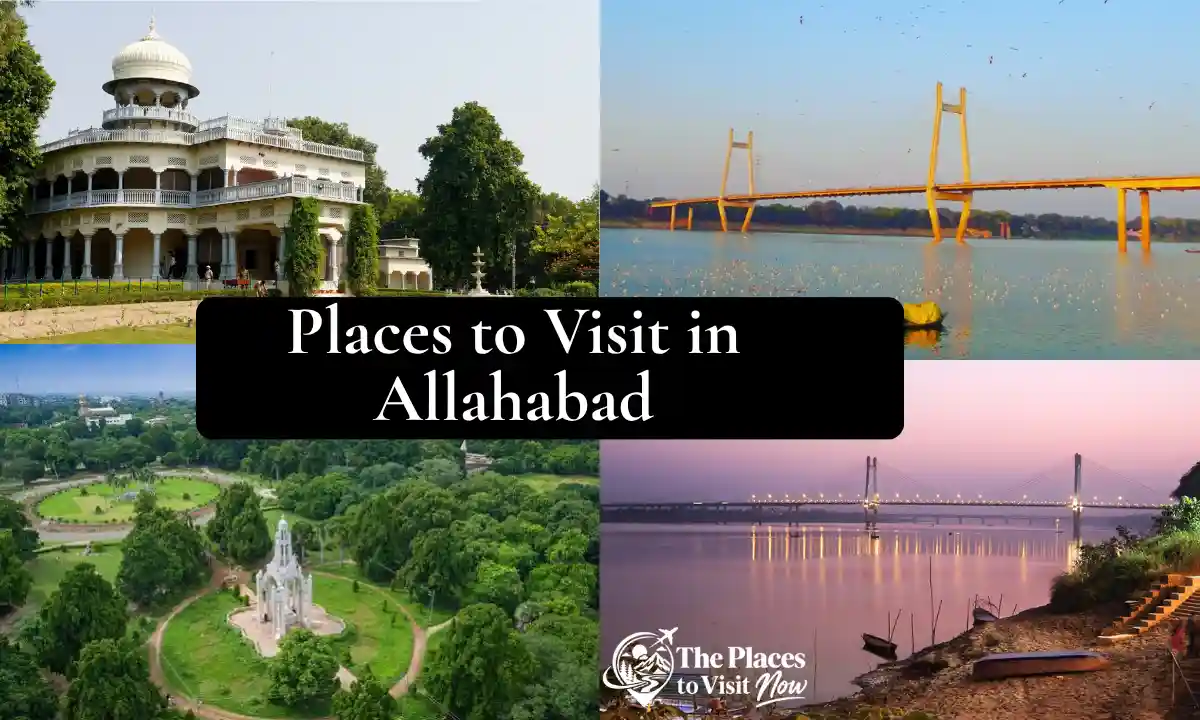
Every tour of Allahabad starts with the Sangam. And it should. Because the junction of Ganges and Yamuna with Saraswati joining them invisibly is what has made this city relevant for two millennia.
What is hardly ever mentioned is that there is another story behind this city. The treaty signed here in 1765 gave the right to the East India Company to levy revenue in Bengal, Bihar and Orissa, which would be pretty much as close as it gets to the constitution of British colonial rule in India. The 1858 proclamation by which India was transferred from the East India Company to the Crown took place here. The family which spearheaded the fight for independence of the country and then ruled it as free, had their home in this city. And in 1975, the court ruling here triggered a sequence of events leading to the Emergency.
This city has played a part in turning around the direction of the whole country four times in the last two hundred years, and you can walk to all four places in one afternoon. This tour guide provides the list of places to visit in Allahabad together with their historical context, approximate entry fees
Allahabad at a Glance
| Detail | What to Know |
|---|---|
| The name | Officially Prayagraj since 2018, still widely called Allahabad |
| Where | Southern Uttar Pradesh, at the confluence of the Ganga and Yamuna |
| The main sight | Triveni Sangam, reached by boat from the ghat |
| The annual event | Magh Mela, every January and February |
| The big one | Kumbh every six and twelve years, with Maha Kumbh in 2025 |
| Best season | October to March |
| Worst season | May and June, when temperatures cross 44 degrees |
| Ideal trip length | 2 days, or 3 with a day trip |
| The access catch | Allahabad Fort is an army installation with limited public entry |
| Railway | Prayagraj Junction, on the main Delhi to Kolkata line |
Allahabad or Prayagraj? A Quick Note
The new name, Prayagraj, was announced for the city in 2018. Most railway stations, government signs, and most maps have now adopted the new name; many others, however, continue to refer to it as Allahabad.
In practice, both names are functional and will serve you well in a conversation. For train tickets and addresses, search Prayagraj. Prayagraj Junction was formerly known as Allahabad Junction, and there are multiple stations within the city, so do not confuse the two.
Four Turning Points, One City
This is the frame worth carrying around with you, because it turns a fairly ordinary looking city into something considerably more interesting.
| Year | What Happened | Where You Can Stand |
|---|---|---|
| 1765 | The Treaty of Allahabad granted the East India Company revenue rights over Bengal, Bihar and Orissa | Allahabad Fort, where the negotiations centred |
| 1858 | The proclamation transferring India from the Company to the Crown was read out | Minto Park, now Madan Mohan Malaviya Park |
| 1920s to 1940s | The Nehru family home served as a centre of the freedom movement and was donated to the nation | Anand Bhavan and Swaraj Bhavan |
| 1975 | A High Court judgment against a sitting Prime Minister triggered the Emergency | Allahabad High Court, viewed from outside |
The park that no one comes to is Minto Park. This is a very basic park near the river Yamuna, having a white marble column with four stone lions on top, commemorating the 1858 proclamation. The park is very humble in its design considering it commemorates an event that was the most important in Indian administration history.
Places to Visit in Allahabad: The Shortlist
| Place | What It Is | Time Needed |
|---|---|---|
| Triveni Sangam | The confluence, reached by boat | 2 hours |
| Allahabad Fort | Akbar’s fort, with restricted public access | 1 to 2 hours |
| Ashoka Pillar | One column carrying three empires’ inscriptions | Inside the fort |
| Patalpuri Temple and Akshayavat | An underground shrine and a sacred banyan | Inside the fort |
| Bade Hanuman Temple | A reclining Hanuman the river bathes each year | 30 minutes |
| Anand Bhavan | The Nehru family home, now a museum | 1.5 hours |
| Swaraj Bhavan | The older house, donated to the Congress | 45 minutes |
| Khusro Bagh | Mughal garden tombs, quiet and beautiful | 1 hour |
| All Saints Cathedral | A Gothic cathedral known as Patthar Girja | 30 minutes |
| Chandrashekhar Azad Park | Where the revolutionary died in 1931 | 1 hour |
| Allahabad Museum | Inside the park, with Azad’s pistol | 1 hour |
| Minto Park | The 1858 proclamation site | 20 minutes |
| Allahabad University | The Oxford of the East, founded 1887 | 30 minutes |
| Alopi Devi Temple | A shrine with a cradle instead of an idol | 30 minutes |
| Nagvasuki Temple | An old riverside temple above the Ganga | 30 minutes |
Triveni Sangam
The Ganga comes in dirty brown and thick. The Yamuna comes in green and clear. At their confluence, you can see the separation in the water, and it is said that the third river Saraswati meets in the underground stream, giving rise to the name Triveni meaning three braided streams.
The confluence point itself is reached by rowing boats from the ghats. The fee is per boat, not per head, and it is negotiable. It increases significantly during mela period. Booths are arranged at the confluence point for people wishing to take a dip there.
- Go early morning. This is the reason why one visits this place.
- Settle your boat fare, time of the ride and whether the waiting time is included before getting into the boat.
- Put on a life preserver, and do not overload the boat, however, pressurized the boatman might be.
- Women at the Sangam generally take bath in their clothes. Have a spare and a towel ready.
- Do not buy the wrapped offerings that are forced on you at the ghat.
Allahabad Fort: The Access Rules Nobody Explains
This fort was erected by Akbar in 1583 at the site of the Yamuna river bank near the confluence, and it is the biggest fort of Akbar. The fort is an ASI monument of national importance, but in addition, it is also an active Indian Army garrison, and this is the only information that is missing from all the tourist sites.
In other words, you will not be able to simply wander inside it. There is one part with the Patalpuri temple and Akshayavat tree that can be accessed through a separate gate and usually it is open for tourists. The access to other parts of the fort, including Ashoka pillar is limited and depends on the current situation, and usually they are open more during Magh Mela and Kumbh.
The Ashoka Pillar: one column, three empires
This is the most extraordinary piece in the city and also the most difficult to find.
The gleaming sandstone pillar erected by Ashoka in the third century BCE bears the edicts of the Mauryan ruler. A few centuries hence, Samudragupta inscribed the longest eulogy in Sanskrit language on the same pillar called Prayag Prashasti, which is the single most important document historians can depend on about the spread of the Gupta dynasty. A few more centuries hence, Jahangir added another inscription.
One stone pillar with the writings of the emperors of the Maurya, Gupta, and Mughal dynasties within a fort that belongs to yet another emperor. There is no other such place in all of India and located within a military cantonment, where few people even get to see it.
Patalpuri and the Akshayavat
Patalpuri is an underground temple that can be accessed via steps from the fort, with idols and low lighting. Next to this is Akshayavat, the immortal banyan, a tree that has mentions in ancient literature and has links to Ramayana.
This tree has an interesting story behind its origin. After the British seized the fort in the eighteenth century, access to the actual location was restricted, and the nineteenth century visitor notes that a fake stump was planted near the Patalpuri Temple, and this was called as the branch of the real tree despite the locals knowing this fact.
Anand Bhavan and Swaraj Bhavan
Two houses on the same compound, and in between a very large part of the twentieth-century Indian history!
Swaraj Bhavan is the older house, which was purchased by Motilal Nehru and donated by him to the Congress Party to be used as their headquarters. Anand Bhavan is the other house, which was constructed later by the family and they continued living there. The house has been donated to the nation and now stands converted into a museum. The rooms are maintained as they were, with the family’s library, furniture and personal collections. And the museum takes you through the story of the freedom struggle through the documentation available in this house and through their photographs.
- Irrespective of your political inclinations, the weight of history in these two houses is quite significant. Indira Gandhi was born in this house. Gandhi had come and stayed in this house. Several decisions that influenced the freedom struggle have been taken in these rooms.
- Visiting both the houses separately requires separate tickets.
- The place remains closed on Mondays.
- Taking photographs in the preserved rooms is restricted.
- The Jawahar Planetarium located in the same compound conducts regular shows.
Temples of Allahabad
- Bade Hanuman Temple, near the Sangam: This is the only large temple in the whole of India that has the idol of Lord Hanuman reclining and not standing. It is below ground level and during floods, water comes inside to cover the idol, which is believed to be the Ganga bathing the lord. No activity takes place until the waters subside.
- Alopi Devi Temple: Unique for the lack of an idol. There is a wooden cradle in worship inside, and the temple is considered one of the Shakti Peethas.
- Nagvasuki Temple: An ancient temple on a tall bank overlooking the Ganga at the north end of town. It is quiet and has nice views of the river.
- Mankameshwar Temple: A Shiva temple located on the banks of the Yamuna in the cantonment area. The temple is busy on Mondays in Sawan.
- Shankar Viman Mandapam: South Indian style temple tower at the Sangam area built on several levels.
The Magh Mela: A Kumbh Every Single Year
Everybody believes that the large-scale congregation at the Sangam takes place once every twelve years. This happens only with the larger festival.
Every year, during the month of Magh in January and February, there is a mela at the confluence site on the sands. There is a creation of an entire city temporarily with tents, roadways, electricity, and sanitization services for pilgrims to perform rituals at particular dates. Pilgrims perform kalpvasis who live an austere life in tents on the sands for the whole month and take bath daily.
Every six years, there is a large congregation but every twelve years there is a maha kumbh where in 2025 crowds were counted in billions.
- The best option for a first time visit would be the Magh Mela held once a year as compared to the Kumbh Mela due to the similar kind of camp set up, similar kind of ritual and similar ambiance but less number of people.
- There will be accommodation shortage for the main bathing dates in the city itself so plan early or avoid those particular days.
- The mela period provides you with access to certain areas of the fort which provide access to the Ashoka pillar.
- Crowd control is important and one must not take an uncharted route especially on the bathing dates.
Gardens, Parks and Colonial Allahabad
- Khusro Bagh: a spacious walled Mughal garden containing the tombs of Prince Khusrau, son of Emperor Jahangir, besides those of his mother and sister. The sandstone mausoleums are elegant, the garden is expansive, and it is mostly deserted. The most wonderful hour in town, gratis!
- All Saints Cathedral, also known as Patthar Girja: a nineteenth century cathedral in white and pink stones, designed by the same architect who later went on to design the Victoria Memorial in Kolkata.
- Chandrashekhar Azad Park: formerly called Alfred Park, and also the site where the freedom fighter Chandrashekhar Azad shot himself dead after a firefight with the police in 1931, and thus evaded capture. There is a monument to mark the spot.
- Allahabad Museum: within the grounds of the park, which contains exhibits including archeological relics, miniature paintings, terracotta and the pistol used by Azad.
- Allahabad University: established way back in 1887, and which once boasted of being called the Oxford of the East, with beautiful old buildings to visit.
- Allahabad High Court: one of the oldest high courts of India, and where the 1975 judgment was pronounced. It remains a working court so just admire it from outside.
Day Trips From Allahabad
| Destination | Distance | Why Go | Time Needed |
|---|---|---|---|
| Shringverpur | About 40 km | The Ramayana site where Ram crossed the Ganga | Half day |
| Kaushambi | About 60 km | An ancient city with an Ashokan pillar and ruins | Half day |
| Chitrakoot | About 130 km | Ramayana hills, temples and Gupt Godavari | Full day |
| Varanasi | About 120 km | Ghats, temples and Sarnath | Full day or overnight |
| Vindhyachal | About 90 km | A major Shakti Peetha above the Ganga | Half day |
Entry Fees and Costs
These are approximate figures for planning. Rates are revised periodically, so confirm at the counter before you visit.
| Place or Activity | Approximate Cost (Rs) | Notes |
|---|---|---|
| Sangam boat, shared | 100 to 300 per person | Rises sharply during mela season |
| Sangam boat, private | 600 to 1,500 per boat | Agree duration and waiting time first |
| Allahabad Fort, accessible section | Free or nominal | Carry photo ID, security checks apply |
| Patalpuri Temple | Free | Steps down, not easy for elderly visitors |
| Anand Bhavan | 50 to 100 | Closed Mondays, planetarium ticketed separately |
| Jawahar Planetarium | 80 to 150 | Scheduled shows only |
| Swaraj Bhavan | Nominal | Same compound as Anand Bhavan |
| Allahabad Museum | 50 to 100 | Closed Mondays |
| Khusro Bagh | Free | Open through the day |
| All Saints Cathedral | Free | Active church, dress modestly |
| Chandrashekhar Azad Park | Free | Memorial at the site |
| Auto across the city | 50 to 150 per hop | Agree the fare first |
| Full-day cab | 2,000 to 3,000 | Best for the temples and day trips |
Best Time to Visit Allahabad
| Months | Conditions | Verdict |
|---|---|---|
| October to February | Cool and dry, with winter fog from late December | Best window of the year |
| January and February | Magh Mela on the sands at the Sangam | The most interesting time to be here |
| March | Warming, still comfortable early in the month | Good, and quieter than mela season |
| April to June | Very hot, often past 44 degrees | Avoid |
| July to September | Monsoon, and the rivers run high | The Sangam point shifts and boating is limited |
Two things worth planning around. Air quality across this part of the Gangetic plain is poor through November and December, and winter fog from late December regularly delays trains and flights.
A 2-Day Plan
| Day | Morning | Afternoon and Evening |
|---|---|---|
| Day 1 | Sangam boat at sunrise, then the fort section | Bade Hanuman, Anand Bhavan, Khusro Bagh at sunset |
| Day 2 | Alopi Devi and Nagvasuki temples | Azad Park, the museum, Minto Park and the cathedral |
Add a third day for Chitrakoot or Kaushambi. If you are here during the Magh Mela, give one full day to the mela grounds alone and let everything else fit around it.
Practical Tips Most Allahabad Guides Skip
- While arranging trains and searching for addresses, use Prayagraj instead of Allahabad.
- Check the name of the station mentioned in your train ticket because there are many stations.
- Have photo identification cards to get into the fort. It is an army fort and identification is required.
- Plan your visit to the Ashoka pillar but don’t make sure about it. It is not always accessible.
- Agree the fare of the boat in total including waiting before boarding into the boat. It is the most frequent source of problems for visitors.
- Anand Bhavan, Swaraj Bhavan and the museum are closed on Mondays. So have Monday for temples, parks and Sangam.
- Always have some cash in small notes for boats, offerings and auto-rickshaws.
- Try the local food specialties like kachori and sabzi from the sweet shops and lassi from the university area.
Trivia You Can Use to Sound Like a Regular
- The Ashoka Pillar at this place has three different inscriptions from three empires – the edicts of Ashoka, the Prayag Prashasti of Samudragupta and an inscription from the Mughals on the same column.
- The Prayag Prashasti is the most important historical record available today for the territorial range of the Gupta empire, and it was inscribed on a column that was already six centuries old at the time.
- The proclamation of handing over India from the East India Company to the British Crown was delivered in this very city and the monument commemorating this event is a small column in a secluded park.
- Mela is organized every year in the sands of the Sangam, not just every twelve years, and many pilgrims come and spend the whole month staying at the kalpvasi.
- The idol in the Bade Hanuman Temple is placed below the ground level and during the flood of the Ganga, it comes into the temple and drenches the deity, which is considered bathing by the river locally.
- In Alopi Devi Temple there is no idol installed in the sanctum sanctorum. It has a wooden cradle installed there.
Final Take: Two Days, and One of Them Before Sunrise
The places worth visiting in Allahabad are categorized into three main categories. There is the Sangam and the temple complex, which is why many people visit Allahabad. There is the fort, which houses a pillar of three empires, and it may be or may not be open depending on your luck. Then there is the political part of Allahabad, which consists of Anand Bhavan, Minto park, Azad Park and the High court and which is nowhere to be found in any travel itineraries.
Two days are just right. You should spend day one on the waterways before dawn, then the fort circuit, Anand Bhavan and Khusro Bagh. Spend day two at the temples and the political sites. When making reservations, search for Prayagraj, make sure you have ID for the fort, make agreements for the fare of all boats in advance and if you can, please visit during January or February. The melas take place on sands every year and you do not have to wait for a Kumbh to understand the essence of this city.
Frequently Asked Questions
Is Allahabad the same as Prayagraj?
Yes, the name of the city is changed to Prayagraj. This happened in 2018. Prayagraj appears on the railway map and in many maps online, but Allahabad is used in much older literature. When booking railway journeys, search for Prayagraj since there are different stations in the city.
Can you visit Allahabad Fort?
Yes and no. It is a monument of ASI but it is also an active military post of the Indian Army. There is a part that consists of the Patalpuri Temple and the Akshayavat tree which is accessible via a different entrance. The rest can be accessed depending on the situation.
What is special about the Ashoka Pillar in Allahabad?
The column features inscriptions from three different empires. These include Ashokan inscriptions from the 3rd century B.C.E., Samudragupta’s Prayag Prashasti from the Gupta Empire, which serves as the main source about the boundaries of this empire, and an inscription from the Mughal era. The column can be seen inside the fort.
Does the Kumbh Mela happen every year in Allahabad?
A mela is held each year. The Magh Mela, which takes place every year during January and February on the sands of the Sangam, lasts for one month and involves people living in tents for that time. There are also bigger melas every six years and even bigger ones every twelve.
How many days are enough for Allahabad?
Two days should be sufficient for the Sangam, the easily accessible part of the fort, Anand Bhavan, the major temples, Khusro Bagh and the political sites. The third day can be spent visiting Chitrakoot, Kaushambi or Varanasi. In case of the Magh Mela, dedicate one full day to the mela area alone.
What is the best time to visit Allahabad?
Oct–Feb, with Jan and Feb the most exciting due to the Magh Mela. Do not travel from April to June since temperatures may exceed 44 degrees. Note that the air pollution levels on this plain are quite high in Nov-Dec, and winter fog causes problems with travel.
Note: Access to Allahabad Fort and the Ashoka Pillar is controlled by the army and varies without notice. Fees, timings, closing days and mela arrangements change periodically. Confirm current details locally before your visit.
Also read more: Best Places to Visit in June Outside India: The Expensive Month, Spent Well




Leave a Reply