
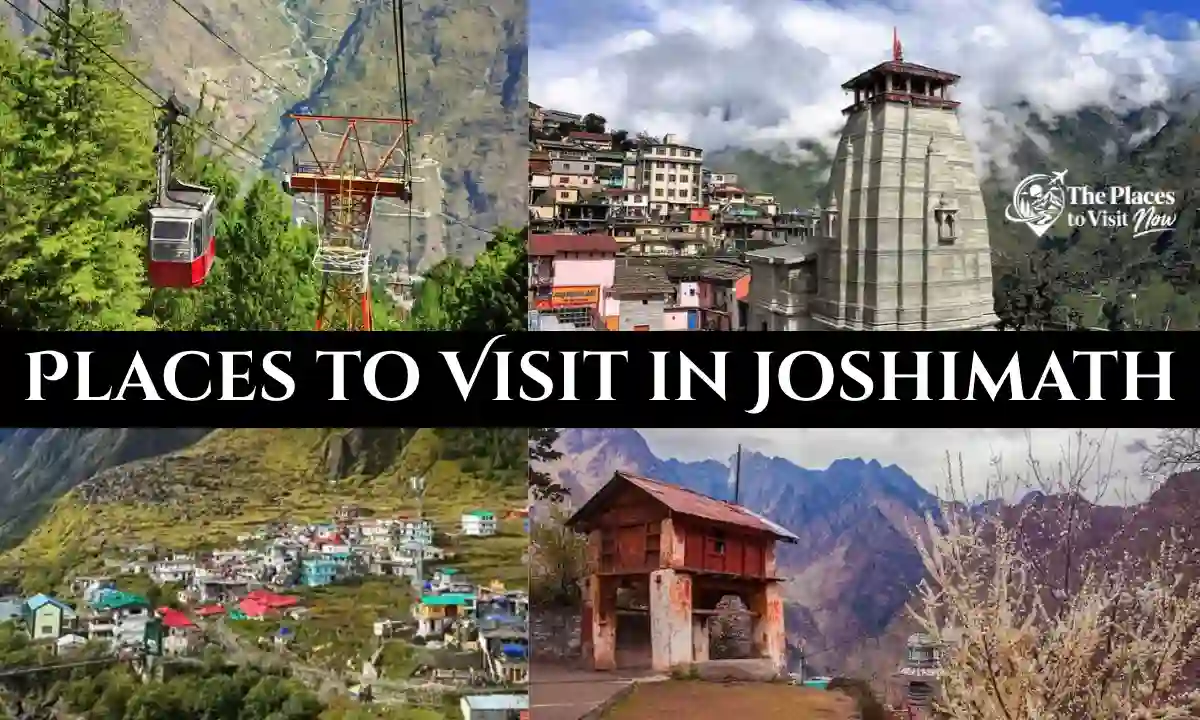
Almost all the tourist guides available for this town were published before January 2023, and never updated since then. This poses a problem, considering that the most important information that should be presented regarding Joshimath nowadays has little to do with the temples that one can visit there.
Therefore, this page should serve as a status report rather than a travel guide. Joshimath (also known as Jyotirmath) is located at an elevation of around 1,875 meters above sea level and serves as the gateway to Badrinath, Valley of Flowers, Hemkund Sahib and Auli. Joshimath is also a town with a documented problem of land subsidence that shouldn’t be ignored.
Fortunately, there is some good news that doesn’t get enough attention among the headlines: the town is operational, the roads are used, and the local economy needs visitors. Therefore, an honest list of what to see in Joshimath will be a useful one: here are the things that are still standing; here is one thing that hasn’t worked for three years and here is the season when Joshimath stops serving as a stop and turns into a destination itself.
The Subsidence, Stated Plainly
This is something that you need to know prior to your visit. The statistics have been provided by scientific and official sources of the city, and not from travel literature.
| What people ask | Where it actually stands |
| Is the town still sinking? | Yes, but currently at a very slow rate. Scientists describe it as still in a danger zone |
| Can it be stopped? | Experts say the slope subsidence cannot be halted entirely. Protective work at the toe of the slope has begun |
| How much movement was measured? | Across different parts of the town, from a few centimetres up to around 14.5 metres |
| How many homes were affected? | Of roughly 2,152 houses, about 1,403 were affected. Around 472 need rebuilding and 931 need repairs |
| Were buildings evacuated? | Yes, 181 critically unstable buildings were evacuated, though some residents have since moved back |
| What makes it worse? | Heavy monsoon rain. That is the single biggest factor that could speed the movement up |
This is one result that should be known for its impact on how the problem is perceived. The first investigation showed that the area in which the town is located consists of glacial debris deposited about seven thousand years ago when the glacier retreated from there instead of being the old debris of the landslides that were always presumed.
This means that the practical advice for the traveller is as follows: avoid travel during the monsoon, stay in safer areas of town, use Joshimath as a stopover point on your journey and not as an actual destination and make your plans more flexible. Do not treat the destruction as something to see. Some people have to live here, and some have lost their homes.
The Ropeway Has Not Run Since 2023
Take just one practical point out of this page, and let it be the one, as it’s the one which most pages lack.
The ropeway linking Joshimath and Auli has been closed since 2023 due to cracks on its platform caused by subsidence. Three years passed since then, and it remains closed till now. The survey has already been performed, and even the technical commission arrived to study the problem, but the situation remains unclear yet, and there’s no schedule of its restoration. The operator states the financial loss at about ten crores of rupees, while the local tour operators are eager to see it opened.
Why it is important for you when booking: although many websites still give the price of the ticket for this ropeway, ignoring the fact of its non-operation. In case it is your destination in Auli, plan your way to get there by road and find out the status of the ropeway before. Sometimes even the road can be closed due to the snow.
The Six Months When This Town Becomes Badrinath
This is what makes Joshimath worth visiting and not merely passing through, and most of the guides don’t mention it.
While the Badrinath temple is closed for winters, the idol of Lord Badri is transferred to Narsingh Temple located in Joshimath and worshipped for six months. Pilgrims have their darshan for six months of the year in this temple and not in the higher temple.
It totally changes one’s perception of the visit during winter time. The temple is closed, the road beyond covered with snow, and what pilgrims came here for has shifted to the town below the hill. If you can’t reach Joshimath during summer yatra, you shouldn’t be disappointed because it’s the same deity sitting in a different place.
Narsingh Temple and the Shankaracharya Connection
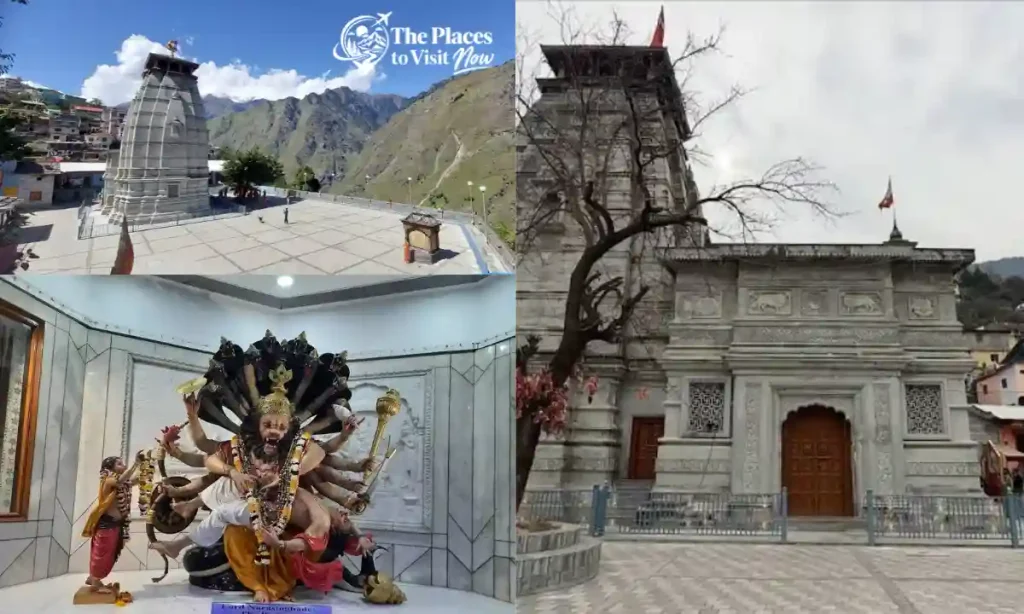
This town is said to be one of the four pithas, according to Adi Shankaracharya, and this particular one is the northern one and holds responsibility for Atharvaveda. The heads of the math are called Shankaracharya. In the math compound there are temples to Badrinarayan and Rajrajeshwari Devi as well as a cave where Shankaracharya used to meditate.
The Narsingh Temple is the main temple in the town, dedicated to the avatar of Vishnu known as Narasimha and the idol of which is believed to have been installed by Shankaracharya himself. According to local legend, the idol’s left arm gradually became thin and the arm will break and Badrinath will move to Bhavishya Badri, some ten kilometers from the present location.
This particular local legend is very old and predates modern times completely. It is no wonder visitors hear these two phenomena mentioned at once, but in fact they are different things: one is an old legend and another is a natural process.
What Is Actually Worth Seeing in Town
Joshimath is small and most of this fits into a single unhurried day, which is usually all you have before moving on.
| Where to go | What you will find | How long it takes |
| Narsingh Temple | The main temple, and the winter seat of Badrinath for six months of the year | About an hour |
| Jyotirmath, the math complex | The northern pitha, with the Badrinarayan and Rajrajeshwari Devi shrines and Shankara’s cave | An hour or so |
| Kalpavriksha | A very old mulberry tree tied by tradition to Shankara’s meditation here | Half an hour |
| Bhavishya Badri | About 10 km out, the shrine tradition names as Badrinath’s future seat | Half a day with the drive |
| Tapovan hot springs | Roughly 10 km away, with thermal springs beside the Dhauliganga | Half a day |
| Vishnuprayag | The confluence of the Alaknanda and Dhauliganga, and one of the Panch Prayag | An hour including the walk down |
| Auli | About 13 km by road, for the meadows and the ski slopes in season | A full day |
Auli has enough to it that it is a separate trip rather than an afternoon, and the road is now the way to get there. Treat it as its own day.
What Joshimath Is a Gateway To
This is the real reason most people come, and the town earns its place entirely by position. Each of these is a trip in its own right.
Badrinath
The temple shrine located further upstream is accessible during the summer months but inaccessible during the winter months, when the deity is brought to the Narsingh Temple. The road conditions on this stretch vary depending on the weather and development work, so make sure to verify the status before going.
The Valley of Flowers
Part of the Nanda Devi and Valley of Flowers World Heritage Site, designated in 1988 and extended to include the valley in 2005. The valley lies between 3,352 metres and 3,658 metres above sea level and remains inaccessible from November through May due to snowfall, with July through early September marking the peak season for flowering.
The following logistics must be noted. Starting from Govindghat (around one-hour drive from Joshimath), shared taxis will take you to a distance of four kilometres, followed by a trek of around eleven kilometres to reach Ghangaria, located three kilometres short of the valley. The total distance covered in hiking will be around seventeen kilometres. Overnight stay does not happen within the park limits; hence, Ghangaria is where you will be staying, while the porters, mules, and helicopters are available to help you get there.
Following are four main obstacles that are commonly faced in this trekking path more than in other places.
| What you need to know before the Valley of Flowers | The detail |
| Do I need a permit? | Yes, issued by the Forest Department at Ghangaria, and valid for three days |
| Can I stay inside the valley? | No. Accommodation is at Ghangaria, and only daytime visiting and trekking are allowed |
| When is it open? | June to October, with the best flowering from July into early September |
| How far is the trek? | Around 17 km in total from Govindghat, with under 11 km of it to Ghangaria |
Hemkund Sahib
The high Sikh temple, which can be accessed along the same path during the brief summer season when it is operational. The trek to the temple is strenuous and should be considered as such and not a side visit while in the valley.
The Nanda Devi area and Kuari Pass
The larger Nanda Devi Biosphere Reserve lies beyond the town, and the famous Kuari Pass trek goes from here over several days. The entry into the protected region is controlled, so anything heading in that direction requires a registered company along with permits.
When to Go
Season matters more here than in most hill towns, because it changes both what is open and how safe the slope is.
| If you come in | What the town is like | What it suits |
| April to June | The yatra season opening, with Badrinath accessible and the valley about to open | Pilgrims and anyone heading up the valley |
| July to September | Monsoon, and the period scientists flag as the accelerant for slope movement | Only the Valley of Flowers, and with real caution about roads and landslides |
| October and November | Clear, cold and settling, with the shrine season closing | The most comfortable window for the town itself and for Auli |
| December to March | Winter. Badrinath shut, the idol down at Narsingh Temple, snow on the Auli slopes | Winter visitors, skiers, and anyone who wants the quiet version |
The honest seasonal advice: In case your dates are flexible, try to stay clear of the monsoon. This is the one time when both the geology and the road play against you, and the Valley of Flowers is the only justification for this compromise.
What a Trip Costs
Rupee figures to plan against, for two people. Mountain rates move with season and road conditions, so check current prices rather than budgeting from this alone.
| What you are paying for | Roughly what it costs | Worth knowing |
| A budget room in town | 800 to 2,000 a night | Ask about the building and the part of town before booking |
| A mid-range hotel room | 2,000 to 4,500 a night | Limited stock, and it fills through the yatra season |
| A room at Ghangaria | 1,000 to 3,000 a night | Basic and seasonal, since the settlement effectively shuts in winter |
| Valley of Flowers forest permit | A modest per-person charge for three days | Issued at Ghangaria; carry identification |
| Taxi from Joshimath to Auli | 1,200 to 2,000 one way | More in snow, and currently the way up since the ropeway is down |
| Shared jeep to Govindghat | 100 to 300 per seat | The normal way locals travel this stretch |
| Porter or mule to Ghangaria | 1,000 to 2,500 | Negotiated at Govindghat; rates rise in peak season |
| Meals per person per day | 300 to 700 | Simple Garhwali and north Indian food; options thin out at altitude |
Two Ways to Plan It
Joshimath as a stop on the way up
This is what most people do, and there is nothing wrong about it either. Come in the afternoon, visit the temple of Narsingh and the math campus, head on to Vishnuprayag if you have daylight left, and then leave for Badrinath or Govindghat the next morning. One night at Rudraprayag is sufficient for visiting the town.
Joshimath as the base for a longer week
Just give it three or four days, and make good use of it. Travel to Auli in one day via road travel, go to Tapovan and Bhavishya Badri in another day, and then use the rest of your time to achieve any of the major goals that brought you here – be it Badrinath during its season, the valley during summer or the slopes during winter.
Practical Tips
- Make sure you know the condition of the ropeway in advance of your Auli day trip. It hasn’t been operating since 2023 and there has been no word of its renovation.
- Don’t be afraid to inquire about the room, the building, and the neighborhood in addition to prices and views while booking the accommodation.
- Be aware of the road condition for the section leading to Badrinath. Weather changes and construction work will influence it on any particular day.
- Take some cash with you as well. This mountain region isn’t really connected and won’t guarantee smooth transactions without it.
- Include buffer days in your itinerary through this part of the Himalayas as road closures happen normally and not necessarily as emergencies.
- Prepare for acclimatization if you’re planning to go even a little higher. Joshimath is lowland, but Hemkund and the valley are high, which often gets underestimated.
- Get your Valley of Flowers permit at Ghangaria as it’s valid for just three days.
- Spend money locally as tourism here suffered greatly and locals carry all its expenses themselves.
Six Pieces of Trivia
- The town is known officially as Jyotirmath and as per legend, it is regarded as the northern pitha of the four cardinal pithas created by Adi Shankara and bears the responsibility of Atharvaveda.
- For six months of the year during the closing of Badrinath for winters, the idol of Lord Badri is brought down from Badrinath and worshiped in the Narsingh Temple.
- As per the local belief, the left hand of the Narsingh idol has become so thin that it is the size of hair and once it breaks, Badrinath will shift to Bhavishya Badri.
- According to an initial study, the town is built on debris formed due to the retreating glacier about seven thousand years ago and not landslides as was believed earlier.
- The Valley of Flowers makes up part of the World Heritage Site that was inscribed in 1988 but extended in 2005.
- The Joshimath to Auli ropeway is not operating since 2023 with the operator having put losses to the tune of about ten crore rupees.
Final Take
But go; go with knowledge. The prudent thing to do with regard to the places to visit in Joshimath would be to realize that Joshimath is just a gateway town, not the end of the journey, that the ropeway is not working, and above all to avoid the monsoons because it is that one time of year when both the slope and the roads are against you.
But check your dates right, for the season that most travel guides dismiss is the one that makes the best case for itself. Between December and March, the temple is closed, and the deity of Badri is housed in the Narsingh Temple at the foot of the hills, where there is snow on the Auli slopes, and the town is quiet. That would make for a better visit than the hurried overnight stay in the yatra season.
FAQ’s
Is it safe to visit Joshimath now?
The town operates well, the roads operate, tourists keep coming, but the process of land subsidence is continuing now; it takes place slowly now, according to scientists, and the town is still in the zone of danger. The most reasonable way to visit the area is to choose another time other than the monsoon season; rain is the main cause that can make the process of movement faster.
Is the Joshimath to Auli ropeway working?
It has been out of action since 2023 due to subsidence resulting in cracking of its platform. After three years since it stopped operations, nothing much has been heard regarding any plans to restore it. It is important that one plan to travel to Auli by road, which is roughly 13 km.
What are the main places to visit in Joshimath itself?
Narsingh Temple, that also serves as the winter abode of Badrinath; the Jyotirmath math, with the various temples and the cave of Shankara; the Kalpavriksha Tree and the Vishnuprayag, where the Alaknanda and Dhauliganga rivers meet. A bit farther from here are the Tapovan, with its hot springs, and the Bhavishya Badri, both of which are located at about 10 km distance from this place.
Why does Joshimath matter for Badrinath pilgrims?
Because, for half the year, it houses the deity. During the winters when the Badrinath temple is closed due to weather, the idol of Lord Badri is taken to Joshimath in the Narsingh Temple and prayed to till the time the temple is open again. During winters, the darshan takes place in the town and not the valley.
How do I get to the Valley of Flowers from Joshimath?
Take an hour’s drive to reach Govindghat, from there hire a shared taxi up to four kilometers, and then walk for nearly eleven kilometers till Ghangaria, that lies about three kilometers below the valley. The total distance of walk up is around seventeen kilometers. Permits from Forest Department, that can be acquired at Ghangaria and are valid for three days only, are required. And no one is permitted to camp in the valley area, hence Ghangaria is the place to camp.
What is the best time to visit Joshimath?
October and November for the town, when the skies are blue and the season of shrines draws to a close. December through March if you are looking for Auli under the snow and the Badri idol residing at the Narsingh Temple. April through June for the season of yatra pilgrimage and Badrinath. The monsoon months of July through September should be avoided unless Valley of Flowers is your goal.
Also read more: Places to Visit in Hyderabad With Friends: Pick a Side of the City

Leave a Reply