
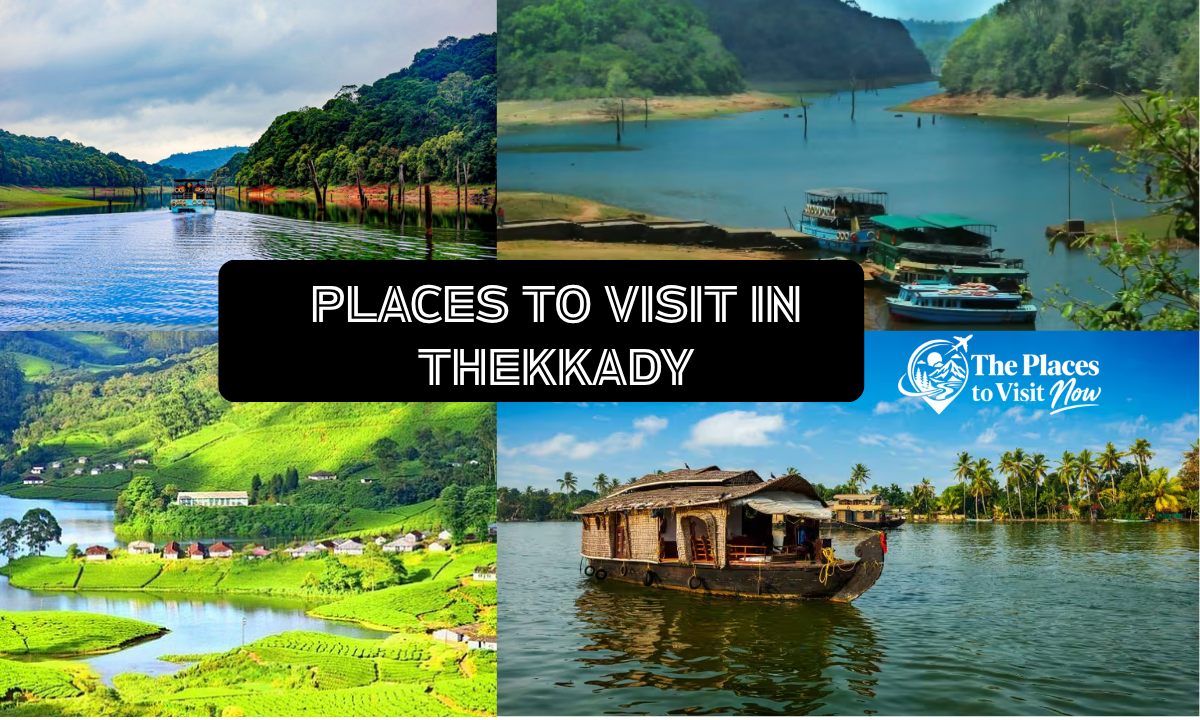
Everyone who visits Thekkady does pretty much the same thing. They wait for the Periyar lake cruise, spend ninety minutes on an overcrowded deck staring at a shoreline through others’ cell phones, glimpse a distant herd of something from the deck, and leave feeling like they’ve visited a tiger reserve.
There is nothing wrong with the cruise itself. It is just the least exciting option of about nine ways to get into Periyar, which is the only way the vast majority of visitors ever learn about. There is a series of walking, rafting and camping tours offered by the local forest department which are arguably the best wildlife experience in India, and some of them are led by poachers who used to hunt in this forest and now guard it.
This guide will help you visit all the necessary places in Thekkady comparing all of those programmes, and everything else you can do there.
Thekkady at a Glance
| Detail | What to Know |
|---|---|
| Where | Idukki district, Kerala, on the Tamil Nadu border |
| The park | Periyar Tiger Reserve, around 777 sq km |
| Its credential | Rated the best managed tiger reserve in India in a 2022 assessment |
| Where you actually stay | Kumily town, about 4 km from the park gate |
| The default activity | The lake boat cruise, and the least rewarding option |
| The best single day | Bamboo rafting, dawn to dusk |
| The best two days | The Tiger Trail, camping with ex-poacher guides |
| Book programmes | Online or at the eco-tourism office, well ahead |
| Best season | September to March, with March to May best for sightings |
| Ideal trip length | 2 to 3 days |
Thekkady, Kumily or Periyar?
Three names, one place, and many wrong bookings.
- Periyar Tiger Reserve is the protected area, which derives its name from the river which originates from this protected area.
- Thekkady is the name of the place located near the entrance of the park, having the boat jetty and the eco tourism office.
- Kumily is the name of the town located four kilometers away from here, where almost all the hotels and restaurants are found, and where you stay during your trip to the place.
In case your hotel claims to be situated in Thekkady, see how far it is from the entrance to the park before booking. Most of them are in or around Kumily.
The Lake Is a Drowned Forest
This is the one factor which changes the view of the boat journey.
Periyar Lake is an artificial creation; it was created in the latter part of the nineteenth century when a dam was constructed across the Periyar river which diverted the water from it to flow eastwards into Tamil Nadu, thus submerging a whole valley filled with standing forests. What you see as tree stumps sticking out of the water are those of the submerged forest, more than a hundred years after its submersion.
It is this one fact alone which makes the journey so much more fascinating. You are not viewing a lake filled with dead trees but a submerged forest and the wildlife you are here to observe congregates around the shores of the lake because that is the end point of the forest.
The Programme Ladder: Nine Ways Into Periyar
This is the table the whole guide exists for. Costs are approximate and are revised periodically, so confirm on the official booking portal or at the eco-tourism office.
| Programme | Duration | Approximate Cost (Rs) | Effort | What You Actually Get |
|---|---|---|---|---|
| Lake boat cruise | 1.5 hours | 250 to 500 per person | None | Distant shoreline viewing from a crowded deck |
| Nature walk | About 2.5 hours | 350 per person | Easy | A guided forest walk with a trained local guide |
| Green walk | About 3 hours | 400 to 600 | Easy | A gentler introduction to the forest edge |
| Bamboo grove stay | Overnight | 5,000 upwards | Easy | Tented or hut accommodation inside the reserve |
| Jungle scout, night patrol | About 3 hours | 1,200 per person | Moderate | A night walk along patrol routes with guards |
| Border hiking | Full day | Around 1,800 | Hard | A long ridge hike along the reserve boundary |
| Bamboo rafting | Dawn to dusk | 1,800 to 2,500 | Moderate to hard | Trek plus rafting on the lake, lunch included |
| Tiger Trail | 2 days or 3 days | 6,000 to 10,000 | Hard | Deep forest trek and camping with armed guards |
| Gavi day trip | Full day | 2,500 to 4,500 | Easy | Jeep safari, plantation walk and boating at Gavi |
Two useful observations. The groups for the walking tours are very small in numbers, with usually ten or less, sometimes just six on the Tiger Trail – that’s precisely why they are sold out. And all of them have trained guides who are locals, and that’s the idea behind all of it.
The Guides Used to Be the Poachers
It is the aspect of the Periyar that is known to conservationists worldwide and that travellers rarely get to hear of.
Many years ago, there were cases of poaching, and the felling of bark and sandalwood by the inhabitants of the local villages, which was their main source of income. Rather than simply enforcing rules on the issue, the park devised a participation mechanism where the villagers became the guards, trackers and guides.
Thus, on the Tiger Trail, the individuals who will be showing you the way, pitching the tents and preparing your meals will be local villagers who once hunted in that very area. There is no one who knows the terrain better. This is clearly stated in the programme details and is the most convincing reason for choosing a walking programme over the boat one.
Other programmes involve the services of guides from the tribes inhabiting the fringe areas of the park, such as the Mannan and Paliyan. Tipping is common and expected at the end of the walk.
The Boat Cruise, Honestly
If you have limited time, and your party cannot cover much walking, you may try the cruise, but you need to know exactly what you will get.
- Boats operate multiple times during the day, starting in the morning and ending in the afternoon. The earlier and the later boat trips offer the best chances for encountering animals on water.
- Book tickets in advance, since there are always many people trying to get on a boat. Queuing one and a half or two hours in advance is normal in the season.
- After an accident that took place in 2009, the number of people on the upper deck was limited, all passengers should wear life jackets during the whole trip, and sign an indemnity form upon boarding. Do not ignore these requirements.
- The most common encounters include elephants, gaur, sambar, and wild boar on the shoreline, birds and otters. There are tigers in the reserve, but you will hardly see them during the boat ride.
- Take binoculars with you because everything will be at a great distance, and without them, you will see nothing more than some silhouettes.
Bamboo Rafting: The Best Single Day
If you could only include one programme in your itinerary, then this is the one.
This starts in the morning and ends in the evening, entailing hours of trekking in diverse forests, followed by some hours of rafting in the lake, with a hefty lunch break in between. The programme involves a small group, usually up to a maximum of about ten, accompanied by an armed escort and some guides.
The programme’s success lies in the water level view of things. Sailing in a bamboo raft a few feet above the water level, in quiet stealth along the shoreline, is an altogether different story from sailing in a diesel boat packed with a hundred people. Giant squirrels, Nilgiri langurs, hornbills, elephants and gaur are some real possibilities, but the main feature is the silence.
Wear shoes that you do not mind getting wet; expect leeches during and after the monsoon season, and be reasonably fit, because this is a long day of trekking.
The Tiger Trail
The two days, one night or three days and two nights hiking and camping in the reserve under the escort of armed forest guards and ex-poachers. These groups are extremely small. The participants must be physically healthy and will usually be accepted from fifteen years up to sixty-five years.
You carry your own stuff, camp in the tents, eat what the guides cook and trek through portions of the forest which are off-limits to the day visitors. You will certainly encounter elephants, gaur, sambar and wild boar, and you might see a tiger but it’s highly unlikely and it is a true situation for any tiger reserve in India.
It requires advanced booking and it is not an easy adventure. But it is undoubtedly the best experience that Kerala offers.
Places to Visit in Thekkady Beyond the Park
| Place | Distance From Kumily | Time Needed | Best For |
|---|---|---|---|
| Spice plantations | In and around town | 2 hours | Cardamom, pepper, vanilla and clove |
| Vandanmedu | About 25 km | Half day | India’s cardamom trading centre |
| Gavi | About 28 km by road route | Full day | Forest jeep safari and lake boating |
| Chellarkovil | About 15 km | 2 hours | A cliff-edge view over the Tamil Nadu plains |
| Pandikuzhi | About 5 km | 2 hours | A stream and valley on the state border |
| Kurisumala | About 4 km | 1 hour | A short hill climb with wide views |
| Ottakathalamedu | About 5 km | 1 hour | Sunset over the Cardamom Hills |
| Murikkady | About 5 km | 1 hour | Coffee, cardamom and pepper plantations |
| Mangala Devi Temple | About 15 km | Half day | Opens for only one day a year |
| Kumily town market | In town | 1 hour | Spices, oils and tea, bought at source |
Spices, and Where to Buy Them
Thekkady lies in the Cardamom Hills, and this is one of those rare places in India where it becomes worthwhile to do a tour of the spice plantations and not simply a tourist stopover.
One of the most important centers in the entire country for the trade of cardamom is Vandanmedu, some twenty-five kilometres from Thekkady, where the spice is graded and auctioned. This is very much a business center and not a tourist attraction; that is precisely what makes it an enjoyable visit if you have an hour.
- Buy from plantation shops or the established stores in Kumily rather than from someone who approaches you on the street.
- Ask for the current year’s crop, and check that cardamom is green and aromatic rather than pale and dry.
- Vanilla and saffron are the two things most commonly misrepresented here. Be sceptical of anything unusually cheap.
Mangala Devi Temple
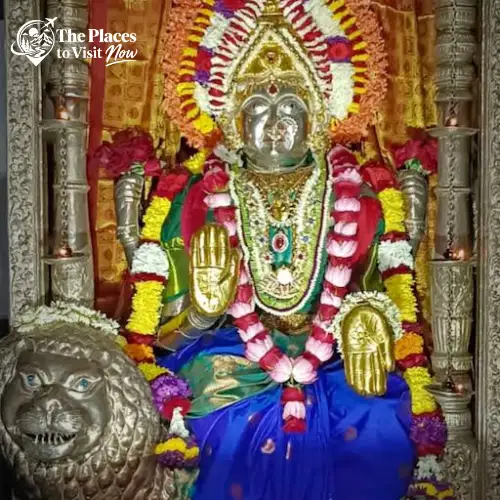
An ancient stone temple in the woods near the border between Kerala and Tamil Nadu, about fifteen kilometers away from Kumily, and within the preserve. What makes it unique is that it is open to the public only once in the year, during the Chithra Pournami festival, held in April/May.
During this day, devotees from both states climb up to visit it. The rest of the year, it remains silent in the forest, shut. If your trip coincides with it, then you must adjust your itinerary accordingly.
Gavi
Forest village that is about a one-day drive away, and accessible via a long winding path through a plantation and a reserve forest, which is famous for the Malayalam movie. Jeep ride around, guided walk, rowing on a small lake, and lunch are the usual package.
The place is well organized, but it may get very commercial at its peak. Plan to visit there on a weekday after getting reservations from the forest authorities or through an authorized agency.
An Honest Word on Elephant Rides
Elephant rides and baths are strongly advertised at Kumily, and they happen to be some of the most photographed activities undertaken here. However, these activities also bring up serious issues regarding the well-being of animals involved in the training process through chaining and working. More and more tourists are opting out of such activities, and luckily for you, there are numerous ways of spending money on the projects of the forest department in Thekkady. Bamboo raft elephant viewing is a far better choice.
Entry Fees and Costs
These are approximate figures for planning. Forest department rates are revised periodically, so confirm on the official portal or at the eco-tourism office before booking.
| Item | Approximate Cost (Rs) | Notes |
|---|---|---|
| Periyar park entry, Indian | 45 to 100 | Charged in addition to programme fees |
| Periyar park entry, foreign national | 400 to 600 | Higher rate applies |
| Lake boat cruise | 250 to 500 per person | Book online, upper deck capped |
| Nature walk | Around 350 per person | Small groups, morning slots |
| Jungle scout night walk | Around 1,200 per person | Three hours after dark |
| Border hiking | Around 1,800 per person | Full day, demanding |
| Bamboo rafting | 1,800 to 2,500 per person | Includes lunch and tea |
| Tiger Trail, one night | 6,000 to 10,000 per person | Minimum group size applies |
| Bamboo grove or jungle camp | 5,000 upwards | Accommodation inside the reserve |
| Gavi day package | 2,500 to 4,500 per person | Jeep, walk, boating and meal |
| Spice plantation tour | 300 to 800 per person | Usually about two hours |
| Kathakali or Kalaripayattu show | 300 to 500 per person | Evening, about an hour |
| Auto from Kumily to the park gate | 80 to 150 | About four kilometres |
| Full-day cab | 2,000 to 3,000 | For Vandanmedu and the viewpoints |
Best Time to Visit Thekkady
| Months | Conditions | Verdict |
|---|---|---|
| September to November | Post-monsoon, green, comfortable | Best all-round window |
| December to February | Cool and dry, peak visitor season | Excellent, but book everything ahead |
| March to May | Hot, water sources shrinking | Best sightings of the year |
| June to August | Heavy monsoon, forest at its greenest | Programmes may be curtailed, leeches everywhere |
The trade-off is the usual one for Indian wildlife. The most comfortable months are not the months with the best sightings. As the dry season progresses towards May, animals concentrate around the lake and become far easier to see.
A 2-Day Plan
| Day | Morning | Afternoon and Evening |
|---|---|---|
| Day 1 | Bamboo rafting, dawn to dusk | Return late, Kathakali show in Kumily |
| Day 2 | Early lake cruise or a nature walk | Spice plantation, then Ottakathalamedu at sunset |
With a third day, add Gavi or the border hike. If you want the Tiger Trail, build the whole trip around it, since it takes two full days and needs booking well in advance.
Practical Tips Most Thekkady Guides Skip
- Pre-book your eco-tourism package before coming here. The good packages have limited numbers intentionally and get booked several days in advance.
- Bring along your binoculars. Whether it is on the water, lake or rafts, all the viewing takes place far away.
- Leeches are unavoidable between June and September and following any rainfall. Just long socks, proper footwear and a pocket full of salt or repellant sorts you out.
- Wear neutral clothes on walking trails and do not bring along anything bright or white.
- Plastic bottles are banned within the wildlife sanctuary. Carry an empty reusable bottle.
- Night time is cold up here even though it is hot in the lowlands, so carry a jacket.
- Go across to Tamil Nadu from the checkpost if you want cheap fuel and totally different high street. It is just a walk from the centre of Kumily.
Trivia You Can Use to Sound Like a Regular
- Periyar Lake is an artificial lake, which was formed when the dam flooded the forest valleys in the late nineteenth century, and the exposed stumps are part of the drowned forest.
- Most of the guides on the Periyar Tiger Trail have been poachers who were taken under the umbrella of conservation and now help tourists traverse the very forest.
- In a national management assessment in 2022, Periyar Tiger Reserve was ranked as the best-managed tiger reserve in India.
- The river Periyar, after which the tiger reserve has been named, originates within the premises of the park.
- Mangala Devi Temple, located within the tiger reserve at the state border, is open to the general public for just one day in a year during Chithra Pournami.
- Vandanmedu, located close to Thekkady, is one of the largest cardamom markets in India, and the surrounding hills are named accordingly.
Final Take: Book a Programme, Not a Ticket
Places to see in Thekkady are almost all one place, Periyar, and the issue is how to get in there. The boat is what people will be booking, but it’s the shallowest way to do it. All of the others are preferable: Nature Walk, Night Watch, Border Walk, Bamboo Rafting, Tiger Trail – and all cheaper per hour of enjoyment and run by locals from the edges of the forest.
Spend two full days there. One for bamboo rafting, the best thing that can be done in one day in the whole reserve, and another either on an early cruise or nature walk and then spice plantation and sunset spot. Book it all ahead of time, bring the binoculars, and if you have the energy and three days, choose the Tiger Trail and walk inside the jungle with the hunters who used to roam there.
Frequently Asked Questions
What is the best thing to do in Thekkady?
Bamboo rafting, if you only have one day, starts from sunrise to sunset, and is made up of forest walking for some hours, rafting on the lake, lunch, and a small group with guides and an armed guard. It’s much more exciting than the boat ride most tourists go for.
Is the Periyar boat ride worth it?
This is normal, nothing spectacular. Ninety minutes on a crowded deck, observing wildlife at a distance from the shore. Book one of the early slots for the maximum possibility of wildlife at the water, bring binoculars, and do it online since the tickets get sold out.
What is the Periyar Tiger Trail?
This program involves walking and camping for two or three days in the interiors of the park, escorted by armed forest guards and guides who were former poachers. Very small groups go on this program, and only fit people can join. This program requires reservations at least some months before.
Are Thekkady and Kumily the same place?
Almost, but not quite. The Periyar Tiger Reserve is the park; Thekkady is the region at the entrance of the park having the jetty and office for eco tourism, while Kumily is the town about four kilometres away with almost all the hotels and restaurants in it.
When is the best time to visit Thekkady?
From September to March for comfort, with December to February being the high season. From March to May is warm weather with good wildlife viewing because animals gather around dwindling waters. Monsoon season from June to August is lovely but programs may be cut short due to leeches all around.
How many days do you need in Thekkady?
Two days will be sufficient for activities like bamboo rafting along with a boat ride or walk, spice plantation, and view point. Gavi and border hiking can be done if three days are available. The Tiger Trail can only be arranged if you want it as it requires two days.
Note: Programme availability, group sizes, timings and fees are set by the forest department and revised periodically, and some programmes are curtailed during the monsoon. Confirm current details on the official booking portal or at the eco-tourism office before travelling.
Also read about: Araku Places to Visit: A Railway Line With a Valley at the End of It

Leave a Reply